🇿🇦 The Mzansi Mighty Satchel: A 20-Year Legacy of South Africa’s Thick Plastic Bag
In the annals of South African environmental policy, few items hold as curious and enduring a place as the humble plastic shopping bag. Its story is not one of elimination, but of forced evolution, culminating in the Mzansi Mighty Satchel—a thick, robust, and culturally entrenched carry-all. Introduced by government regulation in 2003, the policy shift was a dramatic attempt to curb the scourge of litter: the once-ubiquitous, flimsy, 14-micron bags that were so pervasive they were cynically dubbed the country's "second national flower."
The Regulatory Revolution
The core of the 2003 legislation involved two critical interventions:
- Mandatory Thickness: Banning the manufacture and distribution of thin bags and mandating a minimum thickness (initially 24 microns, later standardising at about 30 microns for the common carrier bag), with even thicker options (up to 70 microns) available. This was intended to physically prevent the "single-use" mentality by creating a product that was inherently reusable.
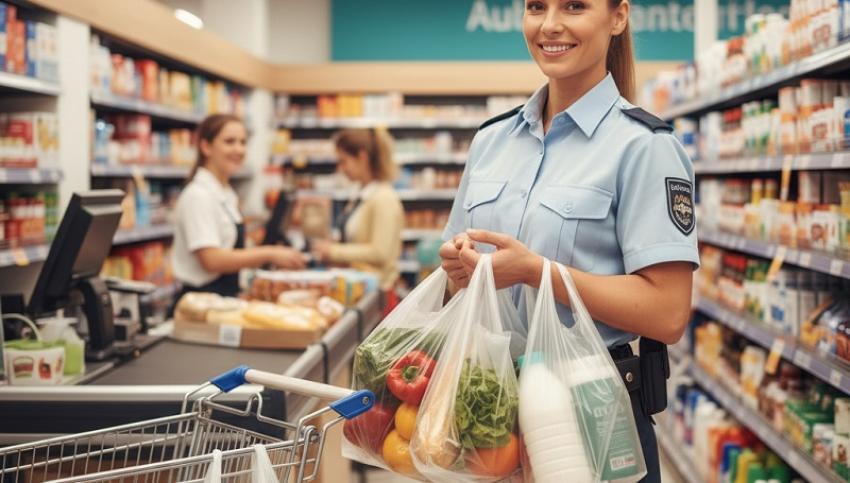
- The Environmental Levy: Instituting a levy, passed onto the consumer, requiring shoppers to pay for the bags at the till. This economic instrument was designed to influence behaviour, forcing consumers to think twice and, ideally, bring their own bags.
The initial results were impressive. Following the regulation's implementation, some reports suggested a dramatic 80% drop in plastic bag consumption as shoppers responded to the new cost. The policy was hailed as a win for environmental governance.
The Evolution of Utility
The thicker bag immediately carved out a unique place in the South African household. Unlike their fragile predecessors, these new bags could handle a serious load—a six-pack, a watermelon, and a family-sized chicken all in one go, without the fear of a catastrophic split. They were robust enough to be truly multi-purpose, seamlessly transitioning from grocery carrier to:
Refuse Sacks: The perfect, cheap liner for small household bins.
Storage Totes: The essential organiser for everything from shoes to children's toys.
Makeshift Satchels: The go-to carrier for everything that doesn't fit into a briefcase or a proper backpack.
This inherent durability effectively turned a product intended to be single-use into an unofficial, high-quality, reusable tote, thereby fostering a culture of pragmatic re-purposing among consumers. The dedicated kitchen cupboard or drawer packed full of neatly folded, thick plastic bags is a true symbol of South African thrift and preparedness.
The Long-Term Challenge and The Circular Economy
Despite the initial success, the long-term effectiveness of the levy has waned. Over time, the cost of the bag has been viewed by many not as a tax designed to curb consumption, but simply as the price of a superior, reusable carry bag. As the levy is not indexed to inflation (though it is occasionally reviewed and increased), its psychological deterrent effect has diminished. Studies show that while consumption remains lower than pre-2003 levels, it has stabilized at a point higher than environmentalists would prefer.
The focus is now shifting to the material itself. To ensure a truly circular economy, the government has recently intensified regulations to mandate the inclusion of Post-Consumer Recyclate (PCR) content in the bags, with a target of 100% recycled content by 2027. Furthermore, Life Cycle Assessment (LCA) studies conducted in South Africa suggest that these locally produced, thicker bags, especially those made with high recycled content, perform better across many environmental indicators than many imported "alternatives" (like thin biodegradable or some paper bags), provided they are consistently reused.
The story of the thick plastic bag in South Africa is ultimately a nuanced one. It’s a success story in shifting product quality to encourage re-use, but a partial failure in using a small economic instrument to truly eliminate plastic dependency. The battle continues, now focused on mandating recycled content to close the loop on this ubiquitous, unexpectedly sturdy, and culturally important South African necessity.