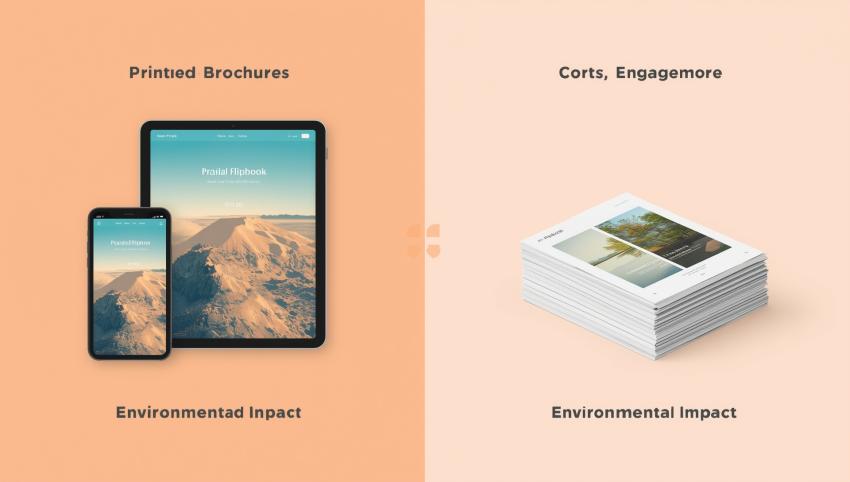
Marketing in 2025 requires strategies that are cost-effective, measurable, and engaging. While many businesses still rely on traditional print marketing, such as brochures, flyers, and catalogs, print can be expensive, slow to produce, and hard to track.
Flipbooks, on the other hand, are interactive digital versions of brochures or PDFs. They combine the tactile appeal of printed materials with online accessibility, mobile-friendliness, and measurable engagement.
In this guide, you’ll discover the differences between flipbooks and traditional print marketing, compare costs and impact, and learn how to use flipbooks effectively to grow your business.
What Are Flipbooks?
A flipbook is an online, interactive version of a PDF, brochure, or magazine. Unlike static PDFs or printed materials, flipbooks allow readers to “flip” pages digitally and interact with content.
Key features of flipbooks:
Page-flip animations: Mimic the experience of reading a physical book.
Clickable links and buttons: Direct readers to products or calls-to-action.
Multimedia support: Videos, images, and animations can be embedded.
Mobile-friendly design: Optimized for smartphones, tablets, and desktops.
Shareable URLs: Easily distributed via email, social media, or embedded on websites.
Flipbooks are more engaging than static PDFs, encouraging users to spend more time exploring content and taking action.
What Is Traditional Print Marketing?
Traditional print marketing includes brochures, flyers, catalogs, magazines, and posters.
Characteristics of print marketing:
Tangible: Physical materials readers can hold and keep.
Offline reach: Distributed at events, mailers, or in-store.
One-time distribution: Once printed, content cannot easily be updated.
Challenges:
High upfront costs for design, printing, and shipping.
Limited reach due to geographic constraints.
Tracking ROI is difficult because engagement metrics are indirect.
While print marketing has a tangible appeal, its limitations make it less effective in today’s digital-driven marketing landscape.
Cost Comparison: Flipbooks vs Print Marketing
Cost is one of the most compelling reasons to consider flipbooks over print.
Comparison Table: Flipbooks vs Print Marketing
Feature
Flipbooks
Traditional Print Marketing
Production Costs
Low: digital design, no printing
High: design + printing + shipping
Distribution Costs
Minimal: email, website, social media
Significant: mailing, events, shipping
Updates & Maintenance
Instant edits at no extra cost
Reprinting required for updates
ROI Tracking
Detailed metrics: clicks, views, shares
Limited: surveys, coupons, delayed feedback
Environmental Impact
Eco-friendly: fully digital
Uses paper, ink, shipping resources
Explanation:
Production Costs: Flipbooks only require digital design, while print involves expensive materials and shipping.
Distribution Costs: Digital sharing is almost free, whereas mailing and events add to expenses.
Maintenance & Updates: Flipbooks can be updated instantly; print must be reprinted.
ROI Tracking: Flipbooks provide detailed engagement data; print relies on indirect measures like surveys.
Environmental Impact: Flipbooks reduce waste and appeal to eco-conscious audiences.
Flipbooks offer a more budget friendly and flexible alternative to traditional print.
Engagement and Reach Comparison
Engagement
Flipbooks increase engagement through:
Interactive elements: Videos, clickable buttons, animations.
Actionable CTAs: Encourage readers to explore products or services.
Longer reading sessions: Engaging layouts keep readers on your site longer.
Print marketing, while visually appealing, relies on passive engagement. There is no way to track how long someone reads a brochure or whether they take action.
Reach
Flipbooks: Accessible globally, mobile-friendly, easily shared online.
Print: Limited to geographic distribution and physical reach.
Analytics and Feedback
Flipbooks: Track page views, time on content, click through rates, and shares.
Print: Feedback is slower and less accurate, usually via surveys, phone inquiries, or coupon tracking.
The ability to measure engagement in real-time gives flipbooks a major advantage for marketers seeking actionable data.
Environmental and Sustainability Benefits
Sustainability is increasingly important for modern brands.
Print marketing: Consumes paper, ink, and energy; generates waste.
Flipbooks: Fully digital, reducing environmental impact.
Eco-conscious consumers may prefer businesses that adopt sustainable marketing methods, providing a reputational advantage.
Real-Life Example: Small Business Success
A small online retailer previously printed seasonal catalogs, spending hundreds each time on design, printing, and shipping.
After switching to mobile-friendly flipbooks:
Costs decreased significantly - no printing or shipping fees.
Engagement increased - readers spent more time exploring products.
Social sharing grew - flipbooks were easily emailed or shared on social platforms.
Measurable ROI - analytics tracked clicks, views, and conversions.
This demonstrates how flipbooks can replace costly print materials while improving reach and engagement. For inspiration, check How Shopify Stores Are Using Flipbooks for Product Catalogs.
Best Practices for Flipbook Marketing
To maximize the impact of flipbooks:
Make Content Interactive
Include links, videos, animations, and calls-to-action.
Optimize for Mobile
Ensure readability and smooth navigation on phones and tablets.
Use Analytics
Track page views, engagement time, and click-throughs to refine strategy.
Promote Widely
Share flipbooks via website, social media, and email campaigns.
Update Regularly
Refresh content to maintain relevance and engagement.
By following these steps, flipbooks can outperform traditional print in both reach and measurable results.
Conclusion: Make the Smart Choice
Flipbooks are not just digital alternatives they are cost-effective, engaging, trackable, and eco-friendly marketing tools. Compared to traditional print:
They reduce production and distribution costs.
They reach a global audience instantly.
They provide measurable engagement and ROI.
They support sustainability goals.
Businesses seeking modern, effective marketing should consider flipbooks. Start creating your interactive flipbook today with https://pdfflipbook.com/.
For further guidance, explore embedding tips or ROI case studies to see how brands maximize their flipbook strategy.