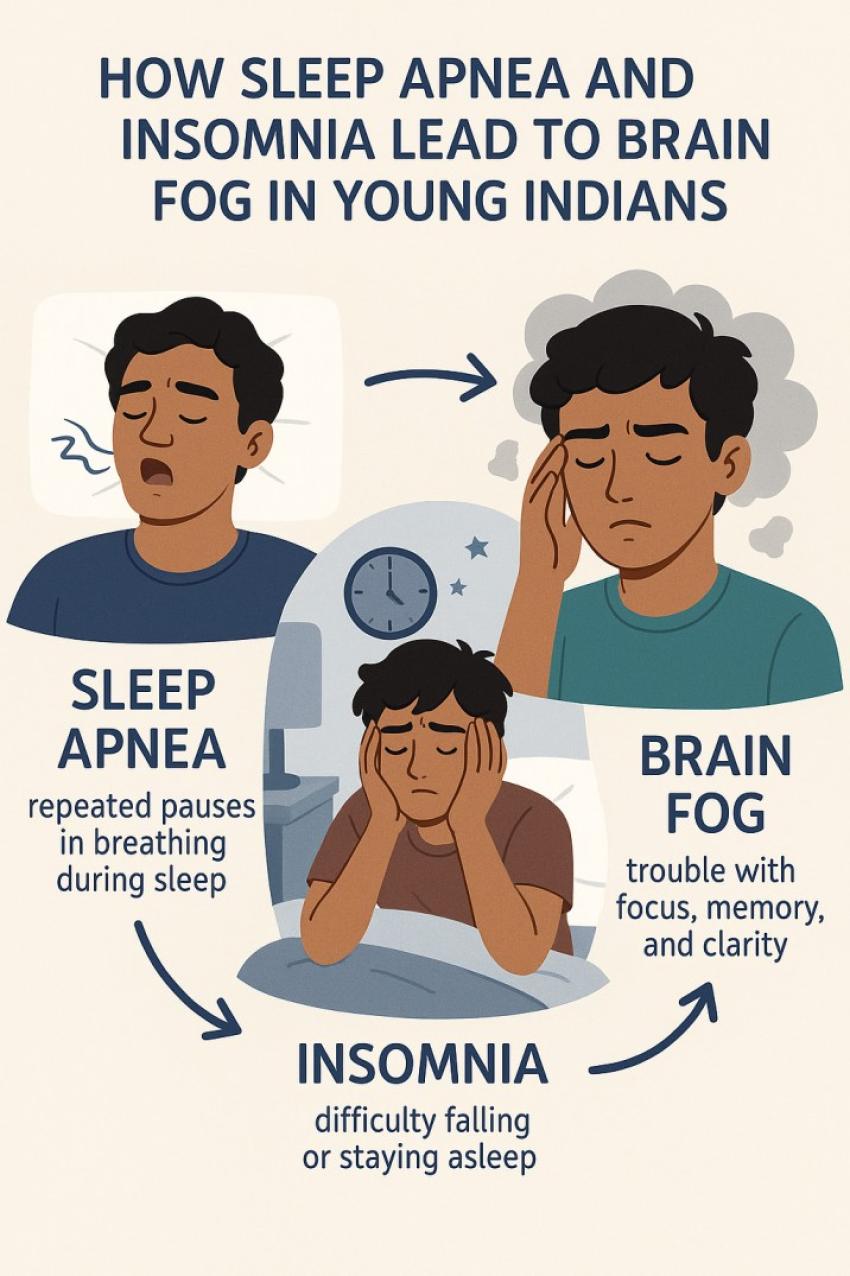
A recent study from the Indian Journal of Sleep Medicine found that nearly 40% of young adults in urban India report regular sleep disturbances. Most of them also complain of brain fog—feeling mentally slow, unfocused, or confused during the day.
Here’s what’s happening.
Sleep apnea and insomnia affect the brain in different ways, but both lead to the same problem: your brain doesn’t get the rest it needs.
When you have sleep apnoea, your breathing pauses and resumes while you're asleep.. It’s common but often goes undiagnosed, especially in India. People with sleep apnea usually snore, feel tired even after 8 hours of sleep, and have trouble concentrating during the day.
Insomnia is when you can’t fall asleep or stay asleep. Young Indians face this due to exam stress, late-night screen use, or work pressure. Many stay awake scrolling on phones or binge-watching, not realizing the cost it has on their brain.
When your sleep is broken—by apnea or insomnia—your brain can’t go through full sleep cycles. That means no deep sleep, and no REM sleep, which are crucial for memory and focus. The result? Brain fog.
Case Study:
Riya, 24, from Delhi
Riya was preparing for medical exams. She had been staying up late, studying hard. Despite sleeping 6–7 hours, she felt exhausted all day. She couldn’t remember what she studied. She also had morning headaches. After a sleep study course at the Academy of Sleep Medicine, a sleep specialist suggested a home sleep test. Turns out, she had upper airway resistance—an early form of sleep apnea. With CPAP therapy and better sleep hygiene, her brain fog disappeared in 3 weeks.
Why This Matters
India is seeing a rise in sleep-related brain fog among youth. And it's not just tiredness. Poor sleep increases risk for anxiety, depression, and even neurodegeneration.
But most people don’t know where to go. General doctors may miss these signs. That’s why there’s growing interest in specialized training—like sleep medicine courses in India. These programs help doctors identify conditions like sleep apnea early.
There are also certificate courses in sleep medicine and full fellowship in sleep medicine programs now offered across India. These are designed for ENT doctors, neurologists, and pulmonologists.
Some ENT doctors even take online fellowship in ENT with sleep focus. It’s an efficient way to learn without leaving practice. These courses often include how to conduct a sleep study course, analyze reports, and treat sleep disorders.
The Sleep Medicine Fellowship India initiative is also helping bridge the gap in sleep care. It brings structured training through hospitals and sleep labs.
Final Thought
Brain fog isn’t just about stress. If you feel mentally cloudy every day, it could be sleep-related. And if you're a medical student or young doctor in India, this is a growing field that needs more trained experts. Institutes like the Academy of Sleep Medicine are helping build that future.
Fix your sleep. Fix your brain.