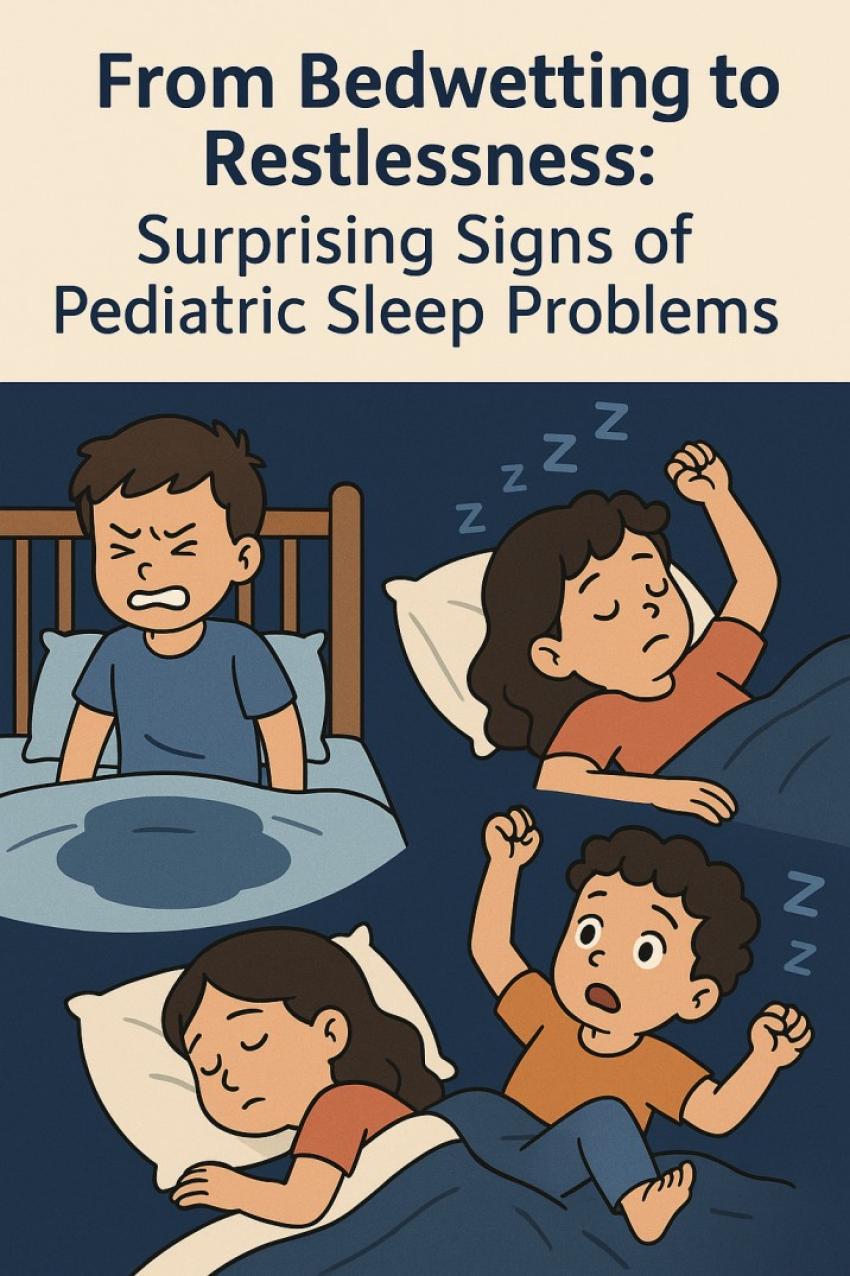
Sleep is important for every child. It helps their body grow and their brain develop. But sometimes, the signs of poor sleep aren’t obvious. Many parents think sleep problems mean trouble falling asleep. But there’s more to it. Bedwetting, restlessness, poor school performance, or even mood swings can be signs of something deeper—possibly a pediatric sleep disorder.
Let’s break it down simply.
Bedwetting: Not Always Just a Phase
Most kids stop wetting the bed by age 5 or 6. But if your child is older and still wets the bed regularly, it may not be just a delay in development. It could be a sign that your child isn’t getting proper sleep. Deep sleep can prevent a child from waking up when their bladder is full. In some cases, sleep apnea in children is linked with bedwetting. When breathing is blocked during sleep, it affects how the brain and body respond.
If your child snores, breathes heavily, or gasps during sleep, talk to a pediatric sleep specialist. A sleep study might help identify what’s going on.
Restlessness and Tossing at Night
Some children toss and turn all night. You may think they’re just “active sleepers.” But constant movement could mean they’re not sleeping well. Restless sleep in children can be a sign of iron deficiency, anxiety, or sleep-related breathing issues. Some kids have periodic limb movement disorder (PLMD), where their legs jerk during sleep. This disrupts rest and can lead to tiredness during the day.
Children rarely say “I didn’t sleep well.” But their body shows it in small ways.
Trouble in School
Lack of good sleep can lead to poor focus, memory issues, and bad grades. Sometimes kids with undiagnosed sleep disorders are wrongly labeled as having ADHD. They’re tired, distracted, and fidgety—not because they can’t pay attention, but because their brain is running on low battery.
If your child’s school performance is dropping for no clear reason, consider sleep as a possible cause.
Mood Swings, Anxiety, and Behavior Issues
Children who don’t sleep well can be moody or emotional. They may cry easily, act out, or have anxiety. Sleep affects mood and behavior, just like it does in adults. A tired child might seem angry or hyper, when really they’re just not well-rested.
This is common in sleep disorders in children, especially when the condition is missed for months.
Frequent Nightmares or Night Terrors
Nightmares are normal once in a while. But if your child has them often, or wakes up screaming from a deep sleep (night terrors), there could be an underlying sleep issue. Some kids experience these because their sleep cycles are disturbed.
Night terrors usually happen in the first few hours of sleep and are more common in children with sleep fragmentation or obstructive sleep apnea.
What Parents Can Do
Watch your child’s sleep closely. Notice how long they sleep, how often they wake up, and how they act during the day. Here are some signs to watch:
Snoring, gasping, or noisy breathing
Frequent bedwetting after age 6
Constant tossing and turning
Trouble waking up in the morning
Mood swings or meltdowns
Poor focus or slipping grades
If you notice these, talk to a pediatrician or sleep specialist for children. A simple sleep study can provide clear answers. Sometimes, treating allergies or improving the sleep environment helps. Other times, more testing or therapy is needed.
Final Thoughts
Sleep problems in kids don’t always look like what you expect. It’s not just about being tired. Sometimes, it shows up in school struggles, emotional issues, or physical symptoms like bedwetting. Don’t ignore these signs. They matter.
Good sleep helps your child grow, learn, and feel better. If something feels off, trust your gut. Help is available—and it starts with noticing the signs.