Introduction
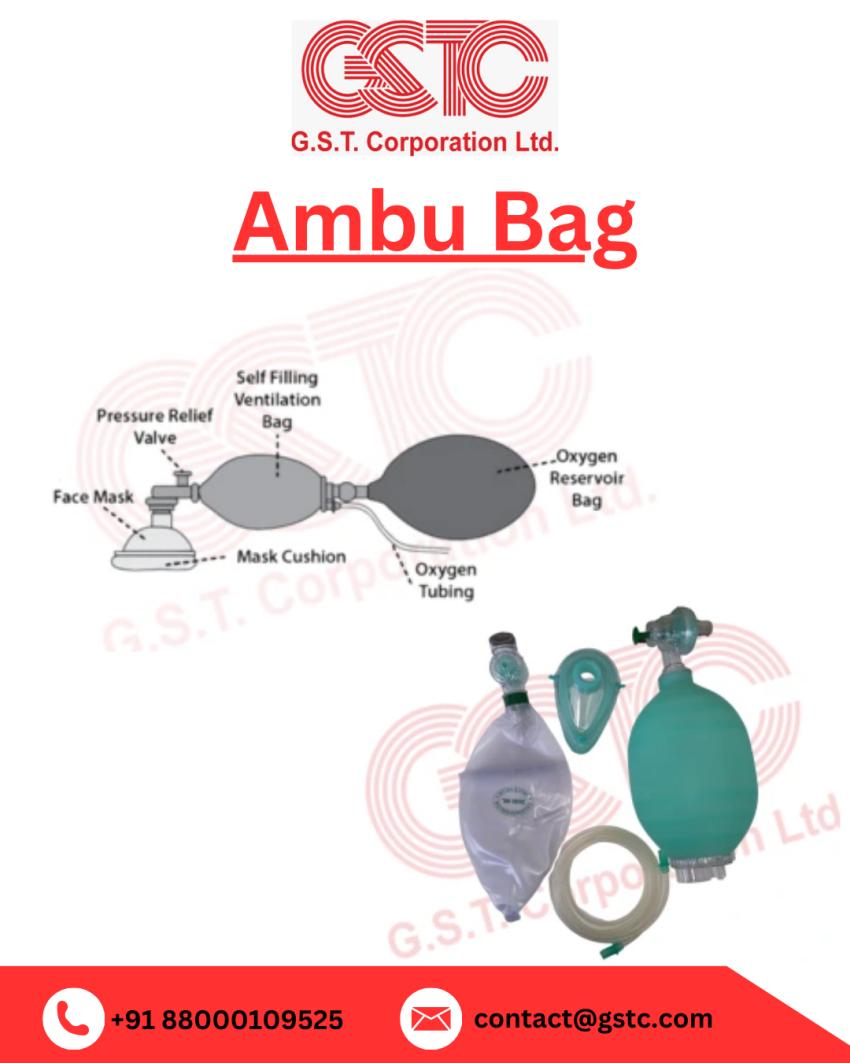
In the event of a medical emergency, time counts in seconds, and the health services have appliances that are effective, reliable, and safe. One such important appliance is the Silicone Resuscitator, otherwise called a Silicone Ambu Bag. It is a life-saving device that plays an important role in the process of manual resuscitation. It helps patients who cannot get adequate breaths on their own.
Features of the Silicone Resuscitator
The Silicone Resuscitator of GST Corporation is manufactured with high precision to render critical care in saving a life. Its most valuable features are:
- Medical-Grade Silicone
It is made from 100% non-toxic, latex-free, clinical-grade silicone, safe for patients of all ages and types.
Provides flexibility and durability for repeated usage.
- Autoclavable & Reusable
It can be sterilized in an autoclave to a maximum temperature of 134°C, making it hygienic and cost-efficient.
Lasts longer than disposable models.
- Available in All Sizes
Adult, Pediatric, and Neonatal sizes are available to match the requirements of different patients.
- Complete Set Included
It comes with an oxygen reservoir bag, oxygen tubing, a face mask, and a carry/storage bag.
- One-way valve Mechanism
This keeps air from coming back, ensuring that the patient gets clean oxygen without any contamination.
- Clear Shell
The expansion of the bag, the movement of air, and the rise of the patient's chest can be seen well for safe and accurate use.
- Ergonomic Design
Security even in pressure handling through a textured grip.
Usage of Silicone Resuscitator
The correct application of the silicone bag is necessary for effective patient management. The following constitutes a simplified version:
Step 1: Prepare the Device
- The face mask should be placed on the patient's valve.
- Connect the oxygen tubing to the oxygen supply if available.
- Attach the oxygen reservoir bag (optional for higher oxygen concentration).
Step 2: Positioning the Patient
- A lay-flat position on your back.
- A slight extension of the head will open the airway (the "head tilt, chin lift" technique).
Step 3: Seal the Mask
- Apply the mask to the nose and mouth of the patient and secure it tightly to prevent any air leaks.
Step 4: Commence Ventilation
- Squeeze the bag smoothly once every 5–6 sec (for adults) or every 3–5 sec for children/infants.
- Watch for chest movement to confirm effective ventilation.
Step 5: Monitor Patient Response
- The movements of the chest, discoloration of the skin, and oxygenation (if monitored) are constantly observed.
- Adjust pressure and rate as necessary according to the patient's age and clinical condition.
Advantages of Silicone Resuscitator
A silicone manual resuscitator boasts a variety of advantages over traditional or disposable alternatives:
- Eco-Friendly & Sustainable
Compared to disposable Ambu bags made from PVC, silicone ones are reusable and reduce the burden of medical waste.
- Economical
The initial expenses are a bit higher, but in the long run, it becomes an economical device.
- High Sterilization Compatibility
That means through repeated exposure to high-heat sterilization, silicone allows for complete disinfection and cleaning in between uses.
- Strong and Reliable
Silicone withstands wear and tear, chemicals, and temperature changes thereof making it very good for prolonged use.
- Patient Safety
Non-toxic, latex-free, and transparent material ensures safety for patients and ease of monitoring for healthcare providers.
- Portable & Lightweight
Includes a carry case, making this item very easy to pack into mobile medical kits, ambulances, or emergency rooms.
Conclusion
The Silicone Resuscitator, more popularly known as a Silicone Ambu Bag, is probably one of the most important pieces of equipment in emergency and respiratory care. It allows only manual ventilation in the worst of conditions; thus, it becomes almost indispensable in hospitals, ambulances, and clinical settings.