It takes approximately 30 minutes - 40 minutes to reach Robben Island from the Nelson Mandela Gateway at the V & A Waterfront (Victoria & Alfred Waterfront), Cape Town. Along with the other private ferries, Robben Island Museum has its own two ferries - Susan Kruger and The Dias. The Susan Kruger boat was named after Jimmy Kruger's wife, a former justice minister who served in the National Party government during apartheid. Between the mainland and Robben Island, these ferries were used to carry employees and political detainees.
Robben Island Ticket Price
Robben Island Museum runs its general tours 4 times a day a week i.e 9AM, 11AM, 1PM, and 3PM. Ticket price varies for South African and Non-South African residents. Currently, ticket prices are - R400 (i.e 1996.40 INR) per South African adult, R210 (i.e 1048.11 INR) per South African child under 18, R600 (i.e 2994.60 INR) per Non-South African adult, and R310 (i.e 1547.21 INR) per Non-South African child under 18. The 9AM trip is the best time to visit to avoid the huge crowds and hot temperatures.
A Portuguese explorer and mariner by the name of Bartolomeu Dias found Robben Island in 1488. It is an oval shaped island that is 3.3 kilometres long and 1.9 kilometres wide, with a total size of 5.08 square kilometres. This island's shore was once populated with a large number of seals. 'Robben' name came from the Dutch word 'seals'. It is located at the entrance of Table Bay which is 6.9 Kilometers from the west of the coast of Bloubergstrand and 11 Kilometers from Cape Town.
It was the year 1652 when the Dutch arrived at the Cape and began to use this Robben Island for the purpose of a port. This was also been used as a grazing station for cattle and sheep. This island is visible from the mainland Cape Town, also known as a leper colony and whaling station but this was more popular for political prisoners. Before the year 1652, many visiting ships to Table Bay chose to land on Robben Island to restock their supplies of fresh water and meat, rather than interacting with the indigenous population on the mainland. As a result, it became a key location for mail exchange, with letters from departing ships being laid beneath an engraved stone for pick up and drop by a returning ship. This kept going after Jan Van Riebeeck arrived at Cape in 1652. He didn't want to halt on the mainland (Cape Town) because he needed to establish a station where ships sailing from Europe to the East Indies could acquire fresh food and water. For hunting, there were lots of penguins, tortoises, and seals. The island's potential for imprisonment did not go unnoticed, and the Dutch began to send their condemned convicts there in approximately 1671. It was only a matter of time until political prisoners and other "miscreants" sent to the Cape from other Dutch possessions received the same treatment. In reality, because they did not agree with Dutch control of their nation, the Dutch authorities deported monarchs, princes, and religious leaders from the East Indies to Robben Island as captives.
Robben Island interesting facts
(1) Former Robben Island jail inmates have become presidents of South Africa.
Some of the inmates who spent time behind the bars on the island have returned to lead the country as presidents. Apart from former President Nelson Mandela who stayed there for eighteen years, former Presidents Jacob Zuma and Kgalema Motlanthe were also detainees who lived there as well.
(2) Robben Island is home to a wide range of bird species.
While visiting the area, you can spot Southern Right Whales, black-crowned night herons, Crowned Cormorants, Cape Fur Seals, a variety of bucks including Eland and Springbok as well as tortoises of various sorts, and a variety of other animals.132 species of birds have been recognized as using the area as their home, which is one of the unique features of the locality.
(3) In the past, mentally ill persons and lepers were also housed there.
Although many people think of Robben as a location where those who have been charged with crimes are imprisoned, there have been other persons also who have been sent there without having committed a crime. People with leprosy and mental disease were also secluded on Robben Island in the nineteenth century. The rationale behind this is that, in addition to being isolated from civilization, the climate was also thought to be healthy for them.
(4) A football league for island inmates used to exist.
Even though people were exiled to the island, it was not all doom and gloom. The reason for this is that the inmates devised a way to keep themselves engaged with an activity. They organized a football league called "Makana Football Association" amongst themselves that exactly followed FIFA's rules. The "Makana" name was inspired by a Xhosa prophet who was imprisoned on the island in the 19th century.
(5) The name of the site of exile comes from the seals of Robben Island.
As previously stated, the Dutch used the Cape as a port as well as a grazing area for their cattle when they arrived. Then, because of the large number of seals that had previously occupied the coasts, the name "Robben" was given. Robben is a Dutch word that means "seal".
(6) On Robben Island, Nelson Mandela planted vegetables.
Nelson Mandela had a garden on the island that he was quite proud of, according to jail guard Christo Brand. Christo claims that "He planted brinjals, tomatoes, onions, and spinach, which the wardens combined with meat for a stew every Friday. Mandela shared his stew with the wardens on a regular basis."
(7) Today, some of the island's inmates work as tour guides.
While the era of incarceration is passed, it's fascinating to note that some of the former inmates now work as tour guides. However, it's important to note that some of these folks are only doing so due to financial difficulties.
Robben Island's population
The island's population is presently around 150 permanent inhabitants, who create a dynamic and well-functioning community. They include staff members from museums, prison tours, the National Ports Authority, lighthouse keepers, the Works Department, and a few veterans. It's a little remote village, yet it's magical. The youngsters are free to stroll to each other's residences and doors are left open. There are roughly 100 dwellings in the settlement, which are placed in broad strands on either side of the main roadway. Every house has dusty lawns and a rain barrel to collect rainwater. There is a local organization, RIVA (Robben Island Village Association) that represents the people, as well as a bi-monthly island magazine called "The Lighthouse".
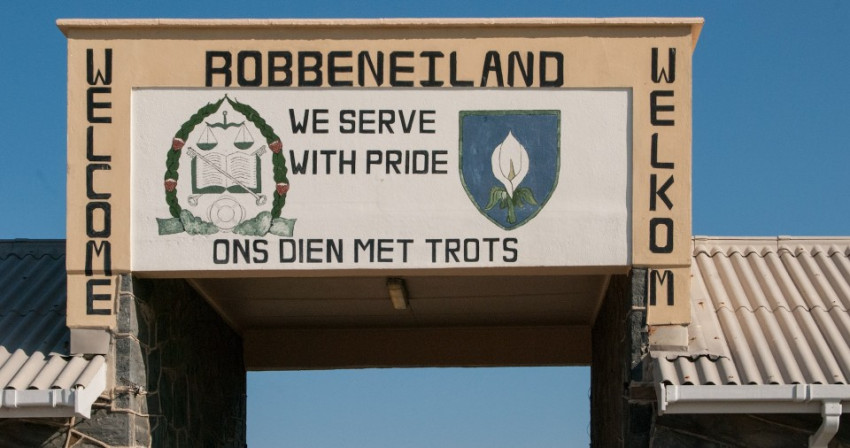
Robben Island stands as both a potent remembrance of the apartheid era and a testament to how the human spirit has prevailed in the face of difficulty, suffering, and injustice in the modern world. The maximum-security jail has been converted into a museum, with daily tours led by ex-political detainees. Each year, thousands of tourists come to the island to learn about South Africa's past and witness Nelson Mandela's tiny cell.
Political activist and lawyer Nelson Mandela was convicted of life imprisonment. He was imprisoned on Robben Island for 18 years, from 1964 to 1982. Mandela was kept in Section B with numerous other political prisoners, each in a separate cell to prevent interaction. One of the first political prisoners to be transferred to Robben Island in 1809 was David Stuurman.
Robben Island was designated as a UNESCO World Heritage Site because the island's structures serve as a reminder of the island's tragic history while also demonstrating the power of the nature of humanity, freedom, and democracy's triumph over oppression.