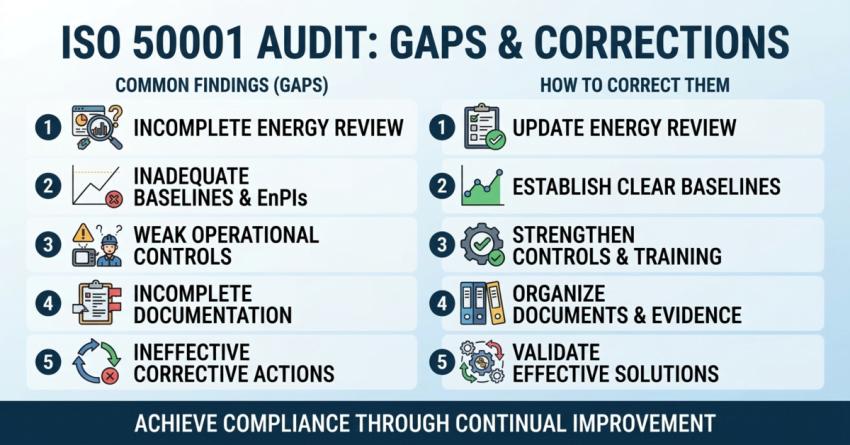
An effective Energy Management System (EnMS) helps organizations control energy consumption, improve efficiency, and achieve better energy performance. However, implementing ISO 50001 does not automatically guarantee successful audit results. Organizations must demonstrate that their energy management processes are implemented, monitored, and continually improved.
Common ISO 50001 audit findings often arise from incomplete documentation, inadequate energy performance monitoring, and ineffective corrective actions. Understanding these issues helps organizations prepare for audits, identify weaknesses, and strengthen their EnMS.
1. Incomplete Energy Review and Significant Energy Uses
An energy review helps organizations understand their energy consumption, identify significant energy uses (SEUs), and determine opportunities for improvement. A common audit finding occurs when energy reviews are outdated, incomplete, or unsupported by reliable data.
How to correct it: Review energy consumption data, identify significant energy uses, and document the criteria used for their evaluation. Update the energy review whenever major changes occur in equipment, facilities, or operational processes. Maintain supporting records to demonstrate how energy improvement opportunities were identified.
2. Missing or Inadequate Energy Baselines and EnPIs
Energy performance indicators (EnPIs) and energy baselines provide a reference for evaluating energy performance. Auditors may identify nonconformities when organizations cannot demonstrate how indicators were established or when energy performance is not compared against appropriate baselines.
How to correct it: Establish suitable EnPIs based on relevant energy consumption and operational conditions. Document the energy baseline, its reference period, and any relevant adjustment methods. Regularly compare current performance against the baseline and retain monitoring results to demonstrate measurable progress.
3. Weak Operational Controls for Energy Management
Operational controls help ensure that significant energy uses are managed effectively. Missing operating instructions, inconsistent equipment maintenance, and inadequate employee awareness can create gaps during an energy management system audit.
How to correct it: Establish clear operating criteria for activities affecting energy performance. Provide employees with appropriate instructions and training. Maintain maintenance schedules, operating records, and monitoring results to demonstrate that energy-related processes are controlled consistently.
4. Incomplete ISO 50001 Documentation and Audit Evidence
A well-implemented EnMS requires documented information that supports planning, operation, monitoring, and evaluation. Missing records, outdated procedures, and inconsistent documentation can make it difficult to demonstrate conformity during an ISO 50001 internal audit.
Organizations can use ISO 50001 documents to support systematic audit preparation, identify missing evidence, and maintain consistent energy management processes. A structured documentation package also helps auditors verify whether documented processes are implemented effectively.
How to correct it: Maintain controlled procedures, energy management plans, monitoring records, and relevant audit evidence. Review documentation periodically and ensure employees use the latest approved versions.
5. Ineffective Corrective Actions and Internal Audits
Another common ISO 50001 audit finding is the recurrence of previously identified issues. This may happen when organizations correct symptoms without investigating the underlying causes or fail to verify whether corrective actions were effective.
How to correct it: Record each nonconformity, investigate its root cause, assign responsibility, and establish realistic completion dates. Verify the effectiveness of corrective actions through follow-up audits or evidence reviews. Internal audits should also evaluate whether the EnMS continues to meet applicable requirements.
Prepare for ISO 50001 Audits with a Structured Checklist
Preventing audit findings requires consistent monitoring, accurate documentation, and effective corrective action management. A comprehensive ISO 50001 checklist helps organizations review energy performance, verify implementation, and identify potential gaps before certification assessments.
Organizations seeking practical documentation support can explore editable ISO 50001 manuals, procedures, SOPs, forms, and audit checklists designed to support EnMS implementation and audit preparation. Selecting appropriate resources can reduce documentation effort while helping teams maintain a systematic approach to energy management and continual improvement.