

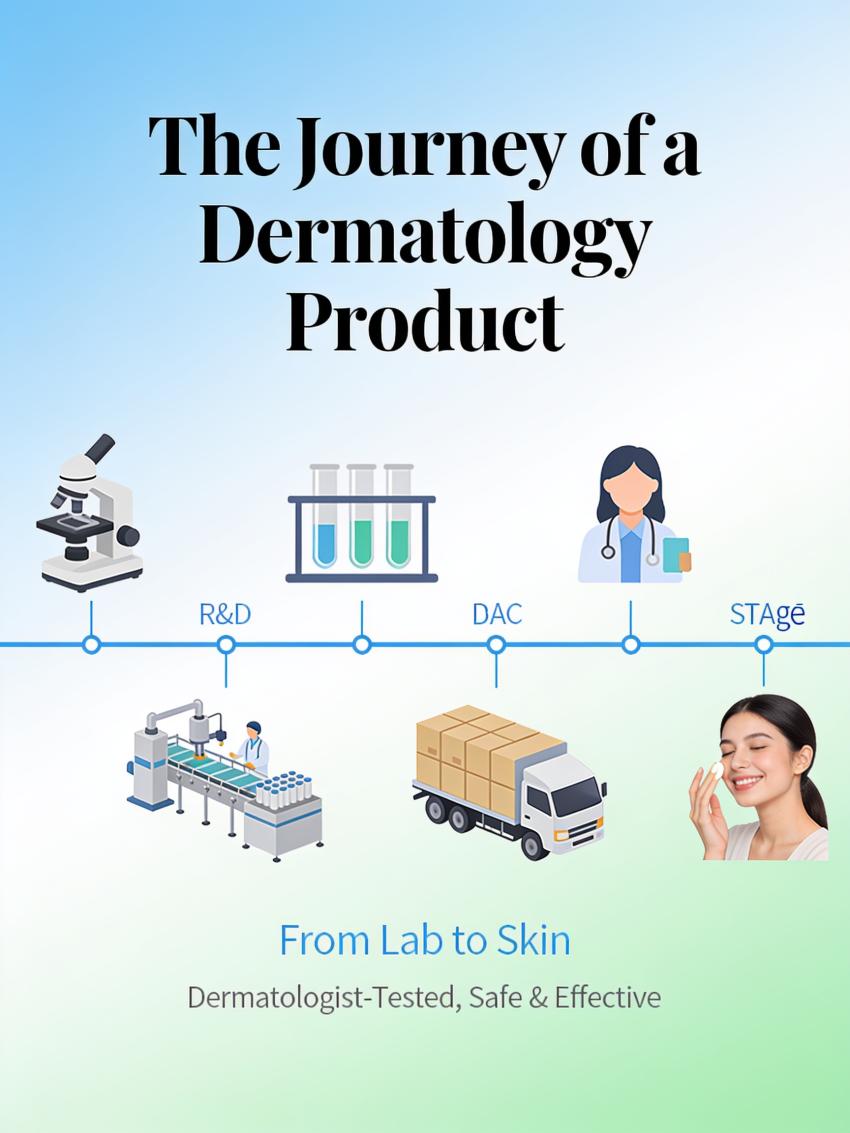
Have you ever picked up a cream or serum and wondered how it was made? Most of us read the label, check the price, and drop it in the basket. But a lot happens before a skin product reaches your hands. It takes years of work, many people, and plenty of testing. Let us walk through the journey step by step.
It starts with a problem
Every good skin product begins with a real problem. Maybe people struggle with dry skin, acne, dark spots, or an itchy scalp. Doctors and researchers listen to what patients complain about. They also look at what is missing in the market. If current products do not work well enough, that gap becomes the idea for something new. This is where Trichology & Therapeutics Products come in, because hair and scalp problems like dandruff and hair fall need careful, targeted care—not guesswork.
Research and choosing ingredients
Once the problem is clear, scientists look for ingredients that can help. Some are old and well known, like niacinamide, salicylic acid, or hyaluronic acid. Others are newer. The team studies how each ingredient works, how much is safe, and how it behaves with other ingredients. Not every ingredient gets along with others. Some lose their strength when mixed. Others can irritate the skin. So this stage takes a lot of patience.
Making the formula
Next comes the formula, which is the recipe of the product. The team decides on the texture, smell, color, and strength. A face cream should feel light. A scalp lotion should not leave hair sticky. Many small samples are made in a lab and tested again and again. Some turn out too thick, some too runny, and some separate after a few days. The team keeps adjusting until the formula feels right and stays stable.
Safety and testing
This is the most important step. A skin product must be safe before anyone uses it. Tests check for irritation, allergies, and how the product holds up in heat and cold over time. Then it is tested on real people under the care of doctors. Dermatologists watch how the skin reacts over several weeks. If the product causes redness or burning, it goes back to the lab. Nobody should rush this part, because your skin is not a place for experiments.
Making it in large amounts
After the formula passes its tests, it moves from small lab batches to large production. This is harder than it sounds. A recipe that works in a small jar may act differently in a huge tank. A reliable Therapeutics Manufacturing brand uses clean rooms, trained staff, and strict checks at every stage. Each batch is tested so the tenth bottle is just as good as the first. Clean tools, steady temperature, and careful records all matter here.
Packaging
Packaging is more than looks. Some ingredients break down when they touch air or light. That is why many serums come in dark bottles or pump bottles. Good packaging keeps the product fresh, makes it easy to use, and keeps germs out. The label should also be clear, with ingredients, directions, and warnings written in plain words.
Rules and approval
Skin products must follow the rules of the country where they are sold. The claims on the label must be honest. A brand cannot say a product treats a problem unless it has proof. Papers are checked, and samples may be reviewed. This takes time, but it protects the buyer.
Reaching doctors and customers
Once approved, the product goes to clinics, pharmacies, and online stores. Many dermatology products are first shared with doctors, who explain them to patients. A doctor can tell you how much to use, how often, and what to expect. Results usually take weeks and not days, and a good doctor will tell you that honestly.
Listening after launch
The journey does not end on the shelf. Brands keep listening to feedback. If many people say a cream feels heavy, the team may improve it. If a new study shows a better ingredient, the formula can be updated. Good brands stay curious and keep learning.
Final thoughts
Next time you open a jar of cream, think about the long road behind it. Scientists, doctors, factory workers, and designers all had a part. A good dermatology product is built on research, honest testing, and care. When you know how much goes into it, it gets easier to choose products you can trust. Read the labels, ask your doctor, and be patient with results. Healthy skin and a healthy scalp take time.
A quick note: no one can promise that a text will never be flagged, since AI detectors are not very reliable. To make it sound even more like you, add a short personal story or your opinion in a couple of places, and reword a few lines in your own words.