Medical device manufacturers need reliable quality records to demonstrate that processes are controlled. Scattered files, incomplete forms, and outdated documents make internal audits difficult. Organizing ISO 13485 forms and records helps auditors find evidence and enables quality teams to identify gaps in their Quality Management System (QMS).
A structured approach to ISO 13485 documentation also helps employees understand their responsibilities and maintain accurate records throughout the product lifecycle.
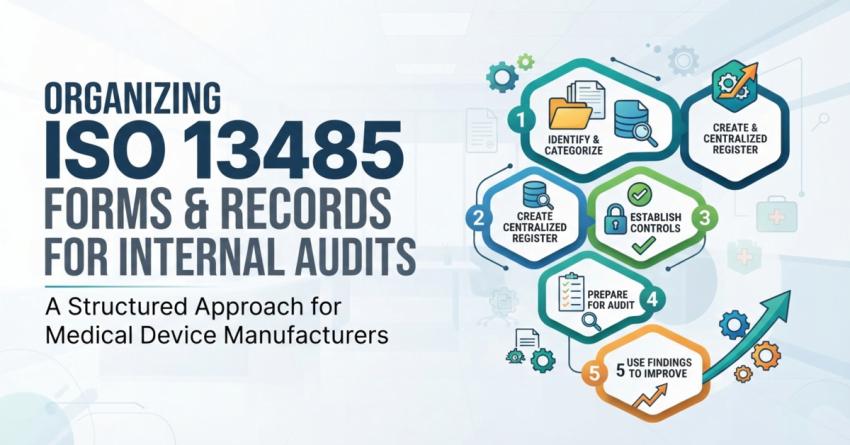
1. Identify and Categorize Quality Records
Review existing records and identify documents supporting medical device processes. Group records into practical categories:
- Design and development records
- Supplier evaluation and purchasing records
- Production and process control records
- Inspection and testing records
- Equipment calibration and maintenance records
- Training and competence records
- Nonconformity and corrective action records
- Internal audit reports and management review records
This classification makes ISO 13485 quality records easier to locate. Assign each category a responsible department or document owner.
2. Create a Centralized Record Register
A practical filing method saves audit time, supports product traceability, and helps teams respond when questions arise. Records should be organized around how work is performed, not simply around the person who created files.
A record register provides an overview of documented information. Include the record name, identification number, responsible department, storage location, retention period, and access requirements.
Use consistent naming conventions and folder structures. Consistent filing reduces duplication and misplaced records.
3. Establish Document and Record Controls
ISO 13485 document control and record management are essential for audit evidence. Establish controls for document approval, revision, distribution, storage, protection, retrieval, retention, and disposal.
Ensure employees use current forms and templates. Remove outdated versions from active use or clearly identify them to prevent unintended application.
Organizations developing or updating their QMS can use ISO 13485 documents to support documentation needs. The editable package includes a Quality Manual, procedures, SOPs, forms, templates, and an internal audit checklist. Customize resources to reflect actual processes.
Completed records should remain legible, identifiable, and retrievable. Access permissions and backups can help protect electronic records from unauthorized changes or accidental loss.
4. Prepare Records for Internal Audits
Internal audit documentation should make it easy to verify whether procedures are followed. Before an audit, review the audit schedule, checklist, previous findings, and relevant records.
Auditors can sample production batches, inspection reports, supplier evaluations, or corrective action records to verify implementation. Ensure samples are traceable to relevant products, processes, or personnel.
Check that records contain dates, approvals, identification details, and evidence of required activities. Investigate missing signatures, incomplete entries, or inconsistent information rather than simply correcting them before the audit.
An ISO 13485 audit checklist supports systematic evaluation and recording of evidence, findings, and follow-up.
5. Use Audit Findings to Improve Record Management
Internal audits should identify opportunities to strengthen documentation, not merely confirm that files exist.
When recurring problems appear, investigate their causes and determine whether improvements are needed in training, record templates, document control, or process responsibilities.
Assign actions to responsible personnel, set completion dates, and verify effectiveness.
Conclusion
Organizing ISO 13485 forms and records makes internal audits more efficient and supports consistent medical device quality management. Well-structured ISO 13485 documents help maintain accurate records, demonstrate process control, and simplify audit preparation. Regularly reviewing documentation and addressing audit findings also helps organizations strengthen their QMS and support continual improvement.