Ruby is admired for its rich red colour, durability and timeless appeal. Yet two rubies that look similar in a display can differ significantly in origin, treatments, quality and value. This is why certification matters when buying a ruby. An independent gemological report helps buyers understand what they are purchasing and make a confident decision rather than relying only on appearance or a seller’s description.
What Is a Certified Ruby Stone?
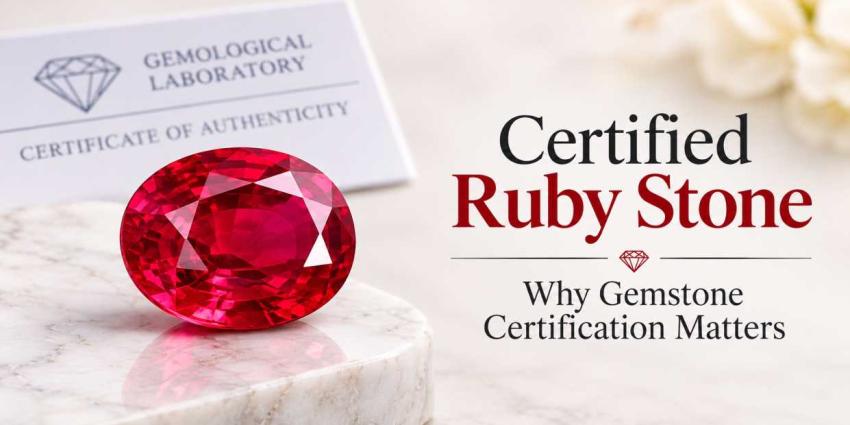
A certified ruby is a gemstone examined by a gemological laboratory that issues a report describing its identifying characteristics. Depending on the laboratory and report type, this may include whether the stone is natural or laboratory-grown, its weight and measurements, colour, and detectable treatments.
Certification is not the same as a guarantee of investment value. Most gemological reports identify and describe a stone; they do not promise a resale price or necessarily assign a quality grade. Buyers should read the report carefully and understand what the laboratory actually confirms.
Why Ruby Certification Matters
1. Confirms whether the ruby is natural
A report can help distinguish a natural ruby from a laboratory-grown ruby or another material sold under a similar name. Natural rubies formed in the earth over geological time, while laboratory-grown rubies are manufactured using processes that recreate ruby’s crystal structure. Both may look attractive, but they are different products and typically have different market values.
2. Reveals treatments
Rubies are commonly heat-treated to improve colour or clarity. Other treatments, including fracture filling or diffusion, may also be used. These treatments can influence durability, appearance and value.
A laboratory report may identify detectable treatment evidence. Knowing this information helps shoppers compare stones fairly and ask appropriate questions. Untreated rubies can be scarce, but untreated does not automatically mean a stone is superior in every other quality factor.
3. Helps assess price and value
The natural ruby price depends on several factors, not certification alone. Colour is particularly important: vivid red hues with attractive saturation are often sought after. Clarity, cut, carat weight, treatment status and sometimes documented geographic origin also influence value.
A report gives buyers useful facts for comparison. For example, a heated ruby and a ruby with evidence of glass filling should not be treated as equivalent simply because their colour and size appear similar. Compare the report details, stone quality and seller’s price before deciding.
4. Supports transparent purchasing
Certification gives buyers documentation to keep with the gemstone and may support communication with a jeweller or insurer. It does not replace an invoice or return policy.
What Should a Ruby Gemstone Report Include?
Before purchasing, review the report for these details:
Identification: Does the laboratory identify the stone as ruby, a variety of corundum?
Natural or laboratory-grown: Is the origin of formation clearly stated?
Weight and measurements: Do the carat weight and dimensions match the gemstone being offered?
Treatment disclosure: Does the report indicate evidence of heating, filling, diffusion or other detectable treatment?
Report number: Can you verify the document through the laboratory’s official report-checking service, if available?
Not every report includes every detail. Some laboratories may offer origin opinions or additional analysis, while others focus on identification. Choose a report that suits the value and intended purchase.
How Certification Influences Natural Ruby Price
Certification can help buyers understand why prices differ, but it does not set a universal rate. Ruby prices can vary widely even among stones with the same weight. A small ruby with exceptional colour and clarity may cost more per carat than a larger stone with dull colour or visible inclusions.
Origin claims can also affect pricing when supported by a credible laboratory opinion and relevant market demand. Nevertheless, a location name alone is not proof of superior quality. Evaluate the ruby itself and its treatment disclosure instead of buying solely on a famous origin claim.
Compare colour, transparency, cut, size, treatment and documentation. Ask for natural-light images and confirm the report matches your stone.
Tips for Buying a Certified Natural Ruby
Choose a recognised gemological laboratory and verify the report independently.
Ask whether the stone is natural and what treatments have been detected.
Request an invoice describing the gemstone and its report details.
Understand the return, exchange and shipping policies before payment.
If you are unsure which gemstone suits your preferences, budget or intended use, a free gemstone recommendation service may help you shortlist options.
Frequently Asked Questions
Is a certified ruby always more expensive?
Not necessarily. Certification costs money and may add confidence, but price primarily reflects the ruby’s quality, treatments, size, market demand and other relevant factors. A report alone does not make a gemstone valuable.
Does a ruby certificate guarantee that the stone is untreated?
No. Read the treatment section carefully. A report may indicate evidence of heat or other treatments, and the scope of testing varies by laboratory and report type.
Can I check a ruby certificate online?
Many laboratories offer report verification through their official websites. Use the report number and follow the laboratory’s verification process rather than relying only on a seller-provided screenshot.
Are natural and laboratory-grown rubies the same?
They share the same mineral composition and crystal structure, but they differ in how they form. Laboratory-grown rubies are created artificially and should be clearly disclosed. Their market pricing generally differs from natural rubies.
What matters most when buying a ruby?
Look at colour, clarity, cut, carat weight, treatment status and documentation. Certification helps confirm important characteristics, while comparing stones and buying from a transparent seller helps you make a well-informed choice.
Conclusion
A ruby’s beauty is only one part of a worthwhile purchase. Certification helps clarify identity, treatments and measurable characteristics, making comparisons more informed and reducing uncertainty. Review the report, verify it where possible, compare quality and price, and choose a seller who answers questions openly. With careful research, you can appreciate the ruby’s colour and character while making a purchase grounded in reliable information.