

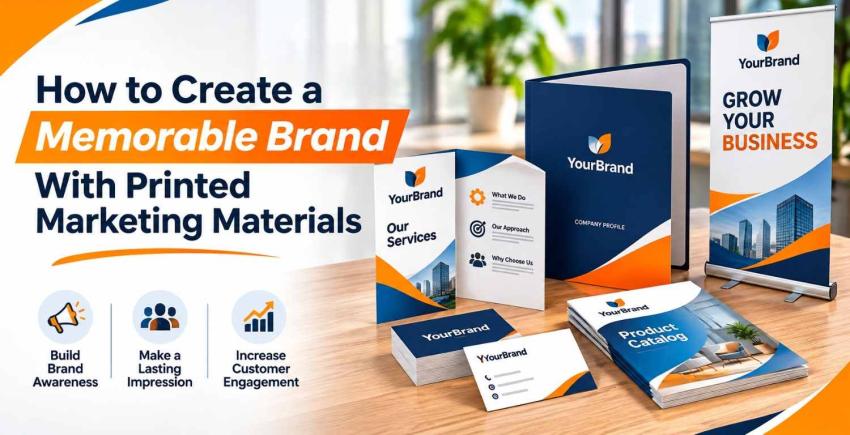
Building a memorable brand takes more than having an attractive logo or a catchy business name. Customers remember brands that communicate clearly, maintain a consistent identity and create positive experiences at every interaction. While digital marketing plays an important role in business promotion, printed marketing materials still offer something valuable: a physical connection with your audience. From business cards and brochures to banners and presentation folders, professionally designed print materials help businesses communicate their message and create a lasting impression.
1. Build a Consistent Brand Identity
Brand consistency is one of the most important factors in making a business recognizable. When customers see the same colors, fonts, logo and design style across different marketing materials, they begin to associate those visual elements with your company.
Printed materials provide an excellent opportunity to maintain this consistency. Whether you are distributing flyers, handing out business cards or sending promotional brochures, every item should reflect your brand personality.
Here are a few ways to maintain a consistent identity:
Use consistent brand colors: Choose a primary and secondary color palette and apply it across all printed materials.
Maintain typography: Use the same font styles for headings, body text and important messages.
Position your logo correctly: Make sure your logo is visible without making the design look crowded.
Follow a common design style: Keep layouts, image styles and graphic elements consistent across different materials.
For example, a company using blue and white as its primary brand colors should follow the same color combination across its brochures, business cards, envelopes and promotional banners.
2. Invest in High-Quality Business Cards
Business cards are often one of the first printed materials customers receive when interacting with a company. Although exchanging contact details may seem like a small activity, a well-designed business card can create a professional first impression.
A good business card should communicate essential information while representing your brand's personality. Avoid filling the card with unnecessary details. Instead, focus on a clean layout that makes important information easy to read.
Consider including:
Company logo and business name.
Contact number and professional email address.
Website URL and business address, if relevant.
Social media handles or a QR code.
A short tagline that communicates what your business offers.
You can also explore different paper finishes, textured stocks and premium printing options to make your cards more distinctive.
Remember, the goal is not simply to distribute contact information. It is to give potential customers something worth keeping.
3. Use Brochures to Communicate Your Brand Story
A memorable brand has a story that customers can understand and connect with. Brochures are useful for communicating that story because they provide enough space to explain your products, services, company values and unique selling points.
Unlike a short advertisement, a brochure allows businesses to share more detailed information in an organized format. It can introduce your company to new customers while helping existing customers understand your offerings.
To make your brochures more effective:
Start with an interesting headline that captures attention.
Introduce your business and explain what makes it different.
Use high-quality photographs that represent your products or services.
Highlight important benefits instead of listing too many features.
Include clear contact information and a call to action.
A well-planned brochure can be used at trade shows, business meetings, networking events, retail locations and customer visits.
The most important thing is to make the content useful. Customers should be able to understand what you offer and why they should choose your business after reading it.
4. Make Business Presentations More Professional With Presentation Folders
First impressions matter, particularly when meeting potential clients, business partners or corporate buyers. The way you present your documents can influence how customers perceive your company's professionalism.
This is where presentation folders become valuable. They help organize important business documents while providing an additional branding opportunity.
Businesses can use folders to carry proposals, product catalogs, price lists, company profiles, contracts and promotional inserts. Instead of handing over loose papers, you can provide everything in a professionally designed package.
Presentation folder printing in Los Angeles is a useful option for businesses looking to create customized folders for client meetings, corporate presentations, trade shows and networking events.
When designing presentation folders, consider the following elements:
Professional appearance: Use your company logo, brand colors and a clean layout.
Practical design: Include pockets to hold documents, brochures and business cards.
Useful information: Add your website, contact details or a short brand message.
Quality materials: Choose durable paper stocks and suitable finishes for a polished look.
A thoughtfully designed folder does more than organize paperwork. It helps create a consistent experience and makes your business appear prepared and professional.
5. Increase Brand Visibility With Promotional Banners
Brand recognition depends partly on how frequently people come across your business. Printed banners are an effective way to increase visibility in physical locations where customers gather, shop, attend events or travel.
Whether you are promoting a new product, announcing a special offer or advertising an upcoming event, banners can communicate your message to a large audience.
Businesses can use banners in several ways:
Storefront promotions: Display important offers, new arrivals or seasonal discounts outside retail locations.
Trade shows and exhibitions: Use branded banners to make your booth easier to recognize.
Corporate events: Display company branding during conferences, seminars and networking events.
Product launches: Highlight new products and promotional messages in high-traffic areas.
For businesses targeting local customers, Banner Printing in Los Angeles can help create customized promotional displays for storefronts, exhibitions, outdoor advertising and business events.
When designing banners, remember that people may only have a few seconds to notice your message. Use readable fonts, attractive visuals, limited text and a clear call to action. Select suitable materials based on whether the banner will be displayed indoors or outdoors.
6. Choose Printed Materials That Match Your Target Audience
Not every marketing material works equally well for every business. A company selling professional services may benefit more from corporate brochures and presentation folders, while a retail store might get better results from promotional flyers, posters and banners.
Understanding your target audience helps you choose the right combination of print products.
Consider these factors before selecting your materials:
Customer preferences: Think about what information your customers want and how they prefer to receive it.
Business type: Select materials that naturally support your products or services.
Marketing objectives: Decide whether you want to increase awareness, generate inquiries, promote an offer or build customer relationships.
Distribution method: Consider whether materials will be mailed, handed out, displayed or included in product packaging.
For example, a real estate company might use property brochures, business cards, presentation folders and outdoor banners. A restaurant may prefer menus, takeaway flyers, promotional postcards and window graphics.
Choosing materials based on customer needs makes your marketing more relevant and prevents unnecessary printing expenses.
7. Focus on Quality Printing and Finishing
Even the most creative design can lose its impact if the final printed product looks unprofessional. Poor image quality, faded colors, incorrect sizing and weak paper materials can negatively affect how customers perceive your brand.
Print quality should be treated as an important part of your overall branding strategy.
Before approving a print order, pay attention to:
Paper quality: Select paper thickness and texture according to the purpose of the material.
Color accuracy: Make sure printed colors match your brand guidelines as closely as possible.
Image resolution: Use high-resolution images to avoid blurry photographs and graphics.
Finishing options: Consider matte, glossy or other suitable finishes to improve the final appearance.
Proofreading: Check spelling, contact details, website links and other important information before printing.
It is also a good idea to review a sample or digital proof before approving a large quantity. Small mistakes can become expensive when they are repeated across hundreds or thousands of printed items.
8. Combine Print Marketing With Digital Marketing
Printed marketing materials become even more useful when they connect customers with your digital platforms. Instead of treating print and online marketing as separate activities, businesses can use both channels to create a more connected customer experience.
For instance, you can add QR codes to brochures, business cards, posters and flyers. Customers can scan these codes to visit your website, explore product catalogs, view promotional offers or contact your sales team.
Other effective ideas include:
Add social media handles to printed promotional materials.
Include website links on brochures and presentation folders.
Use QR codes to direct customers to landing pages.
Promote special online offers through printed advertisements.
Encourage customers to follow your business for updates and new products.
This approach helps businesses measure customer engagement while making it easier for people to move from offline advertising to online interactions.
Creating a memorable brand requires consistency, creativity and attention to detail. Printed marketing materials give businesses an opportunity to communicate their identity in a practical and lasting way. From professionally designed business cards and informative brochures to customized folders and promotional banners, every printed item can contribute to how customers recognize and remember your company. By focusing on quality, choosing materials that suit your audience and maintaining a consistent brand message, you can build stronger customer relationships and create a brand that stands out in a competitive market.