Listing photos showcase the kitchen and the yard, yet a handcrafted bar is the feature buyers remember long after the open house ends. Today’s buyers want homes that feel finished and ready for entertaining, and custom home bars designs signal both at a glance, without a single word in the listing. Since 1999, Bars and Booths has built every custom bar by hand, using fine materials and a trained retro team’s eye for detail. This guide covers the design choices that quietly add value, the signature bars worth considering, and real homes where color and layout made all the difference to the final look.
The Feature Buyers Remember After the Open House
The lifestyle that a bar brings to any house is actually more impactful than any technical specs can convey: whether it’s about throwing parties, winding down after the workday, or weekend gatherings that flow into the night. A custom bar looks as though it has been built into the house, which makes it look elegant.
Design Choices That Quietly Add Real Value
Buyers rarely say it aloud, but they notice craftsmanship. These four choices make the biggest difference.
Design Choice What It Adds Buyer Impression
Built-in cohesion Matches existing trim and floors Permanent, high-end
Wet or dry setup Sink for mixing, or smart storage Practical, ready to use
Durable finishes Sealed stone, treated wood, metallic accents Holds up to spills
Integrated LED lighting Warm glow on glassware and shelves Inviting, no harsh glare
Layout decides the choice: a dry bar fits tight spaces, while a wet bar rewards frequent hosts.
Bars and Booths Custom Home Bars Designs Made to Impress Buyers
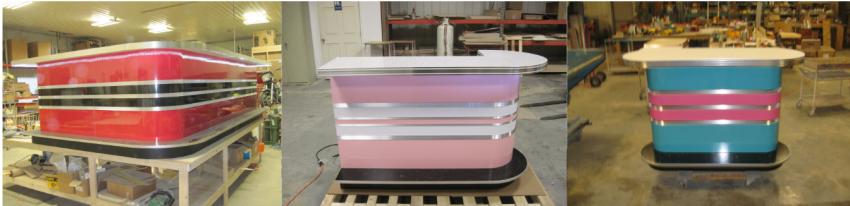
Every Bars and Booths bar starts with one of two designs, then grows into something entirely personal, shaped by the owner’s space, colors, and taste.
Two Signature Starting Points
● Roberta’s Bar (curved): Free-standing, or paired with a checkered floor for a classic retro feel.
● Bomber Bar (straight): Available with a drop-down work surface or a modified L-shape.
Retro Roots, Flexible Style
● Handmade from the finest materials.
● Built for traditional, contemporary, and modern homes as well as retro ones.
● Customizable to any space, so imagination is the only limit.
Proof From Real Homes
Finished projects show how far single custom home bars designs can travel from the showroom floor.
● Peter’s “Office” (Orlando, FL): Capri Blue with Oyster accents created a beachy, personal look.
● History Museum on the Square (Springfield, MO): A complete 1950s setup that holds up in a public space.
● Takeaway: Color and layout choices make a bar feel tailored, and buyers notice.
Conclusion
Cohesive construction, a practical setup, hardwearing finishes and warm lighting all subtly elevate a property’s allure, and buyers feel the impact the moment they step inside. Well-conceived custom home bars designs morph a regular room into the room where people imagine themselves having such a good time.
Bars and Booths crafts each bar individually, ranging from curved and straight to completely custom designs. All projects start with a discussion and one of our experienced retro experts will get back to you immediately. Stop by our showroom in historic Charles Town, WV, only one hour from Washington, D.C. and Baltimore, or give us a call 1-833-888-2748 or email customerservice@barsandbooths.com for pricing and design assistance.
FAQs:
1. What is the average price of a custom bar?
Prices vary greatly depending on size, materials and features. The starting price for a simple custom bar is in the low thousands, but a complete wet bar with all appliances can easily run over $30,000. Hand-crafted retro bars are priced one by one.
2. Does a home bar really increase a property’s resale value?
Usually modestly. Buyers react to nicely crafted, tasteful bars that complement the home, but resale seldom fetches full replacement value. It’s all about quality and location and how well the bar fits buyer lifestyles.
3. How much space should I allow for a home bar?
A small bar will fill around 6 by 4 feet; a full wet bar with seating around 8 by 6 feet. You will need room for stools and aisle space as well.
4. What is the standard height for a home bar counter?
In the old days, the usual bar height was 42" with 28" to 30" stools. Counter-height is about 36" with 24" to 26" stools, ideal for the kitchen and casual areas