

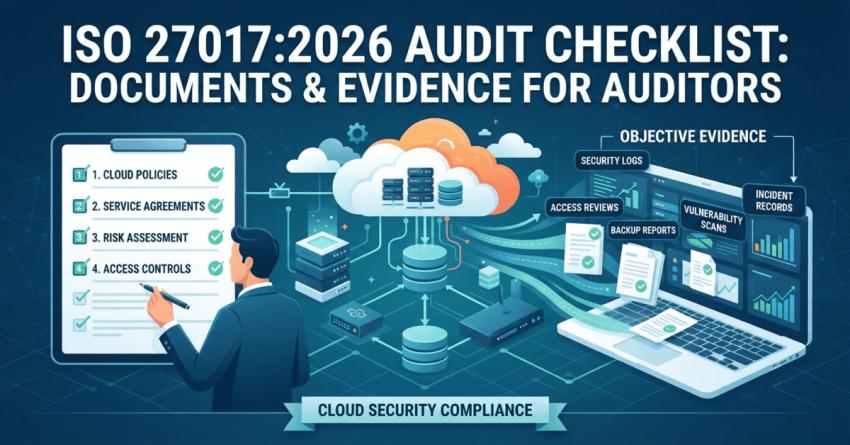
Auditing a cloud information security management system requires reviewing documentation, verifying security controls, and collecting objective evidence. The ISO/IEC 27017:2026 standard provides cloud-specific security guidance for cloud service providers and cloud service customers. Organizations should use an ISO 27017:2026 audit checklist to evaluate cloud security practices, identify control gaps, and verify effective implementation.
Why Is an ISO 27017:2026 Audit Checklist Important?
Cloud environments involve security considerations such as data protection, access management, virtualization, shared responsibilities, and operational monitoring. Organizations should establish appropriate controls to manage these risks.
An ISO 27017 audit checklist helps internal auditors and information security professionals evaluate cloud security controls, review service arrangements, and identify potential nonconformities. It also provides a structured approach to collecting audit evidence and assessing security practices.
Essential Documents to Verify During an ISO 27017:2026 Audit
Auditors should examine relevant documentation to understand how cloud security requirements and responsibilities are managed. The following records are particularly important:
1. Cloud Information Security Policies
Organizations should maintain policies addressing cloud service usage, data protection, access management, and security responsibilities. Auditors should verify their approval, communication, and periodic review.
2. Cloud Service Agreements and Responsibility Records
Cloud service agreements should define provider and customer security responsibilities. Auditors should examine contractual requirements, service-level agreements, data handling responsibilities, and incident reporting arrangements.
3. Risk Assessment and Treatment Records
Cloud security risk assessments should identify potential threats, vulnerabilities, and information security risks. Auditors should verify documented risk treatment plans, assigned responsibilities, and monitoring arrangements.
4. Access Control and Identity Management Records
Access control procedures, user authorization records, privileged access reviews, and authentication policies should be checked to establish whether cloud resources are restricted to authorized users.
Important Audit Evidence and Cloud Security Controls
An effective cloud security audit checklist should address more than document availability. Auditors should verify whether documented controls are operating as intended.
For example, security monitoring logs, access review reports, vulnerability assessment results, backup verification records, and incident investigation reports can provide valuable audit evidence.
Organizations should also maintain records covering virtualization security, cloud data handling, operational responsibilities, and incident response activities. These areas help auditors evaluate cloud security controls and determine whether identified risks are adequately managed.
To organize these activities, auditors and information security professionals should maintain appropriate ISO 27017:2026 documents, including editable security policies, procedures, supporting formats, and audit questions. Well-structured documentation can simplify audit preparation, support consistent control verification, and help organizations maintain evidence of their cloud security practices.
How to Conduct an Effective ISO 27017 Internal Audit
Organizations should follow a structured audit process to achieve meaningful results:
- Define the audit scope: Identify cloud services, operational activities, and applicable security responsibilities.
- Prepare audit questions: Develop relevant ISO 27017 audit questions covering cloud-specific security controls.
- Review documented information: Examine policies, procedures, agreements, and supporting records.
- Collect objective evidence: Conduct interviews, observe activities, and verify implementation records.
- Identify audit findings: Record nonconformities, control weaknesses, and improvement opportunities.
- Verify corrective actions: Review completed actions and confirm their effectiveness.
Strengthen Cloud Security Documentation and Audit Preparation
Maintaining organized ISO 27017 documentation helps organizations demonstrate how cloud security responsibilities and controls are managed. Editable manuals, procedures, checklists, and supporting formats can reduce preparation time and support consistent internal audits.
Organizations should regularly review cloud security arrangements, update documented information, and ensure employees understand their responsibilities. Combining an ISO 27017:2026 audit checklist with reliable audit evidence can strengthen information security management, improve compliance evaluation, and support continual improvement.