

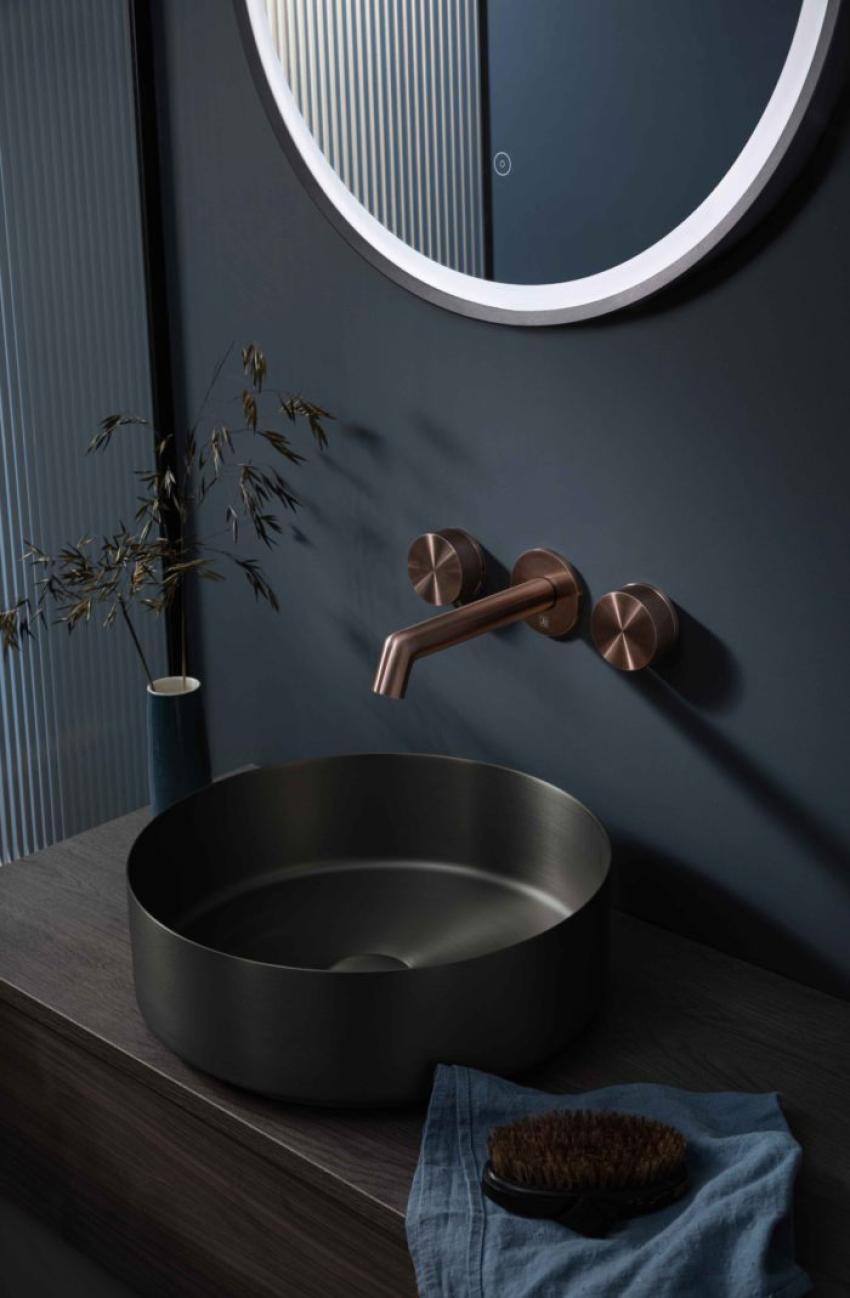
It’s easy to fall for a tap in a showroom, then find out later that it needs a concealed valve, pipework in the floor or more water pressure than your house has. By then, the walls are often tiled, and changing course costs money.
Luxury bath taps work best when the practical details are settled first. To choose the right ones, start with your bath and your water system. Then pick a style (freestanding, wall-mounted or deck-mounted), a solid brass build and a finish that suits the room. This guide takes you through each step in that order.
What Makes Bath Taps “Luxury”?
Price alone doesn’t make a tap luxury. A high price can simply reflect a label. What matters is how the tap is built and how it feels after years of daily use.
Look for these four things:
Solid brass body. It is heavier, resists corrosion and copes well with hard water.
Ceramic disc cartridges. They give smooth, drip-free operation for much longer than rubber washers.
A durable finish. PVD coatings resist scratches and tarnishing better than standard plating.
Precise machining. Handles turn evenly, joints are tight, and there are no visible seams.
Designer bath taps sit within this category but add a design-led element, such as shapes by named product designers, unusual proportions or finishes you rarely find on standard ranges. Good design and good engineering don’t always come together, so check both before you buy.
Which Type of Bath Tap Suits Your Bathroom?
Your bath decides this more than personal taste does. Four types cover most bathrooms.
1. Freestanding Taps
Best for: Freestanding baths with space around them.
Installation: Requires floor pipework, which should be planned before flooring installation.
2. Wall-Mounted Taps
Best for: Compact bathrooms and a clean, minimal look.
Installation: Requires a concealed valve and sufficient wall depth.
3. Deck-Mounted Taps
Best for: Baths with a tap ledge or pre-drilled holes.
Installation: Easy to fit, but the number of holes must match the tap.
4. Bath/Shower Mixer Taps
Best for: Baths used for both bathing and showering.
Installation: Requires a diverter, handset, and adequate water pressure.
Freestanding fillers make a strong focal point, but they only work if the bath sits exactly where the floor pipes come up. Wall-mounted taps leave the bath rim clear, which makes cleaning easier and suits narrow baths. Deck-mounted taps are the most straightforward option and suit traditional rooms. A bath/shower mixer is the practical choice when there is no separate shower.
Will Luxury Bath Taps Work with Your Plumbing?
They will only perform properly if they suit your water pressure and your pipework. This is the step people skip most often, and it is the one that causes the most disappointment after installation.
Water pressure. Many high-end taps are designed for high-pressure systems, such as combi boilers and unvented cylinders. A gravity-fed system gives low pressure, so you will need taps rated for it, or a pump. Check the minimum operating pressure on the specification sheet.
Tap holes. Check whether your bath has pre-drilled holes, and how many. Some baths have none, which suits wall-mounted or freestanding taps.
Flow rate. A wide-spout filler on weak pressure fills slowly. A 150-litre bath takes about ten minutes to fill at a flow rate of 15 litres per minute, so compare flow rates before choosing.
Concealed valves. Wall-mounted taps need a valve body fitted inside the wall, and this must be done before tiling.
Water regulations approval. Check that the tap has WRAS approval. Reputable manufacturers clearly display this information.
Which Finish Should You Choose?
Finish affects how the tap looks on day one and how much effort it takes to keep looking that way.
Chrome: easy to clean, hard-wearing and unlikely to date. It does show fingerprints and watermarks.
Brushed brass: warm in tone and good at hiding marks. Choose a PVD finish, so it ages evenly.
Matt black: strong contrast against light tiles, but it shows limescale quickly in hard water areas.
Brushed nickel: a soft grey that is forgiving of daily use and works with most colour schemes.
Bronze: darker and warmer; suits traditional and industrial-style rooms.
Whatever you choose, wipe taps dry after use and avoid abrasive cleaners. They strip finishes faster than limescale does.
How Do You Match Designer Taps to the Rest of the Bathroom?
A designer tap works best when it complements the overall bathroom scheme.
Match finishes across the room. Taps, shower fittings, towel rails and accessories should share the same finish. Small differences in tone are obvious when the pieces sit side by side.
Keep one shape language. Square-edged taps next to a heavily rounded bath tend to look accidental. Pick either soft curves or crisp lines and stay consistent.
Let one element lead. A bold finish on the taps works well against neutral tiles and white sanitaryware. If the taps are the statement, keep everything around them quiet.
Common Mistakes When Choosing Bath Taps
Ordering taps after the bath is installed, when pipework is already fixed
Ignoring water pressure until the taps are fitted
Choosing on looks alone, without checking that the spout reach lands water in the bath rather than on the rim
Mixing too many different finishes
Skipping the installation specification, including valve depth and hole sizes
Most of these are avoidable by deciding on the taps at the time of the bath, before any first-fix plumbing work begins.
Conclusion
Choosing luxury bath taps comes down to three decisions made in the right order: the bath and plumbing first, then the tap type, then the finish. Settle these early, and the rest of the bathroom falls into place around them.