

You are past your teens; your skin should be calm by now, and yet pimples keep showing up around your chin and jawline. They come in cycles, often right before your period, and they seem to ignore every product you try. If this sounds familiar, hormones may be behind it.
Let us look at what hormonal acne is, why it appears, and what you can do about it.
What Is Hormonal Acne?
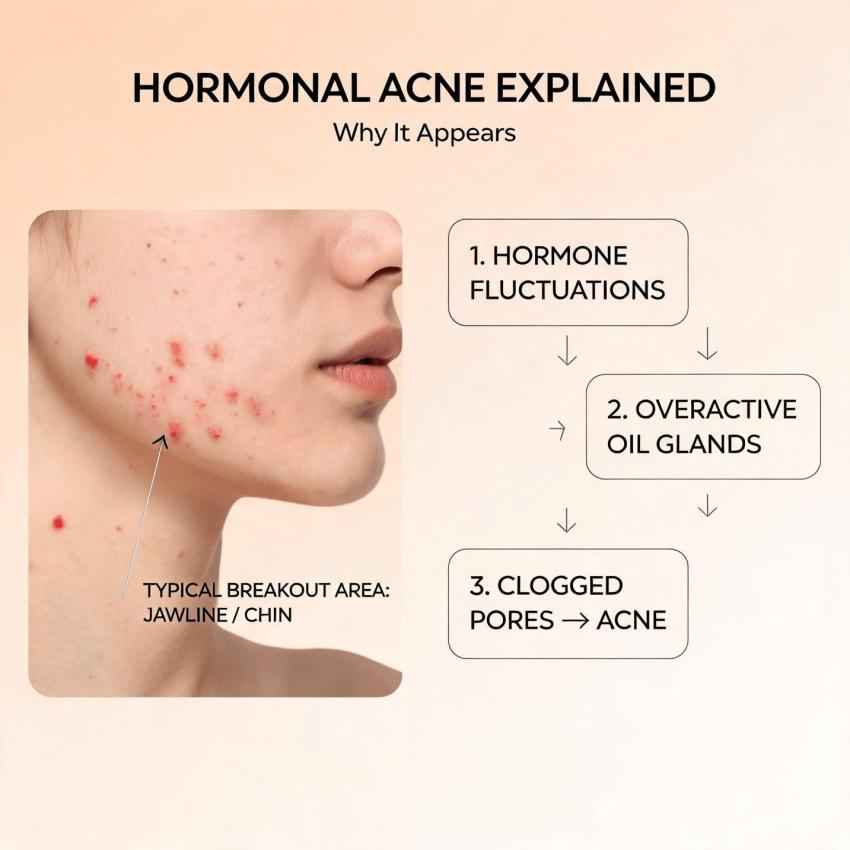
Hormonal acne is acne that is linked to changes in your hormones. It is most common in teens and women, but men can get it too. It often shows up as deep, tender bumps under the skin rather than small surface pimples. Many people notice it on the lower face, including the chin, jawline, and sides of the cheeks.
Why Hormones Cause Pimples
Your skin has tiny oil glands. Hormones called androgens tell these glands how much oil to make. When androgen levels go up, or when the skin becomes more sensitive to them, the glands make extra oil. This oil mixes with dead skin cells and blocks the pores. Bacteria then grow inside the blocked pore, and the skin becomes red, swollen, and sore.
This is why hormonal acne often feels deep and painful. The trouble starts below the surface, so it can take a long time to heal.
Common Triggers
Hormone levels change throughout life, and many things can set off a breakout. The days before a period are a common trigger, since hormone levels shift quickly. Puberty is another big trigger. Pregnancy, stopping or starting birth control, and conditions like PCOS can also play a part.
Stress matters too. When you are stressed, your body makes more cortisol, which can push the oil glands to work harder. Poor sleep, a lot of sugary food, and some medicines may also make things worse in some people.
Adult Acne and What Causes It
Many people are surprised to see pimples in their 20s, 30s, or even 40s. Adult acne and what causes it is a topic that confuses a lot of people, because the reasons are often a mix. Hormones are a big part, but stress, skin care habits, heavy makeup, and a damaged skin barrier all add to the problem.
Adult acne also tends to be more stubborn and leaves marks for longer. That is why steady, gentle care works better than strong treatments that dry out the skin.
How to Spot Hormonal Acne
A few clues can help. The pimples mostly appear on the lower face and jawline. They are deep, sore, and may not come to a head. They often show up in a pattern, such as the week before your period. And they keep returning in the same spots, even when your skincare routine is good.
If your breakouts look more like small, itchy, uniform bumps on the forehead or chest, it may be something else, like fungal acne. This is caused by yeast on the skin, not by hormones or typical acne bacteria, and it needs a different kind of care. In some cases, doctors may suggest antifungal treatment for it. Companies that work as antifungal product manufacturing brands make such medicines for this kind of problem, but you should not start one on your own without proper advice.
What Helps Hormonal Acne
A simple skin routine is the base. Wash your face twice a day with a gentle cleanser and lukewarm water. Use a light moisturizer, even if your skin feels oily, and wear sunscreen every morning. Skipping these basics can make breakouts and marks worse.
Helpful ingredients include salicylic acid, which clears pores, and niacinamide, which balances oil. Azelaic acid can calm redness and help fade marks. Retinoids help skin renew itself and keep pores clear, but they should be started slowly, and they are not safe during pregnancy. Always add one new ingredient at a time and wait about four to six weeks to judge it.
Choosing the Right Products
With so many creams and gels on the market, picking one can feel confusing. A simple comparison of derma products can help. Look at the active ingredient and its strength, check whether it suits your skin type, and read what the label says about who should avoid it. Gel formulas tend to suit oily skin, while creams suit drier skin. Also check for fragrance or heavy oils, which can irritate or clog pores.
Doctors often tailor a plan to the person, so what works for a friend may not work for you.
When to See a Skin Doctor
Over-the-counter care is not always enough for hormonal acne. If your pimples are deep, painful, leave scars, or do not improve after two to three months, it is time to see a skin doctor. They may suggest treatments that work on the hormonal cause, such as prescription creams, certain tablets, or hormone-related options, depending on your health.
If you have irregular periods, hair growth in unusual places, or sudden weight changes along with acne, tell your doctor. These can be signs of conditions like PCOS that need proper care.
Habits That Support Your Skin
Sleep seven to eight hours, since lack of rest raises stress hormones. Eat plenty of fruits, vegetables, and whole grains, and notice whether sugary or very oily foods make your skin worse. Find simple ways to relax, like walking, stretching, or quiet time. Change your pillowcase weekly and keep your hands off your face.
Never pick or squeeze deep pimples. It pushes inflammation deeper and often leaves dark marks or scars that last far longer than the pimple itself.
Be Patient
Hormonal acne does not clear in a week. Skin needs time to settle, and most plans take two to three months to show clear results. Stick to a simple routine, avoid switching products too often, and keep track of how your skin changes through the month.
Final Thoughts
Hormonal acne is common, and it is not your fault. It comes from changes inside the body, and that is why harsh scrubbing or over-washing never fixes it. Keep your routine gentle, use a few well-chosen ingredients, take care of your sleep and stress, and see a skin doctor if it keeps coming back. With steady care and the right advice, your skin can become calmer and clearer over time.