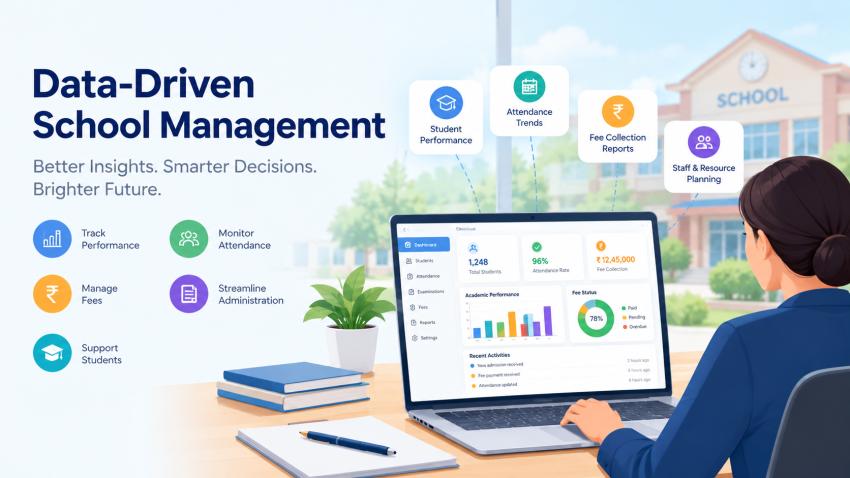
Schools generate valuable information every day, including student attendance, examination results, fee payments, admissions, staff performance, and classroom activities. However, when this information is scattered across spreadsheets, registers, and separate software systems, school leaders may struggle to turn it into meaningful decisions.
Data-driven school management helps schools organize operational and academic information, identify patterns, monitor progress, and make decisions based on reliable records rather than assumptions. With the right digital tools, principals and administrators can understand what is happening across their institutions and respond to challenges more effectively.
A modern School ERP system can bring important school operations together, making information easier to access and analyze. This article explains how schools can use data to strengthen administration, support students, and plan for long-term growth.
What Is Data-Driven School Management?
Data-driven school management is the practice of using accurate, organized information to guide administrative and academic decisions. Instead of relying entirely on manual reports or individual observations, school leaders review relevant data to understand performance, identify gaps, and determine appropriate actions.
For example, attendance records can help identify recurring absenteeism, examination results can highlight learning difficulties, and fee reports can help administrators follow up on outstanding payments.
A centralized School Management Software solution can connect these activities and help authorized users access the information relevant to their responsibilities.
Why Schools Need a Data-Driven Approach
Traditional administrative methods can make it difficult to obtain a complete view of school performance. Information may be stored in different files, reports may take time to prepare, and staff members may spend hours reconciling records.
A data-driven approach addresses these challenges in several ways.
1. Faster and More Informed Decisions
School leaders regularly make decisions about staffing, academic schedules, student support, resource allocation, and school operations. Having reliable information available makes it easier to evaluate different options.
For instance, attendance trends can help administrators identify classes that need additional follow-up, while examination reports can show which subjects require academic attention.
With centralized reporting, management teams can spend less time collecting information and more time deciding what action to take.
2. Better Student Performance Monitoring
Academic performance involves more than examination marks. Attendance, assignment completion, subject-wise progress, and assessment trends can all provide useful context about a student's learning journey.
Schools can use a Student Performance Management System to organize assessment information and identify areas where additional support may be needed.
Teachers can review individual progress, discuss learning gaps with parents, and plan suitable academic interventions. These insights should support professional judgment rather than replace teachers' understanding of individual students.
3. Improved Attendance Management
Frequent absenteeism can affect classroom participation and academic continuity. However, identifying attendance concerns manually across multiple registers can be difficult.
A Student Attendance Management System helps schools maintain attendance records and review patterns across classes, students, and reporting periods.
Administrators can use this information to identify repeated absences, initiate timely communication with parents, and coordinate appropriate follow-up.
The objective is not simply to record attendance but to use the information to support student participation and engagement.
4. More Effective Fee and Financial Management
Financial visibility is essential for sustainable school operations. Administrators need to understand fee collection, outstanding balances, concessions, and payment trends to manage resources responsibly.
School Fees Management Software can help organize fee records, track payment status, and generate useful financial reports.
For example, a pending-fee report can help the accounts team prioritize follow-ups, while collection summaries can support budgeting and financial planning.
Accurate financial information also helps reduce confusion between departments and makes routine reporting more systematic.
5. Better Resource and Staff Planning
Schools must coordinate classrooms, teachers, timetables, learning materials, transport, and other resources. Decisions made without consolidated information may lead to scheduling conflicts or inefficient resource utilization.
A connected School ERP Software platform can help schools manage important operational information in one system.
Administrators can review staff schedules, monitor workload distribution, organize institutional records, and identify areas where processes may need adjustment. The specific insights available depend on the modules implemented and the quality of the data maintained.
Key Data Every School Should Monitor
Schools do not need to measure everything at once. The most useful indicators are those that connect directly to institutional goals and support clear action.
Here are six practical categories to consider:
1. Academic performance: Examination results, subject-wise averages, assessment trends, and students requiring additional academic support.
2. Attendance: Daily attendance, recurring absences, class-wise attendance patterns, and follow-up status.
3. Admissions: Enquiry volume, enquiry-to-admission conversion, application status, and pending follow-ups.
4. Fee collection: Total collections, outstanding fees, payment trends, concessions, and pending transactions.
5. Staff and operations: Attendance, timetable allocation, leave records, workload distribution, and operational requests.
6. Parent communication: Circular delivery, communication records, unresolved queries, and follow-up requirements where the system supports such tracking.
Schools should select indicators that are relevant to their size, policies, and priorities instead of creating reports that are rarely used.
How to Implement Data-Driven School Management
Adopting a data-driven approach requires more than installing software. Schools need consistent processes, clear responsibilities, and a plan for turning information into action.
Step 1: Define Clear Institutional Goals
Start by identifying the problems the school wants to address. These might include improving attendance follow-up, reducing delays in fee reporting, monitoring academic progress, or making admissions more organized.
Clear goals help determine which information needs to be collected and reviewed.
Step 2: Centralize School Information
Bring relevant records into a structured system instead of maintaining disconnected spreadsheets and registers. A centralized platform can help authorized staff access consistent information across departments.
Review existing records before migration and correct duplicate, incomplete, or outdated entries wherever possible.
Step 3: Select the Right Software Modules
Choose technology according to actual school requirements. Core capabilities may include student information management, attendance, examinations, fee management, staff administration, communication, and reporting.
Vidyalaya provides an integrated School ERP solution designed to support multiple academic and administrative activities through connected modules.
Schools should evaluate workflows, reporting requirements, access controls, integration needs, and support arrangements before implementation.
Step 4: Establish Consistent Data-Entry Practices
Reports are only as reliable as the information behind them. Define who updates student records, when attendance is entered, how assessment results are verified, and how financial transactions are recorded.
Consistent procedures reduce discrepancies and help staff work with dependable information.
Step 5: Review Reports Regularly
Create a review schedule that suits the purpose of each indicator. Attendance may need daily monitoring, academic performance may be reviewed after assessments, and financial reports may be examined weekly or monthly.
Assign responsibility for reviewing each report and documenting the follow-up action.
Step 6: Train Staff and Protect Student Information
Teachers, administrators, and accounts staff need role-specific training to use school systems correctly. Access should be limited to information required for each person's responsibilities.
Schools should also establish appropriate data-retention, backup, privacy, and security practices. Student information must be handled carefully, and reports should not be shared beyond authorized purposes.
Common Challenges Schools Should Avoid
Even well-planned digital initiatives can deliver limited value when schools overlook the following issues:
Collecting unnecessary data: Focus on information that supports a defined decision.
Maintaining inconsistent records: Establish clear standards for data entry and verification.
Ignoring staff training: Provide practical guidance and ongoing support.
Reviewing reports without action: Assign owners and deadlines for important follow-ups.
Overlooking privacy: Apply appropriate access permissions and safeguard sensitive records.
Relying entirely on automated insights: Use reports to guide decisions, while considering context and professional judgment.
A successful data-driven approach depends on people, processes, and technology working together.
How Vidyalaya School Software Supports Smarter School Management
Vidyalaya School Software offers integrated capabilities for academic and administrative management, helping schools coordinate activities such as student records, attendance, fee management, staff administration, and reporting.
Its School ERP Software can help schools organize operational information, while its student attendance management features and fee management tools support important day-to-day workflows.
Schools evaluating a digital management platform should assess how well the available modules match their existing processes, reporting needs, integration requirements, and future plans.
To understand how the platform may fit your institution, request a Vidyalaya demo and discuss your school's specific requirements with the team.
Conclusion
Data-driven school management gives educational institutions a structured way to understand performance, coordinate departments, and make more informed decisions. From monitoring student progress and attendance to managing fees and allocating resources, reliable information can help school leaders identify priorities and respond more effectively.
The most successful approach starts with clear goals, accurate records, appropriate software, trained staff, and regular review. By connecting school information with practical action, institutions can build more organized operations and create better support systems for students, teachers, and parents.
For schools planning their next stage of digital transformation, an integrated School ERP platform can provide a practical foundation for more informed and coordinated management.