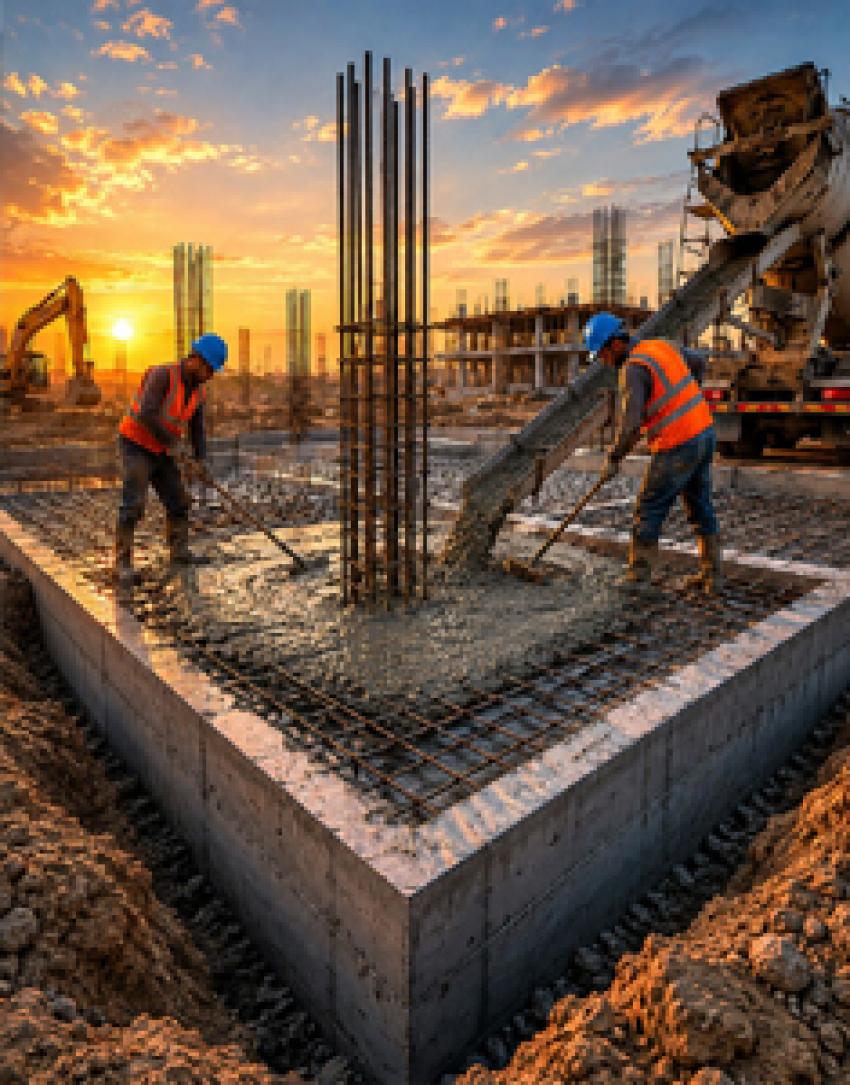
Concrete is commonly used in construction because of its strength and durability. Superior concrete quality calls for using the best cement for concrete. But apart from that, proper curing is equally necessary in order to ensure that the concrete acquires the required strength and resistance.
If you are building a modern concrete home or any other structure with reinforced concrete, knowing the appropriate curing period will help avoid deterioration. Here is a comprehensive guide on how long concrete needs to cure and what the process involves.
Why Is Concrete Curing Technology Important?
Curing is a technical procedure which ensures that the moisture and temperature conditions in concrete are appropriately maintained after placement for hydration to be completed. Hydration is the chemical reaction between water and cement, which causes concrete to set and gain strength.
Lack of adequate moisture results in the process being slowed or completed too soon on the exposed surface. The consequence? Concrete may crack, have weak surfaces, and be more porous.
Curing done with proper concrete technology has a number of advantages:
Increased strength: It assists in developing desired compressive strength of concrete.
Enhanced durability: It assists in making concrete denser, and hence less susceptible to water and other agents getting in.
Cracking prevention: It restricts water loss during the early setting of concrete and hence shrinkage.
Surface quality improvement: It prevents concrete from excessive dusting and surface weaknesses.
To conclude, curing is important for ensuring construction quality.
How Long Should Concrete Be Cured When Made With The Best Cement?
The period of curing will depend upon the kind of cement used, type of concrete, environmental conditions, and structural application. As a general rule, IS 456:2000 states the following periods of moist curing of exposed concrete surfaces.
Concrete/site condition
Minimum curing period
Concrete Made With Ordinary Portland Cement (OPC)
Not less than 7 days
Concrete with blended cement/mineral admixture
Not less than 10 days
Concrete in dry & hot weather condition
Not less than 10 days
Concrete with blended cement under difficult circumstances
It is advisable to cure for 14 days
When To Start Concrete Curing For Modern Homes?
Curing should be started when concrete hardens enough to allow curing without disturbing the surface. Yet, protection against excessive moisture loss may sometimes be required before that, especially in cases of hot weather.
During this stage, concrete is still susceptible to evaporation that causes plastic shrinkage cracks to form in the concrete before it gains sufficient strength.
In order to achieve successful curing:
Choose the best cement brand in India like MP Birla Cement to prepare a fresh, dense concrete mix.
Shield fresh concrete from sun radiation, strong winds, and rapid drying.
Start moist curing after concrete hardens enough for curing.
Keep concrete constantly moist during the required curing time.
Prevent concrete surface from drying and getting periodically wet.
How Weather Affects The Concrete Curing Period?
The weather can have a big effect on the rate of moisture loss and cement hydration. This means that curing procedures must be suited to the weather.
If the weather is hot and dry: Higher temperature, less humidity, and winds can speed up evaporation. Keep the surface from the heat of the sun, and make sure it remains wet at all times. Extended curing may be needed during hot and dry weather.
During the monsoon season: The rain could aid in keeping the mixture moist, although excessive rain can harm the concrete while it’s still soft. New concrete should be kept safe from excessive rains.
If the weather is cold: Lower temperatures will slow down the process of hydration and strength gain. Extended curing and protection may be required.
To build modern concrete houses, adapting to the weather is crucial for strength and longevity.
Common Curing Mistakes To Avoid
A good concrete mix could under perform if proper curing is ignored. Here are some practices to avoid:
Stopping too early: Stopping curing too early could result in poor strength and durability of the surface.
Alternating drying and wetting: Alternating between drying and wetting the concrete surface is something to avoid during curing.
Ignoring environmental conditions: Not taking into account weather conditions could result in premature damage to the concrete.
Inappropriate materials: Materials used for curing should be such that they don't bring any impurities or damage the concrete surface.
Misunderstanding the hardening process: Even though hardening could start after sometime, strength building is an ongoing process.
In addition, one needs to understand that curing time and formwork removal are two different things. Formwork removal and structural loading depends on the engineer's judgment and requirements of construction.
Conclusion
Concrete curing has a direct impact on strength gain, quality of the surface and durability. The time period of the curing must take into account the type of the cement, mix design, weather conditions and requirements of the structure.
The best cement brands in India like MP Birla Cement stress on the importance of the curing process within general construction work, paying attention to the necessity of retaining moisture for strength gain. In the end, proper material, appropriate concrete technology and curing process result in reliable structures.