As multinational corporations, Global Capability Centres (GCCs), and fintech powerhouses scale their operational presence across the National Capital Region (NCR), physical workplace security has evolved beyond traditional front-gate security personnel and static CCTV feeds. In today’s hyper-connected enterprise ecosystem, physical security, digital infrastructure, and data privacy have merged into a unified discipline known as Smart Facility Security Architecture.
A physical breach at an enterprise facility—such as unauthorized server room access, compromised visitor logs, or intercepted internal communications—can trigger severe regulatory penalties, financial loss, and catastrophic reputational damage.
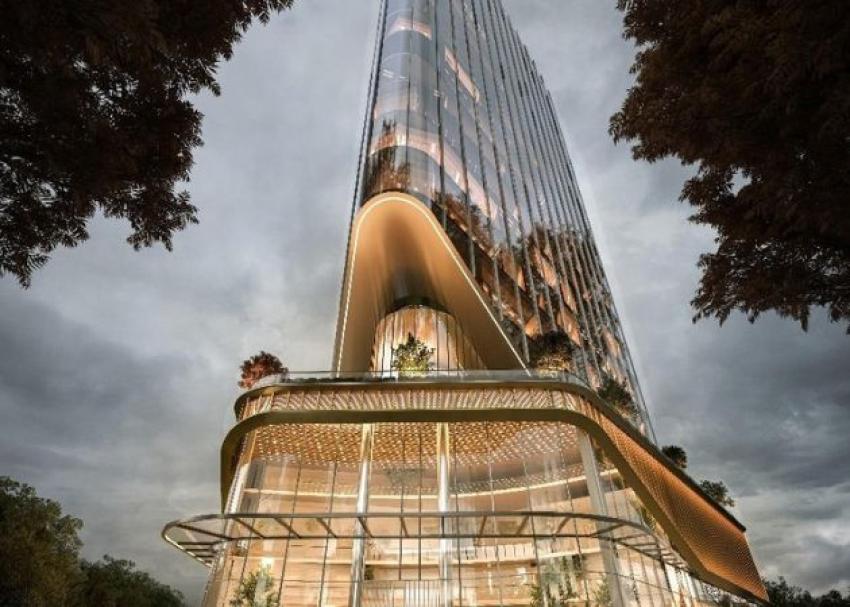
Situated directly along the Dwarka Expressway corridor in Sector 113, M3M CFC (Capital Financial Centre) is engineered to meet these stringent corporate risk standards. Rising 22 storeys (116 meters high) within the 250-acre Smart City Delhi Airport (SCDA) district, M3M CFC integrates multi-layered physical defense protocols, smart building management automation, and data security infrastructure to protect high-value corporate tenants.
1. Multi-Tiered Perimeter Defense & Physical Access Control
Securing a 22-storey commercial tower housing 152 lockable Grade-A office suites requires a concentric defense framework—creating distinct security perimeters from the outer street entrance to private C-suite floor plates.
M3M CFC establishes physical boundary security through multi-stage access verification:
- Automated Vehicular License Plate Recognition (ANPR): Vehicular ingress across all four levels of subterranean basement parking is regulated by ANPR camera systems. Registered corporate vehicles gain frictionless access, while visitor vehicles undergo digital credential scanning at entry points.
- Biometric & RFID Speed-Gate Turnstiles: Ground-floor triple-height lobbies feature contactless speed-gate turnstiles integrated with RFID badges, facial recognition, and QR-code mobile credentials. Unverified visitors cannot pass turnstile barriers without front-of-house host authorization.
- Destination-Controlled Elevator Isolation: High-speed elevators group employees by floor, restricting tenant access exclusively to their designated workplace levels and shared amenity floors like the 3rd-floor executive club, The Chamber. This setup prevents unauthorized cross-floor wandering within the tower.
2. Integrated Building Management Systems (IBMS) & Threat Detection
Modern commercial assets rely on centralized data centers to monitor facility health, environmental systems, and security threats in real time. At M3M CFC, an overarching Integrated Building Management System (IBMS) acts as the central intelligence core for the entire property.
- AI-Powered Video Analytics: High-definition IP surveillance cameras monitoring common corridors, basement parking levels, perimeter walls, and loading docks feature real-time video analytics. Algorithms automatically flag suspicious perimeter loitering, unattended packages, and unauthorized entry attempts, alerting central control room operators instantly.
- Unified Sensor Network: Thermal sensors, smart smoke detectors, optical glass-break sensors, and water-leak monitoring arrays are continuously polled by the central IBMS. Early detection mechanisms isolate localized hazards before they impact broader building operations.
- Cyber-Physical Isolation: To protect building control systems from external cyber intrusions, M3M CFC’s Operational Technology (OT) networks—which govern HVAC, elevator logic, and fire suppression—are logically and physically segregated from tenant IT data networks.
3. Data Infrastructure Redundancy & Mission-Critical Uptime
For financial institutions, global IT firms, and enterprise headquarters operating within M3M CFC, physical data infrastructure security is just as crucial as digital encryption. Data servers and fiber optic backbone cables require physical shielding against external interference, power surges, and signal degradation.
M3M CFC supports continuous data integrity through robust structural engineering:
- Dual-Telecom Riser Paths: Telecom cabling and high-speed fiber lines route through geographically separated dual risers on opposite sides of the building core. If one vertical riser experiences physical damage or maintenance disruption, data traffic automatically reroutes through the redundant pathway.
- Protected Carrier-Neutral Server Rooms: Dedicated telecom intake rooms and server nodes are housed in secure, climate-controlled, fire-rated zones equipped with gas-based fire suppression systems (FM-200) that extinguish blazes without damaging sensitive electronic server racks.
- Uninterrupted Power Backup for Tech Cores: Supported by 100% full power backup diesel generators with automated transfer switches (ATS), server infrastructure and active network hardware remain fully operational during external grid fluctuations or regional blackout events.
4. Compliance with Global Privacy Standards & Corporate Governance
Beyond physical systems, corporate occupiers—particularly European and North American multinationals—must ensure that their landlord's facility management practices comply with international data privacy regulations, including GDPR and India's Digital Personal Data Protection (DPDP) Act.
- Encrypted Visitor Management Systems (VMS): Digital guest check-in kiosks encrypt visitor personal data at entry, storing records in compliance with national data privacy mandates rather than on exposed physical paper ledgers.
- Secure Floor-Plate Segregation: Column-free, expansive floor plates of approximately 22,500 sq. ft. feature clear physical perimeters and lockable unit boundaries. This allows corporate tenants to deploy internal biometric access controls, clean-desk policies, and private server cabinets within their leased footprint without interference.
Conclusion: Fortifying Enterprise Operations at M3M CFC
In an era where corporate security risks encompass both physical intrusions and digital infrastructure vulnerabilities, selecting a commercial address requires evaluating its underlying safety technology.
M3M CFC in Sector 113, Dwarka Expressway, delivers a forward-thinking commercial environment where physical access controls, AI-driven surveillance, dual-path telecom redundancies, and IBMS automation work in unison. By offering an enterprise-grade security architecture right at the Delhi-Gurugram border, M3M CFC provides global corporations and institutional occupiers with a secure, highly resilient foundation for long-term operational success in NCR.