Most event problems trace back to something surprisingly simple: people in the back row can't see the screen, or the speaker's microphone cuts out right as they reach the important part. Audiences forgive a lot, but they rarely forgive not being able to hear or see what's happening. When audio drops or slides freeze, the message gets lost no matter how good the content actually is.
This is why more organizations are rethinking how they approach production for conferences, meetings, and tradeshows. Instead of treating sound and video as an afterthought, they bring in support early and treat it as part of the event strategy itself. For companies planning conferences, product launches, or corporate meetings across Canada, working with a team that understands event audio visual services from the planning stage through to the live show tends to prevent the kind of last minute scrambling that throws off an entire program.
Why Audiovisual Technology Matters at Modern Events
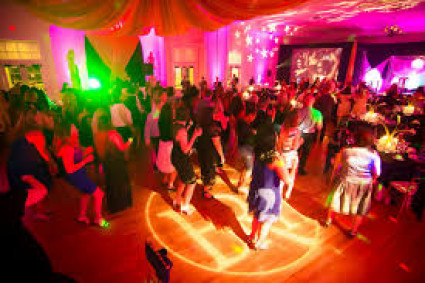
Audiovisual technology is the layer that turns a room full of chairs into an actual experience. Lighting sets the tone before a word is spoken. Sound determines whether people in the back can follow along without straining. Video content, whether it's a keynote presentation or a product demo, gives the audience something to focus on beyond a person standing at a podium.
None of this is about adding flash for its own sake. A well run corporate meeting depends on attendees being able to hear clearly, see clearly, and follow a program that moves smoothly. When those basics are handled well, nobody notices the technology at all. They just remember that the event felt organized and professional.
How Professional Video and AV Production Improves Audience Engagement
Attention is hard to hold, especially in a room full of people checking phones between sessions. Video and AV production help by giving audiences variety. A mix of live camera shots, supporting graphics, and well timed audio keeps a presentation from becoming a flat, monotone experience.
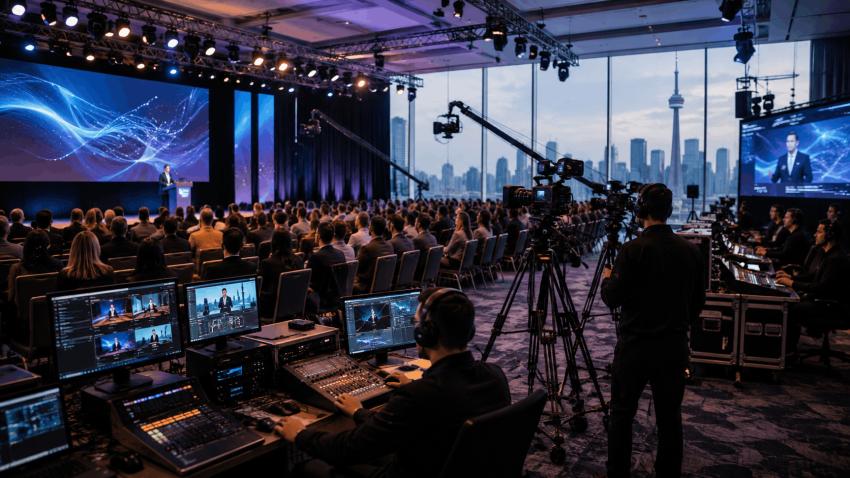
Camera work plays a bigger role than many planners expect. For a general session with hundreds of attendees, a camera package that captures the speaker and projects them onto a large screen makes the front of the room feel closer, even for people seated far back. This is standard practice for larger conferences and general sessions.
The Role of Video Screens, Projectors, LED Walls, and Displays
Screens, projectors, and LED walls all serve the same basic purpose: making sure content is visible to everyone in the room. Which one makes sense depends heavily on the room itself.
Projectors still work well in many meeting spaces, particularly where ambient light can be controlled and the audience is a moderate size. LED walls tend to suit larger venues and tradeshow environments where brightness matters, since they hold up under strong lighting and can be configured into different shapes for the stage design. Video screens and displays fill in the gaps for breakout rooms, registration areas, and smaller spaces where a full LED wall isn't necessary.
Do video walls and projectors actually improve events? In practical terms, yes. They give the audience a consistent visual reference point, reinforce what a speaker is saying, and help branding stay visible throughout the day.
Cameras, Video Production, Recording, and Playback
Beyond live magnification, cameras and video production support other practical needs. Recording a keynote lets it be shared afterward with attendees who couldn't attend, or repurposed for marketing and internal training. Playback systems let organizers queue up pre recorded content, sponsor videos, or testimonials without disrupting the live program.
Media servers and screen management systems sit behind the scenes, coordinating what gets shown, when, and on which screen. For events with multiple presenters or a lot of moving content, this kind of coordination is what keeps transitions clean instead of awkward.
Supporting Presentations, Speakers, Conferences, and Corporate Meetings
What audiovisual equipment does a typical event actually need? It depends on the format, but most conferences and corporate meetings rely on some combination of microphones, speakers, a mixing or broadcast switcher, screens or projection, and a camera package if the session is large enough to need magnification.
Presenters benefit from good sound reinforcement and reliable confidence monitors, since a speaker who can hear themselves clearly and see their slides without turning around tends to deliver a stronger presentation. This is also where onsite technical support earns its value. A technician who can troubleshoot a wireless microphone or fix a display issue in real time keeps small problems from becoming visible ones.
How AV Technology Supports Hybrid and Larger Events
Hybrid events add another layer of complexity, since the production now has to serve two audiences at once: the people in the room and the people watching remotely. That usually means dedicated cameras for streaming, clean audio feeds separate from the room's main sound system, and a broadcast switcher to manage multiple video sources smoothly.
Larger events bring their own scale challenges. More screens, more audio zones, and more presenters all mean more coordination. A setup that works fine for fifty people rarely scales cleanly to five hundred without adjustments.
Why Technical Planning and Onsite Support Matter
Why is professional AV support important in the first place? Because equipment alone doesn't guarantee a smooth event. Planning covers power requirements, rigging points, room acoustics, and how long it takes to set up and test everything before doors open. Onsite support means someone is available to respond if something goes wrong mid event, rather than leaving organizers to troubleshoot on their own.
How to Choose the Right Audiovisual Setup for an Event
What should event planners consider before choosing AV equipment? A few practical factors tend to matter most:
- Venue size and layout, including sightlines and ceiling height
- Audience size and whether magnification or an LED wall is needed
- Type of content, such as slides, live camera feeds, or pre recorded video
- Room acoustics and how sound will travel or echo
- Available power and network connectivity for streaming or recording
- Overall goals of the event, whether that's engagement, brand visibility, or clear information delivery
Working through these questions early, ideally with a production partner rather than after the venue is already booked, tends to produce a much smoother result. AV-CANADA's video production services are built around this kind of planning, matching equipment and crew to the specific event rather than applying a one size fits all setup.
Final Thoughts
Good audiovisual production rarely gets noticed, and that's usually the point. When sound is clear, visuals are sharp, and transitions happen without a hitch, attendees stay focused on the content instead of the technology behind it. For organizations planning a conference, meeting, or tradeshow presence in Toronto or elsewhere in Canada, investing time in thoughtful AV planning pays off in a program that runs the way it was designed to. If you're mapping out your next event, it's worth reaching out to a production team early enough to plan properly rather than fixing problems on the fly.