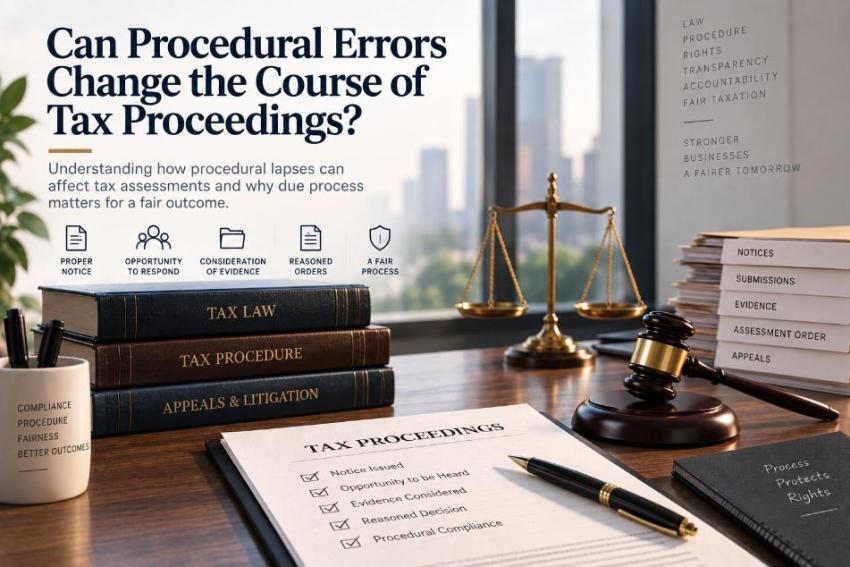
Tax proceedings involve more than calculating the correct amount of tax. Tax authorities must also follow the procedures prescribed by law. These procedures help ensure fairness, transparency and an opportunity for taxpayers to present their case.
A procedural error can sometimes affect the validity or outcome of tax proceedings. However, not every irregularity will automatically invalidate an assessment or demand. The legal effect depends on the nature of the error, the applicable law and the circumstances of the case.
For businesses, understanding procedural safeguards can help identify issues before they become more difficult to address.
What Are Procedural Errors in Tax Proceedings?
A procedural error occurs when a required step in a tax proceeding is not properly followed.
The issue may involve a notice, hearing, submission, evidence, approval or reasoning in an assessment order. In some situations, the taxpayer may not receive a proper opportunity to respond to an allegation before an adverse decision is made.
Other issues may arise when the authority fails to follow a mandatory statutory requirement or does not properly consider material placed on record.
The significance of an error depends on whether the requirement was mandatory and whether the error affected the taxpayer's ability to present its case.
Why Proper Notice Matters
Notice is an important part of tax proceedings. It informs the taxpayer about the issue being examined and gives the business an opportunity to respond.
A company should carefully examine the notices received during an assessment. It should check the subject matter, allegations, information requested and response period.
If an assessment addresses an issue which was not properly communicated to the taxpayer, questions may arise about whether the company received a meaningful opportunity to respond.
Businesses should therefore preserve copies of all notices and maintain records of their responses.
The Right to Present a Case
Tax proceedings generally require the taxpayer to have an appropriate opportunity to explain its position.
This can involve submitting documents, providing explanations and addressing the concerns raised by the tax authority.
A procedural concern may arise if a company is denied a reasonable opportunity to respond before an adverse conclusion is reached.
The circumstances are important. A company should examine what opportunity was provided, what information was requested and whether the time allowed was consistent with the applicable legal requirements.
When Evidence Is Not Properly Considered
A business may submit documents supporting its tax position during an assessment. If relevant material is not considered, the company may need to examine whether the omission affected the decision.
For example, a company may provide agreements, invoices and payment records to explain a disputed transaction. If the assessment order reaches an adverse conclusion without addressing material evidence, the reasoning behind the decision may require further examination.
The company should compare the documents submitted with the findings recorded in the final order. This can help identify whether important evidence was overlooked.
Adequate Reasons in an Assessment Order
Reasoned decision making is an important part of legal proceedings. An assessment order should provide a clear basis for the conclusions reached.
A company may have grounds to question an order if significant submissions are rejected without proper explanation or if the reasoning does not adequately connect the facts with the legal conclusion.
A short order is not necessarily an invalid order. The relevant question is whether the decision provides sufficient reasoning in the circumstances and complies with the applicable legal requirements.
Can a Procedural Error Invalidate an Assessment?
A procedural error does not automatically result in the cancellation of an assessment.
Courts and appellate authorities may consider the nature of the requirement, whether it was mandatory, whether the taxpayer suffered prejudice and whether the defect can be corrected.
Some procedural defects may require the matter to be reconsidered. In other situations, an irregularity may not have a significant effect on the final outcome.
Businesses should therefore avoid treating every procedural mistake as a complete defence. The legal consequences must be assessed based on the specific facts and applicable provisions.
Mandatory and Directory Requirements
One important distinction is whether a procedural requirement is mandatory or directory.
A mandatory requirement generally requires strict compliance. Failure to comply may have serious legal consequences.
A directory requirement may allow greater flexibility, depending on the wording of the law and the circumstances.
Determining the nature of a requirement can involve statutory interpretation and judicial precedent. This is one reason why businesses should examine procedural objections carefully before relying on them in an appeal.
Why Businesses Should Preserve the Procedural Record
Companies should maintain a complete record of the assessment process.
This can include:
Copies of notices
Responses submitted to the tax authority
Supporting documents
Acknowledgements of submissions
Records of hearings
Correspondence
Assessment orders
Appeal documents
A clear procedural record can help establish what happened during the assessment.
It can also help identify whether a particular submission was made, whether a document was requested or whether the company was given an opportunity to respond.
Acting Quickly After an Adverse Order
Businesses should review an assessment order promptly after receiving it. Tax legislation may prescribe specific periods for filing an appeal or pursuing another remedy.
A delay can make it more difficult to challenge an order, even where the company has a potentially strong legal argument.
Companies dealing with procedural concerns may consider obtaining advice from legal counsel for tax litigation to determine whether the issue has legal significance and what remedy may be available.
The review should cover both the procedural history and the substantive tax dispute.
Procedural Issues and Corporate Decisions
A tax dispute can have consequences beyond the immediate assessment. A substantial demand may affect cash flow, financing arrangements, restructuring plans or other commercial decisions.
Businesses should consider these implications while developing their response. Lawyers for corporate legal matters may also help assess how a tax dispute interacts with broader corporate obligations and transactions.
This can be particularly relevant when the disputed assessment relates to a major commercial transaction or corporate restructuring.
How Companies Can Reduce Procedural Risks
Businesses can take several practical steps to reduce difficulties during tax proceedings.
They should monitor statutory deadlines, maintain organised records and respond carefully to notices. Submissions should be clear, supported by relevant documents and filed within the prescribed period.
Companies should also maintain an internal record of important communications with tax authorities.
Early review of potentially complex tax issues can further reduce the risk of procedural mistakes. Finance, tax and legal teams should coordinate when the matter involves significant financial or legal consequences.
What Should a Company Do When It Identifies an Error?
A company should first determine precisely what went wrong.
It should identify the relevant legal requirement, review the procedural history and assess whether the error affected the company's ability to present its case.
The company should then consider the available legal remedies and applicable limitation periods.
A procedural objection is strongest when it is supported by a clear record and a specific legal basis. General complaints about the assessment process are less useful without evidence showing how the alleged error affected the proceedings.
Conclusion
Procedural errors can influence the course of tax proceedings, but their legal effect depends on the nature and seriousness of the defect. Issues involving notice, opportunity to respond, consideration of evidence and adequate reasoning may require careful examination.
Businesses should preserve a complete record of their tax proceedings and review adverse orders promptly. This allows them to identify potential procedural concerns while relevant evidence remains available and legal deadlines are still open.
A careful assessment of both procedure and substance can help companies decide whether further action is justified and protect their position throughout the tax dispute process.