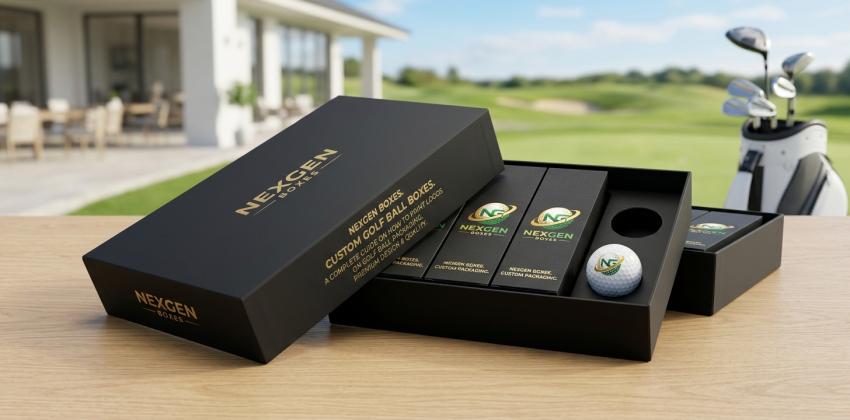
Golf tournaments, corporate outings, and sports retail brands rely heavily on custom branding to make a memorable impression. Placing a crisp, sharp logo on golf ball packaging transforms simple sports equipment into a high-value marketing asset. Investing in custom golf ball boxes allows businesses to showcase their identity cleanly while protecting their merchandise during shipping and retail display.
Designing and printing tailored packaging involves choosing the right materials, selecting appropriate printing techniques, and preparing digital artwork correctly. Ordering custom golf ball boxes with bespoke logos requires an understanding of how colors, finishes, and structural designs interact with paper surfaces. This comprehensive guide breaks down the step-by-step process of printing crisp artwork onto golf packaging.
Preparing Logo Artwork for Custom Golf Ball Boxes
Before sending a design to production, preparing high-resolution artwork is essential for avoiding blurry prints or color distortions. Printing presses operate differently than digital screens, meaning specific file standards must be met.
Vector Format Files: Logos should always be saved as vector files (such as AI, EPS, or PDF). Vectors allow images to scale up or down without losing clarity or becoming pixelated.
CMYK Color Modes: Digital monitors display graphics in RGB mode, but commercial packaging presses print in CMYK. Converting artwork to CMYK ensures that printed colors match your digital proofs accurately.
Bleed and Margin Settings: Add a 0.125-inch bleed around the artwork edge. This safety zone prevents white gaps along the folds if the paper shifts slightly during die-cutting.
Vectorizing Typography: Convert all live text into outlines or vector paths. This prevents font substitution errors when production software opens the file.
Popular Printing Techniques for Golf Packaging
Different printing methods yield distinct visual effects, production speeds, and unit costs. Choosing the right printing technology depends on order volume, budget, and desired surface finish.
Offset Lithography
Offset printing remains the gold standard for high-volume packaging orders. It applies ink via aluminum plates onto rubber blankets, transferring sharp, rich colors onto paperboard. Offset lithography provides excellent color accuracy for detailed corporate logos and gradient backgrounds.
Digital Printing
Digital printing transfers artwork directly from digital files onto packaging substrates without physical plates. This method works best for short production runs, rapid prototyping, or personalized event packages. While unit costs are higher than offset printing for large orders, setup costs remain low.
Flexographic Printing
Flexography utilizes flexible relief plates to apply ink onto various paper substrates. It is commonly used for high-speed printing on corrugated boards and outer shipping boxes, making it ideal for bulk transport packaging rather than intricate retail sleeves.
Luxury Finishing Techniques for Custom Branding
Adding specialty finishes over printed logos turns simple containers into tactile, luxury packages. These post-printing enhancements highlight specific design elements and build strong visual appeal.
Foil Stamping
Foil stamping uses heat and pressure to apply metallic or matte foil films onto paper surfaces. Gold, silver, and holographic foils bring a refined, high-end feel to golf tournament giveaways and luxury gift sets.
Spot UV and Debossing
Spot UV applies a clear, glossy coating over specific areas—like a logo or graphic mark—creating a contrast against a matte background. Combining Spot UV with debossing (recessing the artwork into the board) gives the packaging a sophisticated, tactile dimension that encourages touch.
Designing Functional Box Structures for Golf Balls
Golf balls require specialized structural layouts to stay organized and secure inside the packaging. Custom containers generally feature two main structural layers: internal sleeves and outer display boxes.
Internal sleeves typically hold three golf balls in a single row (commonly referred to as a "3-ball sleeve"). These sleeves are then packed into larger outer boxes holding 12 balls (a full dozen). Custom printing can be applied to both the individual sleeves and the master outer box to maintain brand consistency throughout the unboxing experience.
Material Selection and Sustainability Options
Selecting durable paperboard ensures that printed graphics remain vibrant while shielding golf balls from pressure during handling. High-density paperboard stocks, ranging from 16pt to 24pt thickness, provide a smooth printing surface and sturdy structural frame.
For companies seeking eco-friendly alternatives, utilizing recyclable custom cardboard boxes offers a sustainable foundation that appeals to modern consumers. Coated paperboards provide a glossy finish for rich photo reproduction, while uncoated or kraft cardboards deliver a natural, rustic aesthetic suitable for minimal line artwork and solid dark logos.
Working with established manufacturing experts like NexGen Boxes simplifies material selection, structural die-line preparation, and print proofing. Modern suppliers ensure that custom cardboard boxes used for sports merchandise hold precise fold lines without cracking the printed surface ink.
Conclusion
Printing high-impact logos on custom golf ball boxes requires careful planning across artwork preparation, printing techniques, and material selection. By preparing clean vector files, choosing appropriate finishes like foil stamping or Spot UV, and pairing sturdy cardboard structures with crisp printing, brands can build packaging that stands out on retail shelves and at golf events.