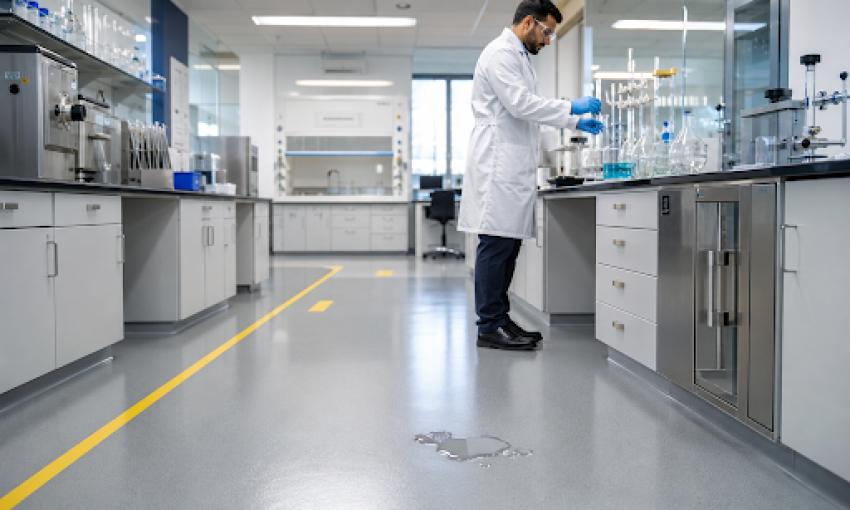
Laboratories require flooring systems that can perform under demanding conditions. Unlike standard commercial spaces, laboratories often deal with chemicals, liquids, specialized equipment, frequent cleaning procedures, and strict safety requirements. A suitable floor must support daily operations while helping maintain a clean and controlled environment.
Choosing the right flooring for a laboratory is not only about appearance. Factors such as chemical exposure, moisture, durability, maintenance, slip resistance, and surface hygiene all influence the long-term performance of the floor.
For facilities in Woodland Park, NJ, selecting the correct flooring system can be especially important where buildings experience seasonal moisture, temperature changes, and different operational requirements. A properly designed flooring solution can help laboratories create safer workspaces while protecting the concrete underneath.
Why Laboratory Flooring Requires Special Consideration
Laboratory environments have unique flooring challenges compared with offices or general commercial spaces.
A laboratory floor may be exposed to:
- Chemical spills
- Cleaning agents
- Moisture
- Heavy equipment
- Frequent movement
- Temperature changes
- Continuous foot traffic
- Specialized testing areas
Ordinary concrete can absorb liquids and develop stains or surface damage over time. Small cracks or damaged areas can also become difficult to maintain in environments where cleanliness is important. This is why professional laboratory flooring solutions should be selected based on the actual requirements of the facility rather than choosing a flooring system only based on cost or appearance.
The Importance of Chemical Resistance in Laboratory Floors
Chemical exposure is one of the biggest concerns in laboratory environments.
Different laboratories may work with:
- Acids
- Solvents
- Cleaning chemicals
- Biological materials
- Industrial compounds
- Testing solutions
When these substances come into contact with untreated concrete, they may penetrate the surface and cause staining, deterioration, or difficult cleaning conditions. A flooring system designed for chemical exposure can help provide a more protective surface and reduce the impact of accidental spills. However, chemical resistance depends on the flooring material selected and the specific substances used in the facility. The flooring provider should understand the type of chemicals involved before recommending a solution.
How Flooring Helps Improve Laboratory Safety
Safety is a major factor in laboratory design.
The flooring surface can influence:
- Employee movement
- Spill management
- Cleaning procedures
- Equipment stability
- Workplace conditions
A suitable laboratory floor should provide a balance between smoothness and traction. A completely smooth surface may be easier to clean, but areas exposed to moisture or spills may require additional slip resistance.
The right texture level depends on:
- Type of work performed
- Cleaning frequency
- Spill risk
- Employee movement
- Equipment usage
A professional flooring assessment helps determine the best balance between safety and maintenance.
Concrete Preparation Before Laboratory Flooring Installation
A high-performance flooring system depends on proper preparation of the existing concrete.
Before installation, the surface should be inspected for:
- Cracks
- Surface damage
- Previous coatings
- Oil contamination
- Moisture issues
- Uneven areas
- Weak concrete sections
Preparation may include:
- Mechanical grinding
- Surface cleaning
- Crack repair
- Removal of old coatings
- Moisture evaluation
Poor preparation can reduce adhesion and shorten the lifespan of the flooring system. Even the highest-quality flooring material will not perform properly when installed over an unsuitable surface.
Choosing the Right Flooring System for Laboratories
Different laboratory environments may require different flooring approaches.
Epoxy Flooring
Epoxy flooring is commonly considered for laboratory applications because it creates a seamless surface that can be customized based on performance requirements.
Benefits may include:
- Easy cleaning
- Durability
- Chemical resistance
- Smooth appearance
- Custom finishes
The exact epoxy system should be selected according to the laboratory's operating conditions.
Chemical Resistant Flooring
Laboratories that regularly handle aggressive substances may require additional protection.
Professional chemical resistant flooring solutions can help facilities create surfaces designed around specific chemical exposure concerns.
Important factors include:
- Type of chemicals used
- Exposure frequency
- Spill duration
- Cleaning methods
- Temperature conditions
A flooring system should be tested and selected based on real laboratory conditions rather than general assumptions.
Polyaspartic Flooring
Polyaspartic systems may be considered in situations where fast curing and durability are important. They can be useful when minimizing operational downtime is a priority.
Seamless Resin Flooring
Seamless resin systems can help reduce joints and gaps where contaminants may collect. This can be beneficial in environments where cleanliness and easy maintenance are important.
Moisture Management in Laboratory Floors
Moisture is another important consideration during laboratory flooring projects. Concrete may appear dry while still allowing moisture vapor to move through the slab.
Potential moisture concerns include:
- Damp areas
- White mineral deposits
- Previous coating failure
- Peeling surfaces
- Water intrusion
Installing a flooring system over unresolved moisture problems can lead to future performance issues. Before installation, the concrete should be evaluated to determine whether moisture control measures are necessary.
Maintaining Clean and Hygienic Laboratory Spaces
Laboratories often require regular cleaning and maintenance. A properly selected flooring system can make routine care easier by providing a smoother and more durable surface.
Maintenance practices may include:
- Cleaning spills immediately
- Removing dirt and debris
- Using approved cleaning products
- Inspecting damaged areas
- Addressing repairs early
The cleaning process should also be considered when selecting the flooring system. A floor that performs well but requires difficult maintenance may not be the ideal choice for every laboratory.
Flooring Considerations for Different Laboratory Areas
Every laboratory space has its own operational requirements, so the flooring system should be selected according to how each area is used. Testing rooms, equipment zones, storage areas, and employee walkways may face different levels of chemical exposure, traffic, moisture, and safety concerns. A complete flooring plan should evaluate each section individually instead of applying the same solution throughout the entire facility.
Testing Areas
Testing areas often require flooring surfaces that are easy to clean, resistant to chemical exposure, and capable of supporting precise laboratory activities. The flooring should help maintain a controlled environment while reducing the risk of contamination from spills, dust, or surface damage.
Equipment Rooms
Equipment rooms may require flooring systems designed to handle heavy machinery, vibration, and concentrated loads. A durable surface can help protect the concrete underneath while providing a stable foundation for specialized laboratory equipment.
Storage Areas
Chemical and material storage areas may need additional protection because of the possibility of spills, leaks, and frequent movement of stored items. Flooring in these spaces should be selected based on the materials being stored and the level of protection required.
Walkways and Common Areas
Employee walkways and shared laboratory areas require attention to traction, durability, and regular foot traffic. A properly designed flooring system should support safe movement while remaining easy to maintain during daily cleaning routines. A complete flooring plan should consider the purpose of each area rather than treating the entire laboratory as one identical space.
Comparing Laboratory Flooring Options
Flooring Type
Best For
Main Benefits
Epoxy Flooring
General laboratory areas
Durable, seamless, customizable
Chemical Resistant Flooring
Chemical exposure areas
Better protection against specific substances
Polyaspartic Flooring
Fast installation needs
Quick curing and durability
Seamless Resin Flooring
Clean environments
Reduced joints and easy maintenance
Polished Concrete
Low chemical exposure areas
Natural concrete appearance
The best choice depends on laboratory operations, safety requirements, and maintenance expectations.
How Professional Installation Improves Performance
Laboratory flooring requires careful installation because small mistakes can affect long-term performance.
Experienced installers understand:
- Surface preparation methods
- Material selection
- Application conditions
- Curing requirements
- Maintenance recommendations
A professional evaluation can help identify the most suitable flooring system before installation begins. The goal is not simply to install a new surface but to create a flooring solution that supports the laboratory's daily activities.
Reducing Downtime During Flooring Installation
Laboratories often cannot stop operations for extended periods. Before starting a flooring project, facility managers should discuss:
- Installation timeline
- Preparation requirements
- Curing period
- Equipment movement
- Work area access
Some facilities may complete flooring upgrades in phases to keep important operations running. Proper planning helps reduce disruption while ensuring the flooring system is installed correctly.
What to Ask Before Choosing a Laboratory Flooring Contractor
Before hiring a flooring professional, laboratory managers should ask:
- How will the concrete be prepared?
- Is moisture testing required?
- Which flooring system fits our chemical exposure?
- How is slip resistance handled?
- What maintenance is required?
- How long will installation take?
- What warranty is included?
A reliable contractor should explain why a specific flooring system is recommended and how it matches the facility's requirements.
Local Considerations for Laboratory Flooring in Woodland Park, NJ
Laboratory and industrial facilities in Woodland Park, NJ, may have different flooring requirements depending on their operations, building conditions, and environmental exposure. Seasonal moisture, temperature changes, and facility traffic can all influence flooring performance.
Epoxy Shine is one option businesses can consider when evaluating laboratory and industrial flooring systems. The final recommendation should always be based on the condition of the concrete and the specific needs of the laboratory.
Final Thoughts
Laboratory flooring plays an important role in creating safe, durable, and efficient work environments. The right flooring system should provide protection against chemical exposure, support cleaning requirements, improve safety, and withstand daily operational demands. By evaluating concrete conditions, chemical exposure, maintenance needs, and facility requirements, laboratories can choose a flooring solution that supports long-term performance and reliability.