Implementing an ISO 20000 service management system can seem complicated when an organization is unsure where to begin. The challenge is usually not understanding the value of IT service management but converting the requirements of ISO/IEC 20000-1 into practical processes, responsibilities, records, and controls.
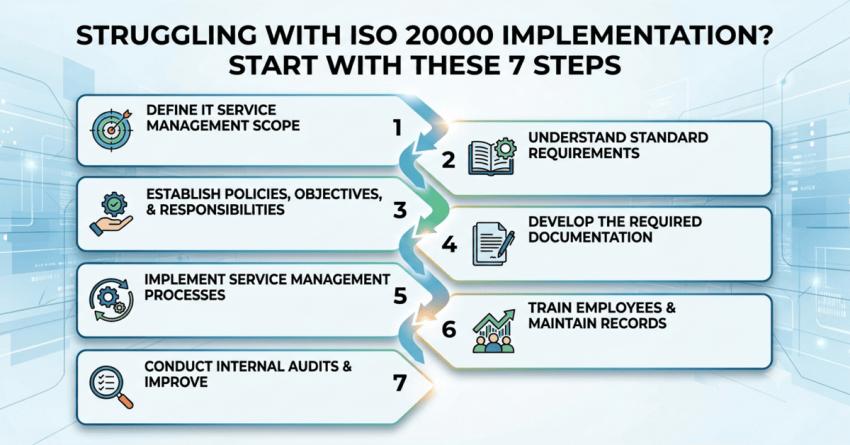
A structured implementation approach can make the process much easier. Here are seven practical steps to help build an effective IT service management system (ITSMS).
1. Define the IT Service Management Scope
Start by clearly identifying which services, teams, locations, and activities will be included in the service management system. The scope should reflect the services your organization actually manages and delivers.
A well-defined scope prevents unnecessary documentation and helps employees understand exactly what the ISO 20000 system covers.
2. Understand the Standard Requirements
Review the requirements of ISO/IEC 20000-1 and identify what your organization already has in place and what needs improvement. Pay attention to areas such as service planning, service delivery, relationship management, incident management, problem management, change management, service continuity, and performance evaluation.
This initial ISO 20000 gap analysis provides a practical roadmap for implementation.
3. Establish Policies, Objectives, and Responsibilities
Management should establish a clear service management policy and measurable objectives. Responsibilities and authorities should also be assigned so employees know who manages each IT service management activity.
Clear accountability is important for maintaining consistent service delivery and supporting continual improvement.
4. Develop the Required Documentation
Documentation turns the requirements into a repeatable working system. Instead of creating every document from scratch, organizations can use structured ISO 20000 documents containing editable templates, procedures, policies, forms, plans, and supporting records.
A practical documentation framework can include an IT service management manual, service management plan, operational procedures, SOPs, policies, job descriptions, forms, and audit checklists.
5. Implement Service Management Processes
Once the documentation framework is ready, put the processes into daily operation. Employees should understand how to record incidents, manage problems, control changes, monitor service levels, handle suppliers, and maintain service continuity.
ISO/IEC 20000-1 focuses on establishing, implementing, maintaining, and continually improving a service management system rather than prescribing one identical implementation method for every organization.
6. Train Employees and Maintain Records
An ITSMS works only when employees understand their responsibilities. Provide appropriate awareness and process training, then ensure required records are consistently maintained.
Examples include incident records, service reports, monitoring results, change records, corrective actions, internal audit results, and management review outputs. These records provide evidence that the system is operating as planned.
7. Conduct Internal Audits and Improve
Before a certification audit, perform an internal audit against the applicable ISO 20000 requirements. Use audit findings to identify weaknesses, implement corrective actions, and improve service management processes.
A clause-wise ISO 20000 audit checklist can make this review more systematic and help teams identify missing documentation or implementation gaps.
Make ISO 20000 Implementation Easier
Creating an ITSMS from a blank page can consume significant time. A ready-to-edit documentation framework can provide a practical starting point for organizations and consultants.
Using a structured set of ISO 20000 documents can provide a practical starting point. A comprehensive documentation package can include an ITSMS manual and plan, service management procedures, policies, SOPs, job descriptions, forms and record templates, an internal audit checklist, and a master documentation matrix.
These editable documents can then be customized according to the organization’s IT services, processes, responsibilities, and operational requirements. This approach helps reduce documentation effort while providing a more consistent framework for implementing and maintaining an ISO/IEC 20000-1 compliant service management system.
Starting with a structured documentation base can reduce preparation effort while helping your team build a more consistent and auditable IT service management system.