Choosing an experienced Bogie Hearth Furnace Manufacturer is important for businesses that require reliable temperature control, uniform heating, efficient operation, robust construction, and customized furnace solutions. A properly engineered bogie hearth furnace can be designed according to the component size, load capacity, heating process, temperature range, and production requirements.
What Is a Bogie Hearth Furnace?
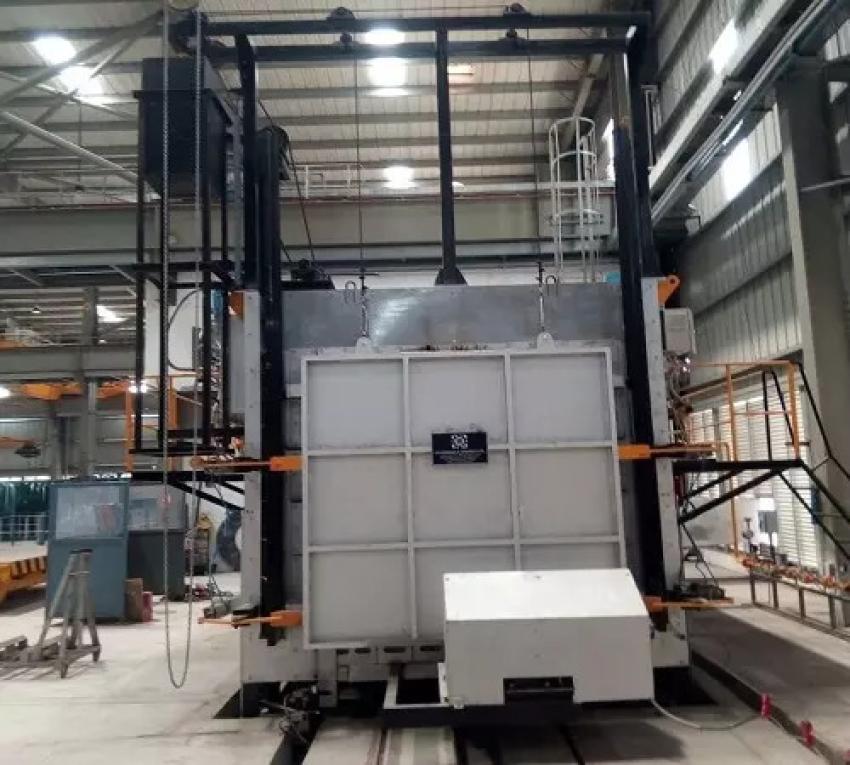
A Bogie Hearth Furnace is an industrial furnace equipped with a movable hearth mounted on wheels or a bogie. The material to be heat treated is loaded onto the bogie, which is then moved into the furnace chamber along rails.
The bogie provides a convenient platform for handling large and heavy components. Depending on the furnace design, the system can be electrically heated or fuel fired.
Bogie hearth furnaces can be used for various heat treatment processes, including annealing, normalizing, stress relieving, tempering, hardening, and other controlled heating applications.
The furnace chamber is lined with suitable refractory and insulation materials to withstand the required operating temperature and minimize heat loss.
How Does a Bogie Hearth Furnace Work?
The operation begins with loading components onto the movable bogie. An EOT crane or another suitable mechanical handling system can be used to position heavy components on the hearth.
Once the load is prepared, the bogie is moved into the furnace chamber along rails. Depending on the design, the bogie can be driven using an electromechanical rack-and-pinion mechanism, rope-and-drum system, or another suitable drive arrangement.
After the furnace is closed, the heating cycle begins. Heating elements or burners raise the temperature according to the programmed heat treatment cycle.
Temperature sensors and controllers continuously monitor the furnace temperature. Multiple heating zones can be independently controlled to achieve the required temperature distribution.
After the required heating and soaking period, the furnace can be cooled according to the specified process. Once the cycle is complete, the bogie is moved out of the chamber for unloading.
This arrangement makes the furnace particularly suitable for large components that are difficult to load into conventional fixed-hearth furnaces.
Types of Bogie Hearth Furnaces
Professional Bogie Hearth Furnace Manufacturers can provide different configurations according to production requirements.
Electric Bogie Hearth Furnace
Electric bogie hearth furnaces use heat-resistant electrical heating elements installed along the furnace walls, roof, doors, or other suitable locations. The heating elements can be divided into multiple independently controlled zones.
Electric systems can provide accurate temperature control and are suitable for applications where electrical heating is preferred.
Gas Fired Bogie Hearth Furnace
Gas-fired bogie hearth furnaces use high-efficiency burners and combustion systems to generate heat. Depending on the application, fuels such as Natural Gas or LPG may be used.
Advanced combustion systems can include automatic ignition, flame-failure protection, gas trains, safety switches, ratio controllers, and other control equipment.
Dual-Fired Furnace
Some industrial applications may require flexibility in fuel selection. A dual-fired furnace can be designed to operate using suitable combinations of liquid or gaseous fuels according to the system configuration.
Key Features of a Bogie Hearth Furnace
A well-designed bogie hearth furnace incorporates several features for reliable industrial operation.
Movable Bogie
The movable hearth allows large and heavy components to be loaded outside the furnace and transported into the heating chamber.
Heavy-Duty Construction
The furnace structure and bogie are designed to withstand substantial loads and demanding industrial conditions.
Multiple Heating Zones
Independent heating zones help maintain the required temperature profile throughout the furnace chamber.
Precise Temperature Control
Thermocouples, digital controllers, PLC systems, and monitoring equipment can provide accurate control of the heat treatment cycle.
Efficient Insulation
Ceramic fibre modules, blankets, refractory bricks, and insulation materials can be selected according to the operating temperature to reduce heat loss.
Customizable Door Configuration
Depending on the application, furnaces can be designed with single or double doors. Large furnaces can also incorporate additional doors or chamber arrangements according to customer requirements.
Benefits of Bogie Hearth Furnaces
One of the primary advantages of a Bogie Hearth Furnace is its ability to process large and heavy components. Since the material is loaded onto a movable hearth outside the furnace, cranes and other mechanical handling equipment can be used efficiently.
Another benefit is operational flexibility. Different component sizes and shapes can be accommodated within the furnace's working area, making the system suitable for diverse industrial applications.
Temperature control is another important advantage. Multiple heating zones and advanced control systems can help achieve consistent heating throughout the chamber.
Bogie hearth furnaces can also be customized for different heating methods, capacities, temperatures, and material-handling requirements.
For large-scale industrial heat treatment operations, this flexibility can make bogie hearth furnaces a practical and efficient solution.
Applications of Bogie Hearth Furnaces
Bogie hearth furnaces are used across a variety of industries.
Foundries
Foundries use bogie hearth furnaces for heat treatment of large castings and other heavy metal components.
Forging Industry
Forging manufacturers can use these furnaces for annealing, normalizing, stress relieving, tempering, and other thermal processes.
Pressure Vessel Manufacturing
Large pressure vessel components can require controlled heat treatment to achieve specified material properties and relieve manufacturing stresses.
Heavy Engineering
Heavy engineering industries use bogie furnaces for processing large machinery components, fabricated structures, and heavy metal assemblies.
Automotive and General Engineering
Specialized bogie hearth furnaces can also be used for automotive components, machine parts, tools, and other engineering products.
Fabrication Industry
Welded structures and fabricated components may undergo stress relieving or other thermal processes in a bogie hearth furnace.
Stress Relieving Using Bogie Hearth Furnaces
Stress relieving is an important application of bogie hearth furnaces. Welding, cold forming, machining, and other manufacturing operations can introduce residual stresses into metal components.
A controlled heating and cooling cycle can be used to reduce these stresses according to the specified process requirements.
For lower-temperature stress relieving applications, suitable air circulation systems can be incorporated to promote convective heat transfer. For higher-temperature applications, furnace designs may rely more heavily on radiation-based heat transfer, depending on the process and furnace configuration.
The appropriate thermal cycle should always be established according to the material, component geometry, applicable specifications, and engineering requirements.
Factors to Consider When Choosing a Bogie Hearth Furnace Manufacturer
Selecting the right Bogie Hearth Furnace Manufacturer in India requires careful evaluation of several factors.
Load capacity is one of the most important considerations. The bogie, drive system, furnace structure, and hearth must be designed for the maximum intended load.
Furnace dimensions should match the size and shape of the components being processed.
Operating temperature determines the required heating system, insulation, refractory materials, and control equipment.
Heating method should be selected according to energy availability, process requirements, operating cost, and production conditions.
Temperature uniformity should also be evaluated to ensure consistent heat treatment throughout the working chamber.
Other important considerations include bogie drive mechanism, door arrangement, heating zones, atmosphere requirements, automation, safety systems, energy efficiency, maintenance access, installation requirements, and after-sales support.
Customized Bogie Hearth Furnace Solutions
Industrial applications often require customized furnace designs. An experienced manufacturer can develop a bogie hearth furnace according to the customer's specific production requirements.
Customization may include furnace capacity, chamber dimensions, bogie size, maximum load, heating zones, door configuration, heating elements or burners, refractory lining, insulation, temperature-control system, atmosphere control, and material-handling arrangements.
For large furnaces, single or double bogie configurations can be considered according to production requirements. An intermediate door may also be incorporated to divide a large furnace into separate chambers where appropriate.
Why Choose an Experienced Bogie Hearth Furnace Manufacturer?
Bogie hearth furnaces combine thermal engineering with heavy mechanical construction. The manufacturer therefore needs expertise in furnace design, refractory materials, heating systems, temperature controls, bogie mechanisms, electrical systems, combustion systems, and industrial automation.
J.R. Furnace and Ovens (P) Ltd. is an established manufacturer and supplier of industrial furnaces and ovens. The company offers Bogie Hearth Furnaces and Car Bottom Furnaces for applications including foundries, cast houses, pressure vessels, heavy structures, forgings, and other metal industries.
Its published information states that it manufactures both fuel-fired and electrically heated bogie hearth furnaces and provides customized configurations based on customer requirements. The company also references applicable industrial requirements such as NADCAP, CQI-9, and AMS 2750 for relevant heat treatment applications.
Conclusion
A Bogie Hearth Furnace is a versatile industrial heating solution designed especially for large, heavy, and complex components. Its movable hearth makes loading and unloading easier while providing the flexibility required for demanding heat treatment applications.
From foundries and forging facilities to pressure vessel manufacturers, heavy engineering companies, and fabrication industries, bogie hearth furnaces can support processes such as annealing, stress relieving, normalizing, tempering, and other controlled thermal treatments.
When selecting a Bogie Hearth Furnace Manufacturer, businesses should consider load capacity, furnace dimensions, temperature range, heating method, temperature uniformity, bogie drive system, insulation, automation, safety, energy efficiency, customization, and after-sales support.
With the right engineering and manufacturing expertise, a customized Car Bottom Furnace can provide reliable temperature control, efficient material handling, consistent heat treatment, and dependable long-term performance for demanding industrial applications.