Starting a new inspection body can be challenging, especially when you need to establish a management system that meets accreditation expectations. ISO/IEC 17020:2026 specifies requirements for the competence, impartiality, and consistent operation of inspection bodies, making it an important foundation for organizations preparing for accreditation.
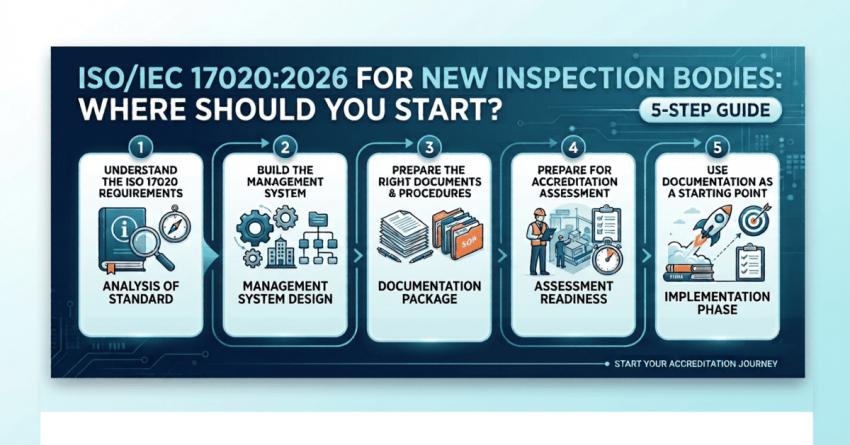
1. Understand the ISO 17020 Requirements
The first step is to understand how the standard applies to your inspection activities. ISO 17020 requirements address areas such as impartiality, confidentiality, organizational structure, personnel competence, resources, inspection processes, records, reports, complaints, and appeals. For a new inspection body, understanding these requirements early helps establish a management system that supports consistent and reliable inspection activities.
The 2026 revision also introduces important changes, including simplified independence categories, risk-based thinking, and new provisions for data and information control.
2. Build the Inspection Body Management System
Once the requirements are understood, the next step is to translate them into practical processes. This normally includes defining responsibilities, establishing controls for impartiality and confidentiality, managing personnel competence, controlling inspection activities, and maintaining appropriate records.
This is where ISO 17020 documentation becomes essential. A documented management system provides evidence that your inspection body has established consistent methods for controlling its activities and meeting applicable requirements.
3. Prepare the Right Documents and Procedures
One of the most important tasks for a new inspection body is developing suitable manuals, procedures, forms, and records. Instead of creating isolated documents, they should work together as one coherent management system.
For a closer look at the key areas that ISO 17020 procedures should address, inspection bodies can also review ISO 17020:2026 procedures' key areas and use the guidance to identify areas that may need to be documented and controlled.
Well-structured ISO/IEC 17020:2026 documents can help an inspection body organize its quality manual, procedures, operational controls, forms, templates, and audit-related records. They can also provide a practical starting point for implementation and accreditation preparation and support consistent implementation.
For organizations that want to reduce the time and effort involved in developing documentation from scratch, a structured ISO 17020 manual and procedure package can provide a practical foundation.
4. Prepare for Accreditation Assessment
After documentation is established, the inspection body needs to implement the system and generate objective evidence that its processes are working. This may include competence records, inspection records, reports, internal audit results, management review outputs, corrective actions, and other required records.
An ISO 17020 accreditation assessment is not simply a document check. The inspection body needs to demonstrate that its documented processes are implemented and that inspection activities are performed competently, impartially, and consistently. ISO confirms that ISO/IEC 17020 can be used as a requirements document for accreditation and assessment.
5. Use Documentation as a Practical Starting Point
For a new inspection body, starting with a clear documentation framework can make implementation more organized. Rather than treating the manual, procedures, forms, and records as separate tasks, connect them to the actual inspection processes and responsibilities of the organization.
A ready-to-use ISO 17020:2026 documents package can help provide this structure while allowing the inspection body to adapt the documentation to its activities, scope, organization, and applicable requirements.
Start Your ISO 17020:2026 Preparation
The earlier an inspection body establishes its management-system documentation, the easier it becomes to identify gaps, implement controls, conduct internal audits, and prepare for accreditation assessment. A practical documentation framework can therefore turn the question “Where should we start?” into a clear implementation path.
Explore the ISO/IEC 17020:2026 documents package to review the available manual, procedures, forms, templates, and audit-support documentation for inspection bodies preparing their management system.