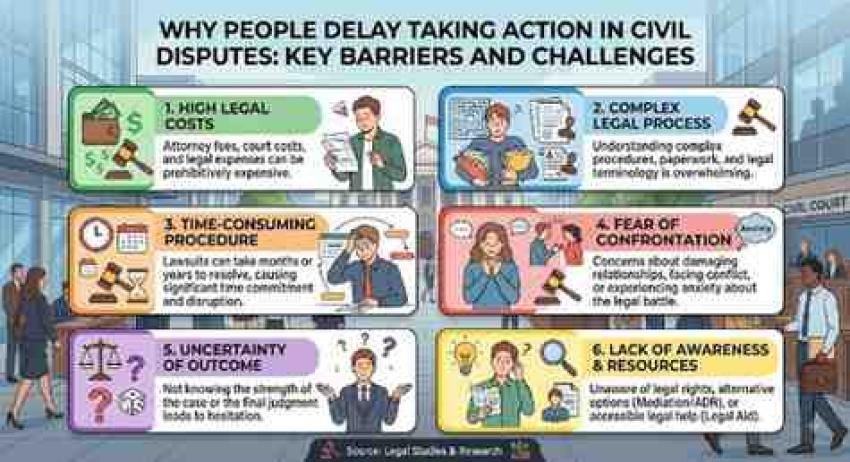
In many such situations, the affected person does not take immediate action. Instead, they wait. They hope the other party will change their position. They try repeated discussions. They worry about legal costs. Some feel uncertain about their rights. Others simply do not realise how quickly delay can affect their legal position.
Delaying action in a civil dispute is common. However, waiting too long can create practical and legal difficulties. Evidence may disappear. Documents may become harder to locate. Witnesses may forget important details. Limitation periods may also affect the ability to bring a claim.
Understanding why people delay can help individuals and businesses respond more carefully when a dispute first arises.
Many People Hope the Problem Will Resolve Itself
One of the most common reasons for delay is optimism. People often believe a disagreement is temporary and will disappear after further discussion.
This is especially common where the parties have an existing relationship. Business partners may want to preserve their commercial association. Family members may avoid legal action to prevent further conflict. A landlord and tenant may continue negotiating. A customer may keep waiting for an unpaid refund or promised service.
Informal discussions can sometimes resolve disputes. However, endless discussions without progress may only prolong the problem.
A sensible approach is to assess whether genuine progress is being made. If the other party repeatedly makes promises without taking meaningful steps, the dispute may require a more formal response.
Taking legal advice does not always mean starting court proceedings immediately. It can help a person understand available options and decide whether negotiation, mediation, a legal notice or litigation is appropriate.
Fear of Damaging Relationships
Civil disputes often involve people or organisations with an ongoing relationship. This can make legal action feel uncomfortable.
A person may hesitate to act against a relative, neighbour, employer, business partner or long standing customer. They may fear being seen as aggressive or unreasonable. Some believe sending a legal notice will permanently damage the relationship.
As a result, they remain silent even when the dispute continues.
In reality, avoiding a problem does not always protect a relationship. Unresolved financial and legal issues can create greater resentment over time. A structured effort to resolve the dispute may sometimes provide more clarity than repeated informal arguments.
Professional advice can also help parties communicate through an appropriate legal process. This may reduce emotional confrontation and focus attention on documents, obligations and possible solutions.
Uncertainty About Legal Rights
Many people delay because they do not know whether they have a valid legal claim.
Civil law can appear complex. A person may know something has gone wrong but remain unsure whether the issue amounts to a breach of contract, property dispute, recovery claim or another civil matter.
This uncertainty can lead to inaction.
For example, a business owner may be unsure whether an unpaid invoice can be recovered. A property owner may not understand available remedies when another person claims an interest in the property. A party to an agreement may question whether a verbal understanding can be legally enforced.
Waiting for complete certainty can be risky. Legal rights often depend on specific facts, documents and applicable law. An early assessment can help identify the nature of the dispute and the steps worth considering.
Consulting experienced civil lawyers in india can help a person examine relevant records, understand the legal position and consider possible remedies before the dispute becomes more difficult to manage.
Concerns About Legal Costs
The expected cost of legal action is another major reason for delay.
Court proceedings may involve legal fees, court fees, document preparation and other expenses. People may also worry about how long a dispute could continue.
These concerns are understandable. However, avoiding legal advice because of assumed costs may not always be the best decision. The financial impact of an unresolved dispute can sometimes become much greater than the cost of obtaining an early legal assessment.
An unpaid debt may remain outstanding for months. A contractual breach may cause additional business losses. A property dispute may become more complicated when transactions take place without resolving existing claims.
Early advice can help a party understand the likely scope of the matter. It may also reveal options other than full litigation. Negotiation, mediation and other forms of dispute resolution may be suitable in some circumstances.
The key issue is not simply whether legal action will cost money. A person should also consider the possible cost of doing nothing.
Emotional Stress Can Lead to Avoidance
Disputes can be emotionally exhausting. Many people delay action because they do not want to think about the issue.
This is particularly common in disputes involving family property, inheritance, partnerships or close personal relationships. The legal issue may be connected with years of personal history.
Some people avoid opening letters. Others postpone collecting documents. They may keep telling themselves they will deal with the matter next week.
Avoidance can provide temporary relief, but the underlying problem remains.
A practical first step is to organise the available information. This may include agreements, invoices, payment records, correspondence, notices and other relevant documents. Creating a clear record of events can make the situation easier to understand.
Breaking the matter into smaller steps may also reduce the feeling of being overwhelmed. The first step could simply be obtaining an informed legal opinion rather than deciding immediately to begin litigation.
People Often Underestimate the Importance of Time
Time can be a critical factor in civil disputes.
Different legal claims may be subject to limitation periods and procedural requirements. The applicable period can depend on the nature of the claim and the facts involved. Waiting until the last possible moment may create unnecessary pressure and legal risk.
Delay can also affect the quality of evidence.
Digital messages may be deleted. Records may be lost. Employees may leave a company. Witnesses may move away or forget important events. The longer a dispute continues, the more difficult it can become to reconstruct what happened.
An early response allows a party to preserve relevant material. It also provides more time to consider the available legal and commercial options.
This does not mean every disagreement should immediately become a lawsuit. It means important disputes should not be ignored without understanding the consequences of delay.
Businesses May Delay to Avoid Disruption
Companies often postpone action because management wants to focus on daily operations.
A dispute with a supplier, customer or business partner can require time and attention. Senior management may decide to wait until a larger financial issue develops before addressing the matter.
This approach can create further problems.
Small contractual breaches can sometimes develop into significant disputes. Repeated late payments may affect cash flow. Unclear obligations may lead to continuing disagreements. Failure to address a breach may also make business relationships harder to manage.
An early review can help a company decide whether the issue requires negotiation, documentation, formal communication or further legal action. Working with a corporate law firm in india may help businesses assess disputes alongside their contractual obligations, commercial interests and long term risk management.
For many organisations, the best response is not necessarily immediate litigation. It is an informed response based on the seriousness of the dispute.
Misplaced Trust in Verbal Promises
People often delay legal action because the other party keeps promising a future solution.
A debtor may promise payment next month. A contractor may promise to complete pending work soon. A business partner may assure everyone a disagreement will be resolved internally.
These assurances may be genuine. However, repeated promises without performance should be assessed carefully.
Written communication becomes important in such situations. It can help establish what was agreed, what has been requested and how the dispute has developed.
Where negotiations continue, parties should keep appropriate records. Clear documentation can also reduce later disagreements about what was said during discussions.
Trust is valuable in personal and commercial relationships, but trust should not replace sensible record keeping or informed decision making.
Lack of Knowledge About Alternatives to Court
Some people believe they have only two choices. They can either tolerate the problem or start a lengthy court case.
This belief often causes unnecessary delay.
Depending on the nature of the dispute, parties may consider negotiation, mediation, arbitration or other available mechanisms. The appropriate method will depend on the facts, contractual terms and legal framework involved.
Alternative dispute resolution can sometimes help parties reach a practical outcome without a full trial. It may also allow greater privacy and flexibility in suitable cases.
Understanding these options can change how a person approaches a dispute. Seeking legal guidance is not always about preparing for a courtroom battle. It can also help identify the most suitable way to resolve a conflict.
Delay Can Make a Dispute More Difficult
A civil dispute rarely improves simply because time passes.
Sometimes the parties resolve matters informally. In other situations, delay increases financial losses, weakens evidence and makes communication more difficult.
The right response depends on the circumstances. Not every dispute requires aggressive action. However, every serious dispute deserves timely attention.
People should assess the facts, preserve relevant documents and understand their legal position before deciding how to proceed. Early action can provide more options. It can also help prevent a manageable disagreement from becoming a larger legal and financial problem.
The most important step is often recognising when waiting is no longer helping. Once informal efforts have failed, an informed and timely approach can protect interests while leaving room for a practical resolution.