Northeast Asia – Polycarbonate (PC) Prices July 2026
The Polycarbonate (PC) Prices in Northeast Asia averaged USD 1.92/kg during July 2026, declining by 16.5% from the previous month. Softer demand from automotive, electronics, and consumer-goods industries, alongside adequate regional supply, pressured prices. Competitive production, inventory levels, feedstock costs, and subdued procurement activity further contributed to the downward trend.
Get the Real-Time Prices Analysis: https://www.imarcgroup.com/polycarbonate-pricing-report/requestsample
Europe – Polycarbonate (PC) Prices July 2026
In Europe, Polycarbonate (PC) prices stood at USD 2.99/kg during July 2026, registering a 14.6% decline from the previous month. Weaker downstream demand from automotive, electrical, and construction applications weighed on pricing. Adequate availability, cautious purchasing, energy expenses, raw material costs, and regional industrial activity continued influencing market conditions.
Southeast Asia – Polycarbonate (PC) Prices July 2026
The Polycarbonate (PC) price in Southeast Asia reached USD 1.73/kg during July 2026, decreasing by 17.6% from the previous month. Reduced demand from electronics, automotive, and manufacturing sectors placed pressure on prices. Ample availability, competitive regional production, inventory levels, and subdued buying interest reinforced the bearish market environment.
North America – Polycarbonate (PC) Prices July 2026
In North America, Polycarbonate (PC) prices averaged USD 2.92/kg during July 2026, declining by 7.9% from the previous month. Softer demand across automotive, electronics, construction, and consumer applications contributed to the decrease. Balanced supply, inventory conditions, feedstock costs, production expenses, and cautious procurement strategies further shaped regional pricing.
Speak to An Analyst: https://www.imarcgroup.com/request?type=report&id=22321&flag=C
What is Polycarbonate (PC)?
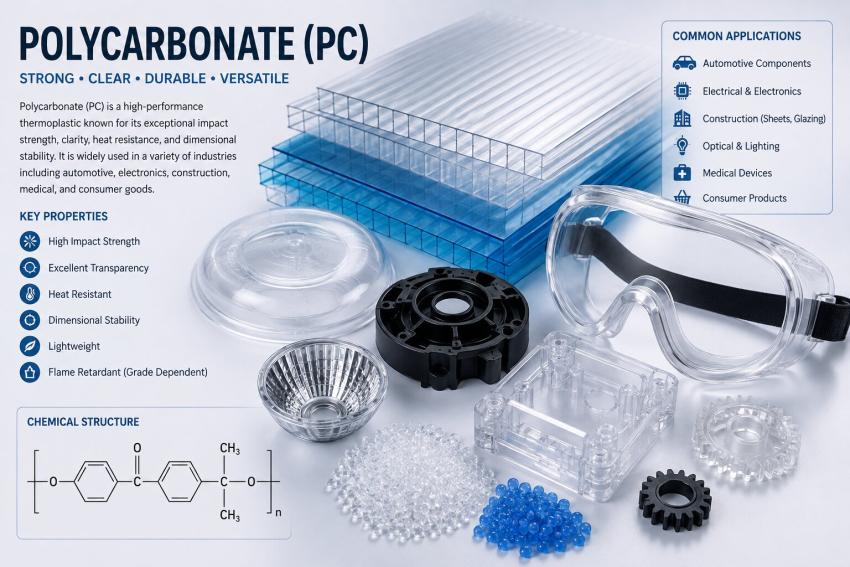
Polycarbonate (PC) is a high-performance thermoplastic polymer known for its excellent impact strength, transparency, heat resistance, and dimensional stability. It is produced mainly from chemical feedstocks and is widely used in automotive components, electronics, electrical equipment, construction materials, medical products, optical applications, and consumer goods.
Latest Polycarbonate (PC) Prices – July 2026
The Polycarbonate (PC) market recorded a broad decline across all listed regions during July 2026. Europe registered the highest price at USD 2.99/kg, followed by North America at USD 2.92/kg, Northeast Asia at USD 1.92/kg, and Southeast Asia at USD 1.73/kg.
Polycarbonate Price Trend – July 2026
The Polycarbonate price trend remained bearish across major markets in July 2026. Prices declined by 7.9% to 17.6%, reflecting weaker downstream purchasing activity and sufficient regional availability. Demand from automotive, electronics, construction, and consumer-product industries remained an important market driver, while feedstock costs, inventories, production rates, and industrial activity influenced regional pricing.
Factors Affecting Polycarbonate Prices
Several factors influenced Polycarbonate prices during July 2026, including:
- Benzene and other feedstock costs.
- Bisphenol A (BPA) prices.
- Energy and electricity costs.
- Polycarbonate production capacity.
- Plant operating rates.
- Automotive-sector demand.
- Electronics and electrical applications.
- Construction activity.
- Consumer goods manufacturing.
- Inventory levels.
- Import and export activity.
- Freight and logistics costs.
- Plant maintenance and shutdowns.
- Overall supply-demand balance.
Polycarbonate Supply and Price Index
Global Polycarbonate supply depends on feedstock availability, BPA production, polymerization capacity, plant operating rates, and international trade. The Polycarbonate price index reflects movements in raw material costs, energy expenses, manufacturing costs, inventories, freight rates, and downstream consumption. Regional production capacity and import requirements can create substantial differences between markets.
Polycarbonate Market News – July 2026
During July 2026, the Polycarbonate market experienced a widespread price decline across Northeast Asia, Europe, Southeast Asia, and North America. Buyers maintained cautious procurement strategies amid weaker downstream demand and adequate supply. Automotive, electronics, construction, and consumer-goods sectors remained key demand centers, while producers monitored feedstock economics, inventories, and operating rates.
Current and Future Demand for Polycarbonate
Current Polycarbonate demand is driven by automotive components, electrical and electronics products, construction materials, optical products, medical equipment, appliances, and consumer goods. Future demand is expected to benefit from lightweight automotive designs, electric vehicles, electronics production, infrastructure development, and advanced engineering applications. Growing demand for durable and lightweight materials could further support consumption.
Previous Year Price Comparison
Compared with July 2025, Polycarbonate prices in July 2026 were influenced by changes in BPA and other feedstock costs, production capacity, industrial demand, inventories, energy prices, and international trade. Year-on-year movements varied by region according to local manufacturing capacity, import dependence, downstream consumption, plant utilization, and broader economic conditions.
Uses of Polycarbonate (PC)
Polycarbonate is widely used in:
- Automotive components.
- Electrical and electronic housings.
- LED and lighting components.
- Construction glazing and roofing.
- Safety and protective equipment.
- Medical devices.
- Optical lenses.
- Consumer electronics.
- Appliances.
- Packaging applications.
- Water and sports bottles.
- Machine guards and protective panels.
Why is Polycarbonate Important?
Polycarbonate is important because it combines high impact resistance, transparency, heat resistance, lightweight characteristics, and dimensional stability. These properties allow manufacturers to replace heavier materials such as glass or certain metals in numerous applications. Its versatility makes it particularly valuable for automotive, electronics, construction, medical, and consumer-product manufacturing.
Polycarbonate Supply Chain
The Polycarbonate supply chain starts with chemical feedstocks used to manufacture key intermediates such as Bisphenol A (BPA). These intermediates are processed into Polycarbonate resin, which is then converted into pellets, sheets, films, molded components, and other finished forms. Manufacturers subsequently supply these materials to automotive, electronics, construction, medical, and consumer-product industries.
Polycarbonate Market Outlook
The Polycarbonate market outlook remains closely connected to automotive, electronics, construction, and consumer-product manufacturing. Demand for lightweight, durable, and high-performance materials is expected to support long-term consumption. However, fluctuations in BPA and feedstock prices, energy expenses, production capacity, inventories, global economic activity, and competition from alternative engineering plastics may influence future prices.
Frequently Asked Questions (FAQs)
What is Polycarbonate used for?
Polycarbonate is used in automotive parts, electronics, construction products, optical applications, medical devices, appliances, safety equipment, and consumer goods.
What were Polycarbonate prices in July 2026?
During July 2026, Polycarbonate prices averaged USD 1.92/kg in Northeast Asia, USD 2.99/kg in Europe, USD 1.73/kg in Southeast Asia, and USD 2.92/kg in North America.
What factors affect Polycarbonate prices?
Polycarbonate prices are influenced by BPA and feedstock costs, energy expenses, production capacity, plant utilization, automotive and electronics demand, inventories, logistics, international trade, and overall supply-demand conditions.
Why is Polycarbonate used in automotive applications?
Polycarbonate offers a combination of low weight, high impact strength, heat resistance, and design flexibility, making it useful for selected automotive components and applications where weight reduction is important.
Is Polycarbonate recyclable?
Yes, Polycarbonate can be mechanically or chemically recycled through appropriate processes. However, recyclability depends on the product's formulation, additives, contamination, collection systems, and recycling infrastructure.
Which industries consume the most Polycarbonate?
Major consuming industries include automotive, electrical and electronics, construction, medical equipment, appliances, optical products, and consumer goods.
What is the future outlook for Polycarbonate?
The future outlook remains favorable due to demand for lightweight engineering materials, electric vehicles, electronics, advanced construction products, and durable consumer goods. Technological development and growing demand for high-performance plastics are expected to create additional opportunities, although feedstock costs and competition from alternative materials will remain important market considerations.
How IMARC Pricing Database Can Help
The latest IMARC Group study, “Polycarbonate Prices, Trend, Chart, Demand, Market Analysis, News, Historical and Forecast Data 2026 Edition,” presents a detailed analysis of Naphtha price trend, offering key insights into global Naphtha market dynamics. This report includes comprehensive price charts, which trace historical data and highlights major shifts in the market.
The analysis delves into the factors driving these trends, including raw material costs, production fluctuations, and geopolitical influences. Moreover, the report examines Naphtha demand, illustrating how consumer behavior and industrial needs affect overall market dynamics. By exploring the intricate relationship between supply and demand, the prices report uncovers critical factors influencing current and future prices.
About Us:
IMARC Group is a global management consulting firm that provides a comprehensive suite of services to support market entry and expansion efforts. The company offers detailed market assessments, feasibility studies, regulatory approvals and licensing support, and pricing analysis, including spot pricing and regional price trends. Its expertise spans demand-supply analysis alongside regional insights covering Asia-Pacific, Europe, North America, Latin America, and the Middle East and Africa. IMARC also specializes in competitive landscape evaluations, profiling key market players, and conducting research into market drivers, restraints, and opportunities. IMARC’s data-driven approach helps businesses navigate complex markets with precision and confidence.
Contact us:
IMARC Group
134 N 4th St. Brooklyn, NY 11249, USA
Email: sales@imarcgroup.com
Tel No: (D) +91 120 433 0800
United State: +1-631-791-1145