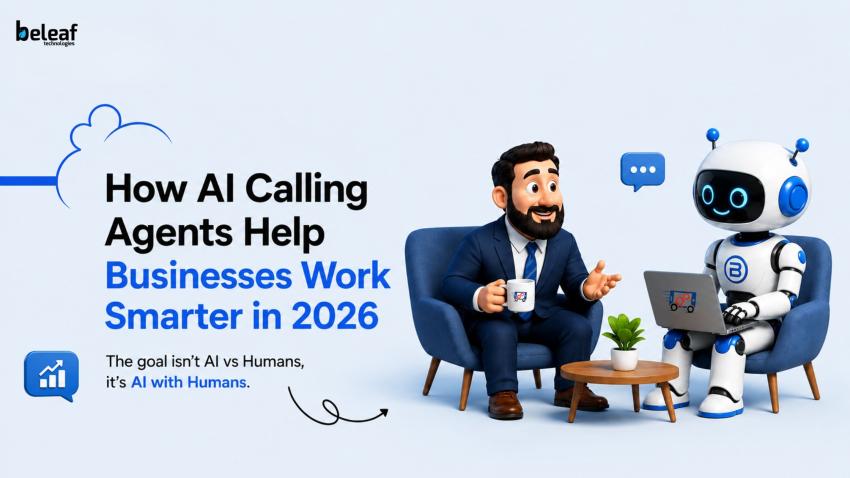
A business can have a great product, strong marketing, and a steady stream of leads but if important calls are missed, opportunities can disappear before anyone gets a chance to respond. This is where an AI Calling Agent can change the way businesses manage everyday communication. Instead of depending entirely on employees to answer repetitive calls, qualify enquiries, schedule appointments, or follow up with customers, businesses can use AI voice technology to handle many routine conversations automatically. In 2026, AI calling is becoming less about simply answering phones and more about creating a faster, more responsive customer communication system.
From Missed Calls to Immediate Conversations
Customers don't always call during convenient business hours. Some want product information, others need support, and potential buyers may simply be checking whether someone is available to help. When nobody answers, that opportunity can quickly move to a competitor. An AI Calling Agent can provide an immediate response for many routine interactions. It can greet callers, understand their questions, collect relevant information, and route conversations when human assistance is required. This gives businesses a way to remain responsive without expecting employees to manually handle every incoming call.
What Can an AI Calling Agent Actually Handle?
The usefulness of an AI phone agent depends on how it is designed and integrated with the business. It doesn't have to replace human employees. Instead, it can take responsibility for repetitive conversations while employees concentrate on tasks that require judgment and personal interaction.
Common use cases include:
Answering frequently asked customer questions.
Qualifying incoming leads.
Scheduling and confirming appointments.
Sending follow-up calls to prospects.
Collecting basic customer information.
Providing order or service updates.
Routing complex conversations to the appropriate employee.
This makes call automation particularly useful for businesses receiving a high volume of repetitive enquiries.
Why Businesses Are Moving Toward AI Voice Agents
The biggest advantage isn't simply reducing the number of calls employees handle. It's about making the entire communication process more consistent. A sales employee, for example, may spend several hours each day calling leads who are not ready to buy. An AI calling system can handle initial qualification and identify which prospects need immediate human attention. Similarly, a service business can automate appointment confirmations while its staff focuses on customers already waiting for assistance. This creates a more efficient division of work: AI handles repetitive communication, while people focus on conversations where human judgment adds more value.
AI Calling Can Support Both Inbound and Outbound Calls
A common misconception is that AI calling technology is useful only for answering incoming calls. Modern AI voice agents can support different communication workflows depending on the business model. For inbound communication, an AI agent can greet customers, understand their intent, answer common questions, and transfer conversations when necessary. For outbound communication, businesses can use automated calling workflows for appropriate tasks such as lead follow-ups, appointment reminders, confirmations, surveys, and customer notifications. The important factor is designing the calling workflow around a genuine business requirement rather than automating conversations simply because the technology is available.
Three Areas Where Businesses Can See the Biggest Impact
Some business processes are particularly suitable for AI calling because they involve predictable conversations and repeated actions.
1. Lead Qualification
Not every lead requires an immediate sales call. An AI calling agent can collect basic information and determine whether a prospect matches predefined criteria. Qualified prospects can then be passed to sales representatives for a more focused conversation.
2. Appointment Management
Businesses such as clinics, agencies, service providers, and consultants often spend significant time managing appointments. AI-powered calling can assist with confirmations, reminders, rescheduling requests, and basic appointment-related questions.
3. Customer Follow-Ups
Following up consistently is difficult when employees have dozens of other responsibilities. Automated voice workflows can help businesses maintain communication with prospects and customers without requiring employees to manually initiate every routine follow-up.
Don't Replace Humans—Use AI Where It Makes Sense
The strongest AI calling strategy isn't necessarily about replacing an entire customer service team. Some conversations require empathy, negotiation, creativity, or complex decision-making that still benefits from a human representative. A better approach is to create a human-AI communication workflow. The AI handles predictable tasks and identifies situations that require escalation. The employee then takes over when the conversation becomes too complex or valuable to automate completely. This approach can improve employee productivity while maintaining a human element in customer interactions.
What Makes an AI Calling Agent Effective?
Simply giving an AI system a voice doesn't automatically create a good customer experience. The quality of the underlying workflow matters just as much as the conversational technology.
A reliable AI calling solution should focus on:
Natural and understandable conversations.
Accurate speech recognition.
Context-aware responses.
Integration with CRM and business systems.
Clear escalation to human representatives.
Call history and useful analytics.
Appropriate handling of customer information.
The goal should be to make the interaction feel useful and efficient rather than making customers feel like they're navigating a complicated automated system.
Final Thoughts
An AI Calling Agent can help businesses rethink how they manage customer communication in 2026. Instead of allowing employees to spend large portions of their day on repetitive calls, businesses can automate suitable conversations and direct human attention toward higher-value interactions. From lead qualification and appointment scheduling to customer follow-ups and inbound support, AI voice technology can become an important part of modern business automation. The businesses that gain the most value will not be those that automate everything, but those that identify the right conversations for AI and create a balanced workflow where technology and human teams work together.