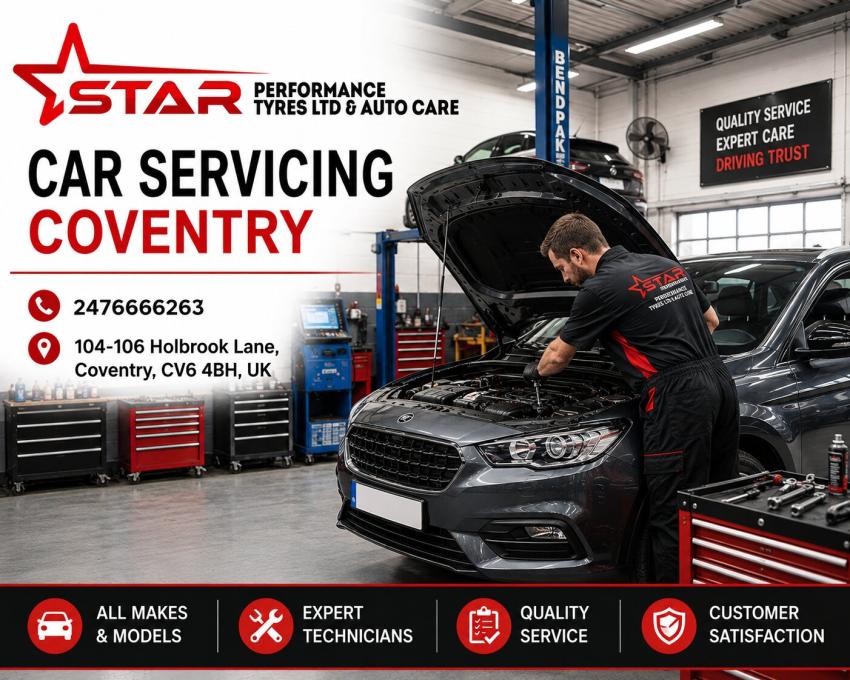
All vehicles require routine maintenance to ensure they will travel safely and reliably down roads. Read this blog to learn what a routine check entails, why timing is important, and what drivers can expect from a typical appointment. It also explores the signs that indicate a car requires concern and ways to choose a trustworthy garage. If you know these fundamentals, the task of maintaining a vehicle in prime condition will become so much easier.
Why Do Regular Checks Matter?
Over time, vehicles wear out, and not replacing them can affect their performance and safety on the road. Every day driving requires inspection of vehicle parts, such as the fuel level, tyres, and brakes, and the longer these parts are put off, the worse the vehicle's performance will be. The brake pad, for instance, wears out and requires more stopping distance before the car stops, and a bald tyre loses traction much faster on wet or icy pavement. Service intervals have been established for this very reason and are needed to prevent small problems from getting out of hand and becoming bigger, more expensive problems. This safeguards the driver and other road users and helps lower the running costs of the road vehicle over its life.
Understanding the MOT Test
In the United Kingdom, all cars three years old or older are required to undergo a mandatory annual test to remain legally roadworthy. Booking an MOT ahead of the renewal date helps avoid a last-minute rush, particularly during busier months when local test slots fill up quickly. The complete test covers various systems, such as lighting, braking, exhaust emissions, tyres and steering, to ensure the car or SUV complies with national safety and environmental regulations. Any fault recorded during testing will typically be classified as either a minor advisory fault (requiring monitoring) or an unsafe fault (requiring repair before a car can be rejoined). A pass certificate will be issued before continuing to drive or tax a car and will normally be valid for 12 months from the date of issue.
What a Service Covers
A normal appointment starts with a visual inspection to identify any parts that need to be replaced before they show further wear. This step is helpful to see into the early stages of any damage that is not apparent to the driver, e.g., wear in the belt or minor fluid leak. When the inspection is finished, the focus shifts to the fluids required for proper operation of the vehicle:
- Engine oil is checked and topped up to protect moving parts.
- Engine coolant levels are checked to avoid overheating.
- Brake fluid is checked to ensure safe and responsive braking.
- Radiator fluid is checked to maintain stable engine temperature.
A major reason for garages to keep track of each visit is to maintain a service history that can be matched to the manufacturer's recommended maintenance schedule. This record is also likely to benefit the vehicle's resale value, as it indicates that it has been well maintained throughout its service life, not just when it developed an issue.
Signs a Service Is Due
Some warning signs indicate that it is time to have a vehicle repaired rather than later. These defects are often clear during normal day-to-day driving activities and can often be avoided, with some large repair costs listed on the books later down the road:
- The warning light on the dashboard turns on during normal driving.
- Braking, acceleration or cornering with unusual noises.
- Stopping distances seem longer than normal.
- Fuel economy diminishes with no conscious effort to reduce driving behavior.
A timely Car Service Coventry booking often resolves these problems before they affect the vehicle's overall performance or lead to a larger repair bill. The steering wheel gives a slight shake and vibrates; also, a slight burning smell should be taken as a reason to schedule an appointment rather than be taken lightly.
Choosing a Suitable Garage
Selecting the right garage can make the entire process much more stress-free. Ensure that technicians are qualified and have a straightforward pricing strategy, as anything being hidden from you after you've begun work can be a problem. Additionally, questions should be asked about a replacement parts' guarantee, since that would help ensure peace-of-mind if the part fails soon after it is installed. It is good practice to have a quick look at the recent customer feedback to know how a garage handles smooth operations and common or uncommon repair work that its customers receive. A well-reviewed, communicative garage will provide significantly more assurance than a garage selected just because it is convenient — it could even be more of an investment in terms of the time of owning a vehicle.
Conclusion
Regular inspection and legal testing ensure that a vehicle is reliable all year round. Minor problems, if detected early, rarely require major repairs, and when the car is properly maintained, it will perform better on each trip. It is one of the easiest ways to minimise damage, ensure the safety of the vehicle and its occupants, and reduce the cost of ownership over time by staying on top of these appointments instead of waiting for warning signs to appear.