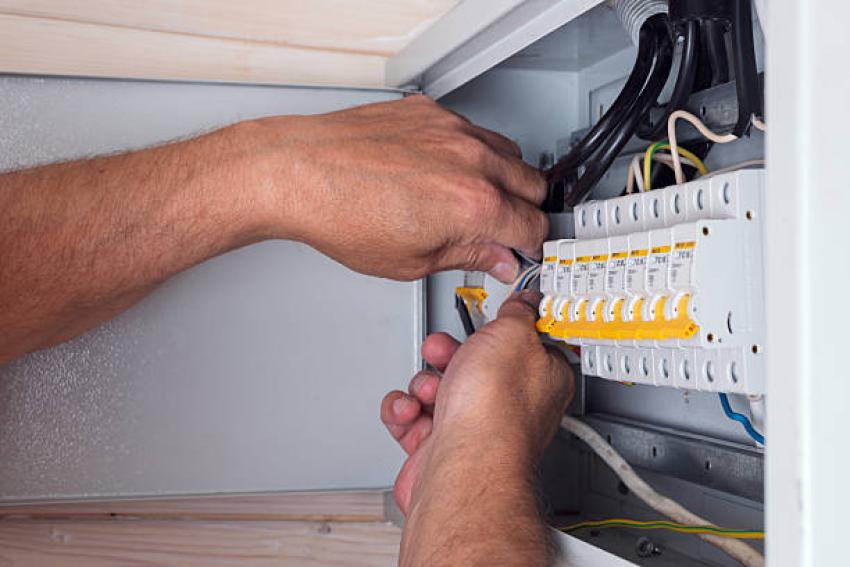
Most people brush off a flickering light or a tripped breaker as just one of those things. Life gets busy, and it's easy to tell yourself it'll probably sort itself out. But some electrical symptoms aren't minor annoyances. They're your house telling you something is genuinely wrong, and ignoring them can put your family and your property at real risk. If you've been noticing strange things happening with your lights, outlets, or breaker box lately, this article breaks down the five warning signs that mean you shouldn't wait. Homeowners across the Antelope Valley who want Electrician in Lancaster CA should treat these symptoms seriously, not as background noise.
1. Your Circuit Breaker Keeps Tripping
A breaker that trips once in a while isn't automatically a crisis. Plug in too many things on one circuit and it'll pop. That's normal. But if the same breaker trips repeatedly, or if multiple breakers are tripping without an obvious cause, that's a different story entirely.
Repeated tripping usually means one of three things: the circuit is genuinely overloaded for your current usage, there's a short somewhere in the wiring, or the breaker itself is worn out and failing. Old breakers do wear out. They're not immortal. And a breaker that trips too easily, or worse, one that stops tripping when it should, is a fire hazard sitting right there in your panel.
Don't just keep resetting it. Get someone to look at it.
2. Lights That Flicker, Dim, or Do Weird Things
Flickering lights get blamed on bulbs constantly. Sometimes that's right. But if you've swapped the bulb and the flickering continues, or if lights dim whenever a large appliance kicks on, the problem is almost certainly deeper than the fixture.
Loose connections inside the wiring are a common culprit. So is a failing electrical panel that can't handle the load your home puts on it. Either way, electrical wiring faults like loose or corroded connections can generate heat and arcing that you'll never see until something catches fire. That's what makes this one deceptive. It looks like a minor annoyance, but arcing inside a wall is genuinely dangerous.
If lights flicker throughout the house, not just in one room, that's a strong signal the panel itself needs attention.
3. Burning Smells, Warm Switch Plates, or Discolored Outlets
This one's urgent. Stop reading for a second and think: have you ever caught a faint burning smell near an outlet or switch and then it just went away? A lot of people shrug it off. That was probably a mistake.
A burning smell near electrical components usually means insulation is melting or wiring is overheating. Warm switch plates, outlets that feel hot to the touch, or outlets with brown or black scorch marks around them are all signs of an active wiring fault. These aren't cosmetic issues. They mean heat is building up somewhere it absolutely shouldn't be, and house fires start exactly this way.
If you notice any of these, don't just unplug whatever's nearby and call it solved. The fault is likely inside the wall. Call an electrician the same day.
4. Outlets That Spark, Are Dead, or Have Two Prongs Instead of Three
Dead outlets are annoying. But they're also telling you something. An outlet that stops working might have a tripped GFCI somewhere upstream, which is easy to fix. Or it might have a loose wire or a failed connection inside the box, which is not.
Outlets that spark when you plug something in are a bigger concern. A tiny spark occasionally is normal as current connects. Big sparks, repeated sparking, or sparks accompanied by a popping sound are not normal. Those point to loose wiring, a short, or a wiring problem that's getting worse over time.
Two-prong outlets are a separate issue worth flagging. They have no ground, which means your appliances and electronics have no protection if there's a surge. Replacing two-prong outlets is one of the more common upgrades homeowners in older homes need. It's not just about convenience. It's about protecting everything plugged into them.
Providers of Electrical Services in Lancaster CA deal with all three of these outlet issues regularly. It's not a rare problem, especially in homes built before the 1980s.
5. An Old or Outdated Electrical Panel
Here's one a lot of homeowners don't think about until something goes wrong. Age alone makes an electrical panel a risk factor. If your panel is more than 25 years old, it was designed for a home that used far less electricity than yours does now. Streaming, EV charging, smart home devices, multiple large appliances running at once. None of that was part of the calculation when the panel was installed.
Fuse-based panels are even more of a concern. Fuses work, technically, but they're outdated and don't offer the same protection that modern breakers do. If someone has replaced a fuse with a higher-rated one at some point (pretty common in older homes), the protection is compromised entirely.
Visible corrosion inside the panel, burn marks around breakers, or breakers that feel loose in their slots are all signs the panel needs replacing, not just inspecting. Jspark Electric INC handles panel replacements and upgrades and is worth a call if your panel looks like it belongs in a different decade.
Top-Rated Electrical Services in Lancaster CA will typically include a full panel assessment as part of any electrical inspection, which is the right place to start if your home is older or you haven't had the wiring looked at in years.
How Urgent Is Urgent?
Some of these signs warrant a same-day call. Burning smells, sparking outlets, or a panel with visible burn marks fall into that category. Don't wait on those. Others, like flickering lights in one room or a breaker that trips occasionally, are still worth scheduling soon rather than ignoring. The problem won't fix itself and it's likely to get worse.
A good rule of thumb: if the symptom is happening regularly, involves heat or smell, or affects multiple parts of the house, treat it as urgent. If it's isolated and mild, book an inspection within the next week or two. Either way, get it looked at. Electrical problems that get ignored tend to get expensive fast.
Good Electrical Services in Lancaster CA aren't hard to find, but make sure whoever you call is licensed, pulls permits when required, and doesn't just reset breakers and leave without diagnosing the root cause.
Frequently Asked Questions
How often should I have my home's wiring inspected?
Most electricians recommend an inspection every 10 years for homes under 25 years old, and every 5 years or so for older homes. If you've done major renovations or added a lot of new appliances, sooner is better. It's one of those things that's easy to put off and genuinely worth not skipping.
Is a flickering light always an electrical emergency?
Not always. A single light flickering in one fixture is usually a bulb or a loose connection at that fixture. But flickering across multiple rooms, or dimming when appliances kick on, points to something bigger. That's when you want a professional taking a look, not just a new bulb.
Can I replace an outlet myself to fix sparking?
Technically, yes, if you know what you're doing and turn off the right breaker. But sparking usually isn't caused by the outlet itself. It's caused by what's behind it. Replacing the outlet face without diagnosing the wiring won't solve the problem, and you could make it worse if you're not familiar with how the wiring is connected.
What's the difference between a fuse box and a breaker panel, and does it matter?
A fuse box uses one-time fuses that blow when a circuit is overloaded. A breaker panel uses switches that trip and can be reset. Modern breakers offer better, more consistent protection, and they're much easier to work with safely. If your home still has a fuse box, upgrading to a breaker panel is usually a smart move, especially in an older home.
How do I know if my electrical panel needs replacing or just an inspection?
If the panel is over 25 years old, has visible corrosion, makes buzzing sounds, or uses fuses instead of breakers, it almost certainly needs replacing rather than just a checkup. An electrician can confirm this pretty quickly once they take a look inside. Don't try to assess the panel yourself by poking around in it.