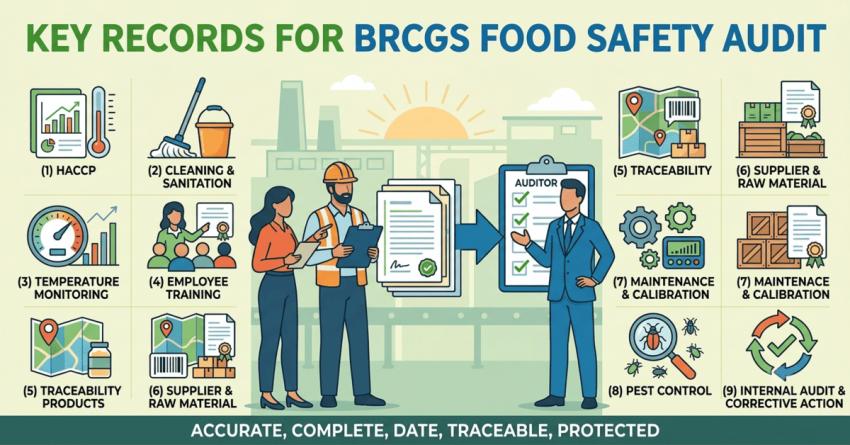
Preparing for a food safety audit can be challenging, particularly when managing a large number of documents and records. Auditors do not only check whether procedures exist; they also look for evidence that those procedures are followed. Well-maintained records can make a significant difference during a BRCGS Food Safety audit.
Records provide objective evidence that food safety controls, quality processes, employee training, inspections, and corrective actions are implemented consistently. Accurate, complete, and accessible records are therefore an important part of audit readiness.
Why Are Records Important for a BRCGS Food Safety Audit?
Records demonstrate that a food safety management system is working in practice. Auditors may review records to confirm that employees follow established procedures and that food safety hazards are properly controlled. How BRCGS Food Safety Improves Quality can also help explain how systematic food safety practices contribute to consistent product quality.
Records should be accurate, legible, dated, traceable, and protected from unauthorized changes. They should also be retained according to applicable requirements, product risks, customer expectations, and legal obligations. Good recordkeeping helps organizations identify problems early and take corrective action before they become serious food safety issues.
Key Records Required for a BRCGS Food Safety Audit
The exact records required can vary according to the site's activities, products, processes, and applicable requirements. However, several categories are commonly important during an audit.
1. HACCP and Food Safety Records
HACCP-related records provide evidence that food safety hazards have been identified and controlled. These may include:
- Hazard analysis records
- HACCP monitoring records
- Critical control point monitoring
- Corrective action records
- Verification records
- Validation evidence
- HACCP review records
These records help demonstrate that the site's food safety plan is actively implemented rather than simply documented.
2. Cleaning and Sanitation Records
Cleaning records show that production areas, equipment, utensils, and other relevant areas are cleaned according to established procedures. They may include cleaning schedules, sanitation checklists, verification results, and corrective actions.
3. Temperature Monitoring Records
Temperature records are important for processes involving storage, cooking, cooling, refrigeration, freezing, or transportation. Records should show required limits, actual results, dates, times, responsible personnel, and actions taken when limits are not achieved.
4. Employee Training Records
Training records demonstrate employee competence. They may cover food hygiene, HACCP, allergen awareness, personal hygiene, cleaning procedures, food defense, and job-specific training.
5. Traceability Records
Traceability records help track raw materials, packaging, production batches, and finished products. Auditors may review supplier information, batch records, production records, dispatch records, and traceability test results.
6. Supplier and Raw Material Records
Supplier approval and monitoring records help demonstrate control over purchased materials and services. These may include approved supplier lists, supplier evaluations, specifications, certificates, testing results, and supplier performance reviews.
7. Maintenance and Calibration Records
Maintenance records show that equipment is inspected and maintained as planned. Calibration records are important for thermometers, weighing equipment, pressure gauges, and other measuring devices.
8. Pest Control Records
Pest management records can include inspection reports, pest control service reports, trend analysis, pest activity findings, and corrective actions. These records help demonstrate that pest risks are being monitored and controlled.
9. Internal Audit and Corrective Action Records
Internal audit records show that the organization regularly checks its own processes. Auditors may examine audit schedules, findings, corrective actions, root cause analysis, and verification of completed actions.
How to Prepare Records for the Audit
Do not wait until the audit date to organize records. Review documentation regularly and make sure records are complete, consistent, and easy to retrieve.
A BRCGS food safety audit checklist can help identify required records by process or clause. Regular internal audits can also identify missing records, incomplete entries, and overdue corrective actions.
Employees should understand how to complete records correctly. Even a well-designed procedure has limited value if the associated records are inaccurate or incomplete.
Conclusion
Records are essential for BRCGS Food Safety audit preparation. HACCP monitoring, cleaning, temperature control, training, traceability, supplier management, maintenance, calibration, pest control, internal audits, and corrective actions provide important evidence. Well-organized and accurate records demonstrate that food safety procedures are consistently implemented, monitored, and improved, helping organizations approach audits with greater confidence and readiness.