Picking a preschool is stressful. You're trying to figure out if your three-year-old is going to thrive, if the teachers actually care, and whether the whole thing is worth the tuition. Montessori keeps coming up in conversations, but a lot of parents aren't totally sure what makes it different from a regular preschool. If you're looking at a Montessori Preschool Program in Pomona CA, this article breaks down what you're actually signing your kid up for, what to look for in a good program, and some honest questions to ask before you commit.
The short version: Montessori classrooms work differently than most people expect. And that's kind of the point.
What Makes Montessori Different From Regular Preschool
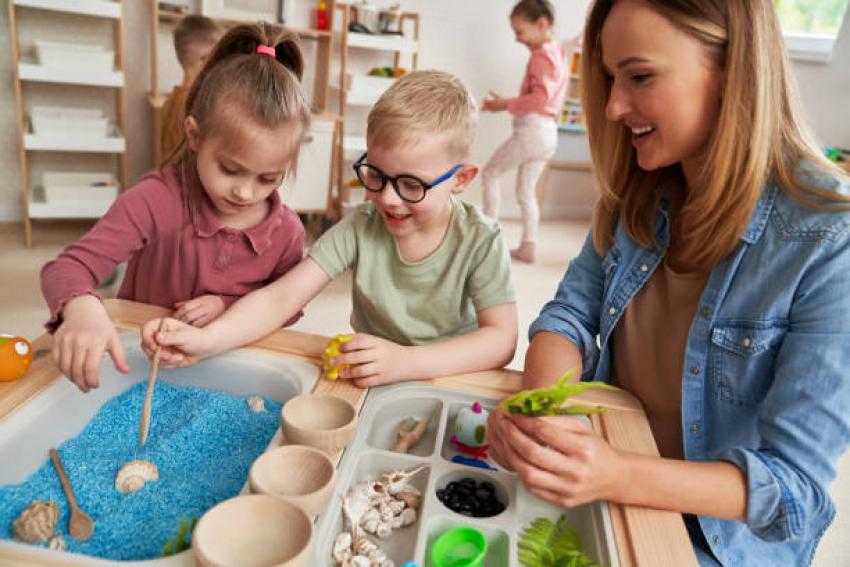
In a traditional preschool, a teacher stands at the front and leads the group. Everyone does the same activity at the same time. It works for plenty of kids. But Montessori flips that. Children move around the classroom freely, choose their own work from a set of specially designed materials, and stay with an activity for as long as they need to. The teacher watches, guides, and steps in when useful. Not to direct every move.
That independence is intentional. The whole method is built on the idea that kids learn better when they're genuinely interested in what they're doing, not just going through the motions because an adult told them to. Research tends to back this up. A study published on Montessori education via Wikipedia points to findings that children in Montessori programs often show stronger social skills and executive function compared to peers in conventional settings.
That said, not every school that calls itself Montessori is running a true program. The name isn't trademarked. So it pays to dig a little.
What a Real Montessori Classroom Should Look Like
Walk into a good Montessori preschool room and you'll notice a few things right away. It's quiet but not silent. Kids are busy. Really busy, actually, just not in the way you might expect from a preschool. There's no chaos, no one yelling over a crowd.
The materials on the shelves are specific to the Montessori method. Wooden beads for counting, sandpaper letters for tracing, puzzles that teach shape and proportion. Each one has a purpose, and kids use them independently after a teacher gives a short lesson. The environment is set up so children can access almost everything themselves, which builds a sense of ownership over their own learning.
Mixed-age groupings are another thing you'll usually see. A three-year-old might work alongside a five-year-old. The older kids reinforce their own understanding by helping the younger ones, and the younger kids get to observe skills they'll grow into. It's a setup that works surprisingly well in practice.
Finding a Quality Montessori Preschool in Pomona CA
Not all programs are equal. When you're researching a Montessori Preschool in Pomona CA, there are a few things worth checking before you schedule a tour. First, ask whether the teachers are Montessori-certified. That means they went through specific training, usually through an organization like the American Montessori Society or the Association Montessori Internationale. A certificate from a weekend workshop doesn't count.
Second, look at the classroom itself. Does it feel calm? Are the materials organized and accessible? Are kids actually engaged, or does it look like controlled chaos with a Montessori label on the door? You can tell a lot in fifteen minutes of observation. Most good schools will let you sit and watch for a bit. If they won't, that's worth noting.
Third, ask how they handle transitions. Drop-off, lunch, pickup. Montessori kids thrive on routine, and a good program builds predictable rhythms into the day even while allowing flexibility within work time.
What to Expect in the First Few Weeks
Honestly, the adjustment period surprises a lot of families. Some kids walk in and immediately take to the freedom. Others take two or three weeks to settle into the rhythm. That's normal. Don't panic if your child seems unsure at first.
Teachers in a solid Montessori Preschool in Pomona CA will observe your child closely during those early weeks and introduce materials at a pace that fits where the child actually is developmentally, not where the calendar says they should be. That individual attention is one of the reasons parents tend to stick with Montessori once they see it working.
Communication with the teacher matters a lot during this stretch. Ask questions. Check in. A good teacher will have specific things to say about your child, not just "they had a great day." Specifics mean they're paying attention.
Is Montessori Worth the Cost
Private Montessori programs aren't cheap. That's just the reality. But a lot of parents find the investment makes sense when they look at what's included: trained teachers, quality materials, small class sizes, and a method that's been around for over a hundred years and keeps producing good results.
If you'd rather not spend hours researching every option in the area, McKinley Montessori Academy is one school families in Pomona have turned to for this kind of structured, child-led early education. It's worth a look if you're comparing local options.
Some families also qualify for subsidized programs or sliding-scale tuition depending on income. Always ask. You might be surprised what's available. Don't assume the sticker price is the final price.
Signs a Program Is a Good Fit for Your Child
Every kid is different. Some genuinely thrive with more structure and find Montessori's open work time overwhelming at first. That's okay. But here are some signs the Montessori Preschool Program in Pomona CA you're considering is doing things right:
- Teachers can explain the purpose of each material, not just what it is
- The classroom has a calm, focused energy most of the time
- Children are allowed to work at their own pace without being rushed
- The school tracks each child's progress individually
- Parents are welcomed in for observation, not just events
- Staff turnover is low, which means the teachers actually want to be there
If most of those boxes get checked on your visit, you're probably looking at a solid program.
Frequently Asked Questions
What age can my child start a Montessori preschool program?
Most Montessori preschool programs accept children starting around age two and a half to three. Some programs have toddler classrooms that start even earlier, around eighteen months. It depends on the school, so ask about their specific age cutoffs when you tour.
Does my child need to be potty-trained to enroll?
Many programs do require it, at least for the preschool level. Some toddler programs are more flexible. It's one of the first questions to ask when you call, so you're not caught off guard later.
How is Montessori different from play-based preschool?
Both approaches value child-led activity, but Montessori uses specific, purposeful materials rather than open-ended free play. There's structure built into the freedom. Kids choose from a curated set of activities, not a general toy box. The distinction matters, and good Montessori teachers can explain it clearly.
How do I know if a school is a real Montessori program?
Ask about teacher credentials and whether the school is affiliated with a recognized Montessori organization. Accreditation from AMS or AMI is a strong signal. Also just observe the classroom. A real program looks and feels different from a conventional one.
Will my child be ready for kindergarten after Montessori preschool?
Generally, yes, and often more than ready. Kids coming out of quality Montessori programs tend to have strong reading foundations, solid math concepts, and good self-regulation skills. Some parents worry about the transition to a structured kindergarten, but most kids adapt pretty quickly once they know what's expected.
Finding the right preschool takes time, and there's no single perfect answer for every family. But if you go in knowing what to look for and what questions to ask, you'll be in a much better position to make a choice you feel good about.