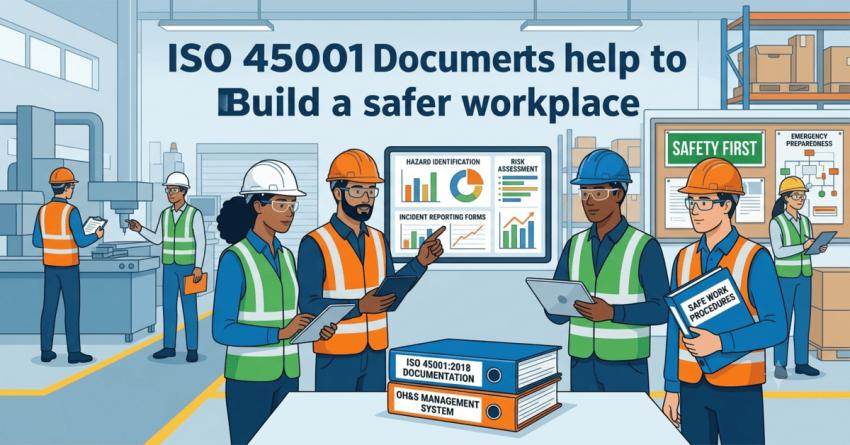
Creating a safer workplace requires more than safety policies and employee training. Organizations need a structured Occupational Health and Safety Management System (OH&S MS) that helps identify hazards, control risks, and continuously improve workplace safety. This is where ISO 45001 documents become essential.
Well-designed documentation provides a practical framework for implementing safety processes consistently across the organization. Instead of relying on verbal instructions or individual practices, documented procedures help ensure everyone follows the same safety standards, reducing the likelihood of workplace incidents and improving compliance with ISO 45001 requirements.
Why Documentation Is the Foundation of Workplace Safety
Every organization faces unique workplace hazards, whether in manufacturing, construction, healthcare, logistics, or service industries. Managing these risks effectively requires documented processes that employees can easily understand and follow.
ISO 45001 documentation establishes clear responsibilities, defines safety procedures, and standardizes risk management activities. This consistency helps organizations prevent misunderstandings while promoting a proactive safety culture where hazards are identified and addressed before they result in accidents.
When documentation is regularly reviewed and updated, it also supports continual improvement, one of the core principles of ISO 45001.
How ISO 45001 Documents Improve Workplace Safety
Properly prepared documentation contributes to safer operations in several important ways. Well-structured ISO 45001 documents provide organizations with manuals, procedures, forms, and records that help standardize safety practices, improve risk management, and support effective implementation of an occupational health and safety management system.
Supports Hazard Identification
Documented procedures guide employees in recognizing workplace hazards during routine activities, inspections, and operational changes. Early identification allows organizations to eliminate or minimize risks before they cause injuries.
Strengthens Risk Assessment
Standardized risk assessment formats help evaluate hazards using consistent criteria. This enables organizations to prioritize corrective actions and allocate resources where they are needed most.
Standardizes Safe Work Practices
Documented operational controls ensure that tasks are performed safely regardless of department or location. Employees receive clear instructions, reducing variations that may lead to unsafe conditions.
Improves Emergency Preparedness
Emergency response procedures, evacuation plans, and incident reporting forms help organizations respond quickly during unexpected situations. Well-documented emergency processes reduce confusion and improve employee safety.
Encourages Employee Participation
ISO 45001 emphasizes worker involvement in occupational health and safety. Documentation such as consultation records, meeting minutes, and feedback forms supports employee participation and helps management identify improvement opportunities.
Benefits Beyond Certification
Many organizations initially prepare ISO 45001 documentation to achieve certification, but the long-term benefits extend much further.
Effective documentation helps reduce workplace incidents, improves legal and regulatory compliance, strengthens management control, simplifies internal audits, and supports ongoing performance monitoring. It also creates consistency when onboarding new employees and maintaining safety practices across multiple locations.
As organizations grow, documented systems become even more valuable by ensuring safety processes remain standardized and scalable.
Simplify ISO 45001 Documentation Preparation
Preparing ISO 45001 documentation from scratch can be time-consuming, especially for organizations with limited experience in implementing occupational health and safety management systems. Developing manuals, procedures, forms, risk assessment formats, and records that align with ISO 45001 requirements often requires careful planning and technical knowledge. A structured ISO 45001 documentation preparation process can help organizations improve consistency, reduce implementation effort, and support compliance with the standard.
Using professionally prepared ISO 45001 documents can significantly reduce documentation effort while providing a structured foundation for implementation. Editable templates allow organizations to customize the documentation according to their operations, helping maintain consistency, improve compliance, and streamline the certification process.
Conclusion
Building a safer workplace starts with well-structured documentation that supports consistent safety practices and effective risk management. ISO 45001 documents help organizations identify hazards, control risks, improve compliance, and drive continual improvement. By implementing comprehensive documentation, organizations can strengthen workplace safety while creating a more efficient and sustainable occupational health and safety management system.