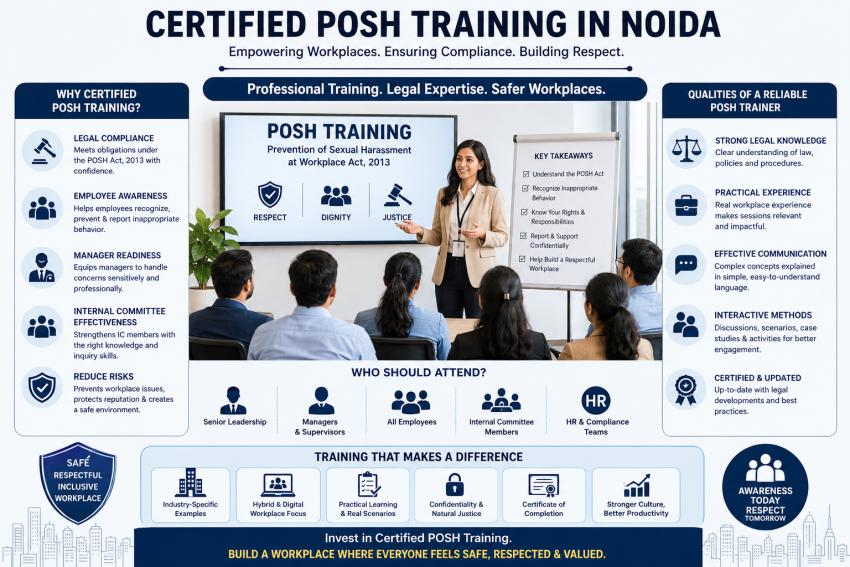
Creating a safe and respectful workplace is an important responsibility for every organisation. Along with promoting employee wellbeing, employers must also comply with the Prevention of Sexual Harassment of Women at Workplace Act, 2013. One of the most effective ways to meet this responsibility is by conducting certified POSH training through qualified professionals.
Many companies organise awareness sessions each year to meet statutory obligations. However, the quality of the training often determines whether employees genuinely understand workplace conduct or simply attend another compliance programme. Certified POSH training delivered by experienced legal professionals provides practical knowledge, improves awareness, and strengthens workplace compliance. For organisations operating in Noida, selecting the right training provider is an important decision. A well designed programme not only fulfils legal expectations but also contributes to building a professional and respectful work environment.
What Is Certified POSH Training?
Certified POSH training refers to structured workplace awareness programmes delivered by professionals who possess recognised expertise in workplace sexual harassment law, corporate compliance, and employee awareness. Such programmes usually include legally accurate information, practical workplace examples, interactive discussions, and guidance based on current legal requirements. Participants often receive certificates of completion, which help organisations maintain records of compliance activities. Certification also reflects a structured learning process rather than an informal awareness session.
Why Companies Prefer Certified Trainers
Every workplace is different. A manufacturing company faces different challenges from an information technology organisation or a healthcare institution. Certified trainers understand these differences and adapt their sessions accordingly. Companies generally prefer experienced trainers because they can explain legal concepts in simple language without making the sessions overly technical. Certified professionals also remain updated with legal developments, judicial decisions, and workplace practices. This helps organisations receive guidance based on current compliance expectations. More importantly, experienced trainers answer employee questions with confidence while maintaining legal accuracy.
Qualities of a Reliable Certified POSH Trainer
Selecting the right trainer requires careful evaluation. Organisations should look beyond marketing claims and examine the trainer's professional qualifications and practical experience. Reliable trainers usually possess several important qualities.
Strong Legal Knowledge
A trainer should have a clear understanding of the Prevention of Sexual Harassment Act, employment law, workplace policies, and Internal Committee procedures. Legal knowledge ensures employees receive correct guidance regarding their rights and responsibilities.
Practical Workplace Experience
Experience handling workplace matters enables trainers to explain legal concepts using realistic situations employees may actually encounter. Practical examples improve understanding and encourage active participation.
Effective Communication Skills
Complex legal provisions should be explained using clear and simple language. Employees from different educational backgrounds should easily understand the training without feeling overwhelmed by legal terminology.
Interactive Teaching Methods
Employees learn more effectively through discussions, workplace scenarios, quizzes, and case studies than through lengthy presentations. Interactive learning encourages better participation and improves knowledge retention.
Why Legal Professionals Often Deliver Better Training
Many organisations prefer advocates, employment law specialists, compliance consultants, or legal experts for POSH awareness programmes. Legal professionals understand both statutory requirements and practical implementation. They explain not only what the law requires but also why organisations follow particular procedures during complaint handling. Their experience enables them to discuss investigation procedures, confidentiality, evidence, natural justice, and employer obligations with greater clarity. This practical perspective adds significant value to employee learning.
Training Should Cover Every Employee
Certified POSH training is not limited to new employees or human resources professionals. Every member of the organisation plays an important role in maintaining workplace respect. Senior leadership demonstrates organisational commitment. Managers learn how to respond appropriately when concerns are reported. Employees understand professional conduct and reporting mechanisms. Internal Committee members receive specialised instruction regarding complaint inquiries and legal procedures. When every level participates, organisations build stronger compliance systems.
The Importance of Industry Specific Training
Every industry presents unique workplace situations. Technology companies frequently address digital communication and remote working behaviour. Manufacturing organisations may focus on factory environments and supervisory responsibilities. Educational institutions discuss faculty, staff, and student interactions. Healthcare organisations address patient interactions alongside workplace relationships. Industry specific examples make training more relevant and easier to understand. Employees recognise situations familiar to their daily work rather than relying upon generic illustrations.
Modern Training Should Address Digital Workplaces
Today's workplaces extend beyond office buildings. Employees regularly communicate through emails, messaging applications, collaboration platforms, and virtual meetings. Certified trainers include guidance on professional online communication and digital workplace behaviour. Topics often include respectful communication, virtual meeting etiquette, workplace messaging, social media conduct, and maintaining professional boundaries. Modern awareness programmes reflect current working practices rather than focusing only on traditional office environments.
Internal Committee Training Requires Specialist Knowledge
The Internal Committee performs one of the most significant functions under the POSH Act. Committee members investigate complaints, examine evidence, maintain confidentiality, and prepare inquiry reports. Because these responsibilities involve legal procedures, committee members require specialised training. Certified legal trainers explain inquiry procedures, documentation standards, witness examination, report preparation, procedural fairness, and principles of natural justice. Proper training improves the quality and credibility of complaint resolution.
Benefits of Certified POSH Training for Companies
Quality training provides benefits extending beyond legal compliance. Employees gain confidence in recognising inappropriate behaviour. Managers understand their responsibilities when concerns arise. Internal Committee members conduct inquiries more effectively. Leadership demonstrates commitment towards workplace dignity and inclusion. Well informed employees contribute towards healthier workplace relationships and stronger organisational culture. Effective awareness also reduces misunderstandings and encourages early reporting of workplace concerns before issues become more serious.
Selecting the Right Training Provider
Choosing a certified training provider should involve careful evaluation rather than selecting the lowest priced option. Organisations should consider the trainer's legal background, experience, industry knowledge, participant engagement methods, and ability to customise training programmes. Reviewing previous corporate experience and participant feedback may also help assess training quality. The best providers encourage interaction, answer practical questions, and present legally accurate guidance suitable for the organisation's working environment. Businesses seeking structured compliance programmes often include Posh Training in Noida as part of their long term workplace governance initiatives.
Building a Positive Workplace Through Continuous Awareness
POSH compliance should not be viewed as an annual legal requirement alone. Workplace behaviour evolves alongside technology, organisational growth, and changing communication practices. Regular awareness programmes help employees remain informed about acceptable conduct, reporting mechanisms, and organisational expectations. Continuous education also reinforces respectful workplace values throughout the organisation. Many companies complement annual compliance sessions with refresher workshops, manager training, and Internal Committee development programmes. Organisations planning regular posh awareness training often create stronger compliance cultures while promoting employee confidence and workplace trust.
Conclusion
Certified POSH training plays an essential role in helping organisations meet legal obligations while creating respectful and inclusive workplaces. The effectiveness of any awareness programme depends largely on the expertise of the trainer delivering it. Professionals with strong legal knowledge, practical workplace experience, and engaging teaching methods provide far greater value than routine compliance presentations.
As companies in Noida continue to grow across multiple industries, selecting qualified trainers becomes an important investment in both legal compliance and organisational culture. Well delivered certified POSH training strengthens employee awareness, supports fair complaint handling, reduces organisational risk, and encourages a professional workplace where every individual feels respected and protected.