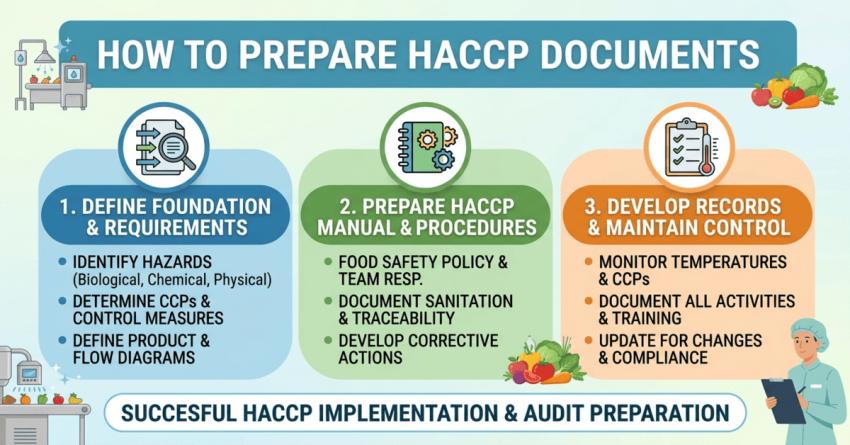
Implementing a HACCP (Hazard Analysis and Critical Control Points) system requires more than identifying food safety hazards. A well-structured documentation system helps organizations define processes, control risks, maintain consistency, and demonstrate compliance during audits. Preparing effective HACCP documents is an important step for food businesses that want to establish a reliable food safety management system and improve overall operational control.
Proper HACCP documentation provides clear guidance for employees, supports monitoring activities, and creates evidence that food safety controls are working effectively. Whether you operate a food manufacturing facility, restaurant, catering business, or processing unit, maintaining accurate documents is essential for successful HACCP implementation.
Understand HACCP Requirements Before Preparing Documents
The first step in preparing HACCP documentation is understanding the food safety processes and requirements applicable to your organization. Businesses should identify potential biological, chemical, and physical hazards associated with their products and processes.
Before creating documents, organizations should define:
- Product details and intended use
- Processing steps and workflow
- Potential food safety hazards
- Critical control points (CCPs)
- Control measures and monitoring methods
This information forms the foundation of the HACCP plan and helps create relevant procedures and records that support effective hazard control throughout the production process.
Prepare a HACCP Manual and Food Safety Procedures
A HACCP manual is the main document that describes how an organization manages food safety risks. It explains the overall HACCP system, responsibilities, and methods used to control hazards.
A complete HACCP manual generally includes:
- Food safety policy and objectives
- HACCP team responsibilities
- Product descriptions
- Process flow diagrams
- Hazard analysis details
- CCP identification and control methods
Along with the manual, organizations need documented procedures that explain how activities are performed. These may include sanitation procedures, supplier control procedures, traceability procedures, and corrective action processes.
Develop HACCP Records and Monitoring Forms
Records are essential because they provide evidence that HACCP controls are being followed. During food safety inspections or audits, organizations must demonstrate that monitoring activities are performed consistently.
Important HACCP records may include:
- Temperature monitoring records
- CCP monitoring logs
- Cleaning and sanitation records
- Employee training records
- Equipment calibration records
- Corrective action reports
- Verification records
Well-maintained records help organizations identify problems quickly and take appropriate corrective actions.
Maintain Document Control and Regular Updates
HACCP documents should not remain unchanged after implementation. Food businesses should regularly review and update documents whenever there are changes in processes, equipment, ingredients, or regulatory requirements.
A proper document control system helps ensure that employees always use the latest approved procedures and forms. It also improves audit preparation and reduces the risk of missing important food safety information.
Use Ready-to-Use HACCP Documentation Solutions
Preparing HACCP documents from the beginning can require significant time, technical knowledge, and effort. Many organizations choose structured documentation solutions to simplify HACCP implementation and ensure that important documents are not overlooked.
Our HACCP documentation package provides professionally prepared templates, including manuals, procedures, checklists, and records that help food businesses establish an effective HACCP system. You can explore our complete range of HACCP documents designed to support food safety implementation and audit preparation.
Conclusion
Preparing effective HACCP documentation is a critical part of building a successful food safety management system. A complete HACCP manual, procedures, and records help organizations control hazards, improve operational consistency, and maintain compliance requirements.
By developing well-structured HACCP documents or using professionally prepared documentation solutions, food businesses can implement HACCP more efficiently and create a strong foundation for long-term food safety performance while improving customer confidence and operational reliability.