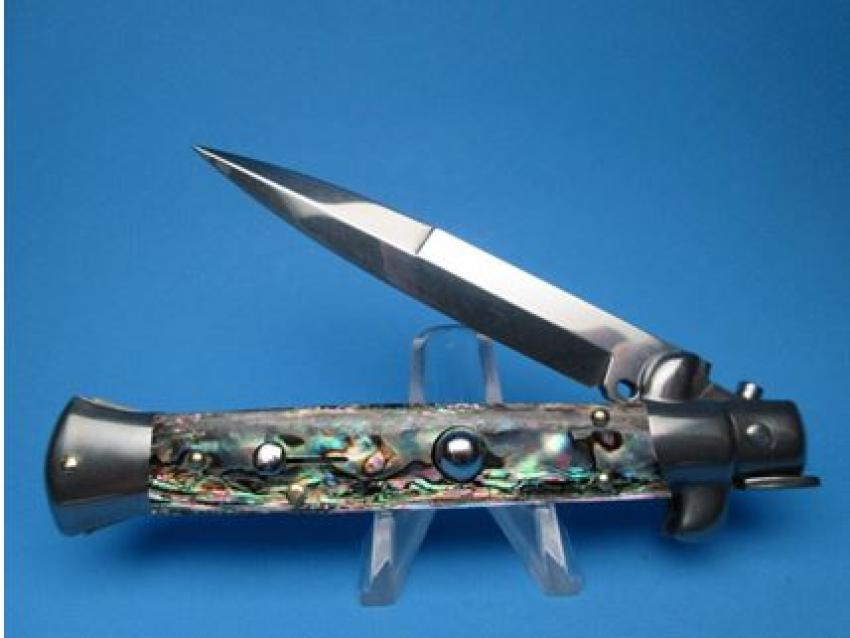
From old movies to modern songs, stiletto switchblades show up again and again. Not just tools, they’ve grown into something bigger through stories people tell. Because they look sharp and snap open fast, directors place them in scenes for effect. Writers sometimes give them to characters that live on the edges - literal or otherwise. They stand less for cutting and more for moments where control slips.
Over the decades, what began as steel became shorthand for risk held in the palm. Out of nowhere, the sharp look of a switchblade knife grabs attention, turning heads in stories where mood matters most. Directors often rely on them to heighten tension, giving them a powerful cinematic presence.
The Story of Switchblade Knives in Movies, Music, and Media
● First Literary Mentions
At first, books brought up switchblades like oddities - small surprises tucked into city scenes without deeper purpose. When tales grew wider, showing grittier corners of society, those same tools slipped into stories as signs of tension, edge, or just making it through the night. From there, their role shifted slowly, feeding what people would eventually see when they thought of that quick snap open.
● Depictions in Mid-20th Century Media
Mid-century screens lit up with the switchblade knife more often than before. Trouble on screen found a tool in these spring-loaded blades - sharp moments grew sharper when they appeared near restless youth. A blade snapping open could mean defiance, tension, even identity, depending on who held it and how light caught the steel. Back then, they helped shape how people saw these knives - screens everywhere linked them to risk, to rule-breaking.
● Modern Interpretations in Entertainment
A sudden gleam catches the eye - flick-knives appear, slipping into films, series, digital battles, graphic tales, almost out of thin air. Yet they do not behave as steel should; their purpose bends toward spectacle. Tension hums behind each snap open, whispering of mood, history, unspoken tension. Writers wield them not to cut flesh but to mark identity, layered with quiet implication. What matters hides just below what you see.
The Future of the Switchblade Knife in Popular Culture
● Changing Storytelling Trends
These days, stories often feel closer to real life, built around characters that think and change in ways that make sense. Because of this, something like a switchblade might show up not for shock value, but quietly - like a hint about who someone is. Quietly shaping the story, it stays out of sight but never disappears. Because people want honesty in what they see - on TV or online - small things carry bigger weight today. Meaning comes through small choices, not loud moments.
● Collecting and Historical Interest
Out there past movies and myths, the switchblade knife pulls attention from those who study old designs and clever mechanics. Not just props on screen, these knives show up in collections because someone once forged them with care, linked them to history, or let them shine under studio lights. What stands out is how they live two lives - one as something you open with a flick, another as a quiet emblem of eras and attitudes now gone.
● Modern Media Perspectives
Out here, stories about switchblades feel different now - more tuned into real-life tensions and who might be watching. Instead of leaning on old ideas, writers slip them in where they fit, like puzzle pieces that earn their spot. Thanks to shows pinging across borders, small films getting seen, and fewer gatekeepers, the blade isn’t just a symbol anymore - it’s part of someone’s history, mood, or survival. Each version adds shade, never just black and white.
Conclusion
MySwitchblade is the most trusted online platform to buy the iconic and retro-styled switchblade knife. Later on, these blades shifted from mere utility items to bold symbols standing for unease, defiance, threat, or personal image. With a look all their own and sharp visibility in film scenes, they’ve stuck around as memorable markers in tales told through visuals. Still, one should remember how stories tend to stretch reality. Just to make things feel more intense. So depictions of flick-knives in movies usually follow creative flair instead of actual accuracy.