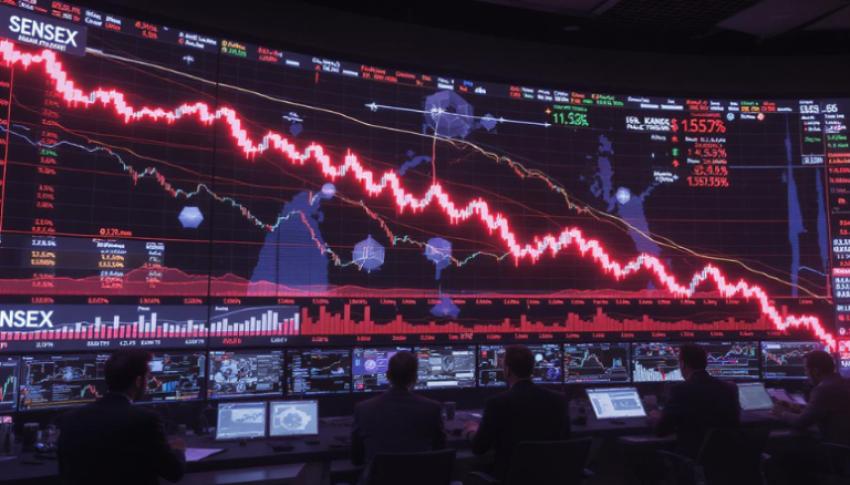
The Indian stock market recently witnessed significant volatility as the Sensex and Nifty Fall dominated financial discussions across the country. Benchmark indices declined by around one percent after heavy selling in leading information technology companies, reflecting growing concerns over global economic conditions and future corporate earnings. Although temporary market corrections often create uncertainty, they also provide valuable insight into investor behavior, sector performance, and long term economic trends. Understanding why the Sensex and Nifty Fall occurred can help investors make informed decisions instead of reacting to short term market fluctuations.
Why IT Stocks Hold So Much Influence
The information technology sector is one of the largest contributors to India's stock market. Several leading software companies are among the biggest constituents of both the Sensex and Nifty.
Because these companies have high market capitalization, even a moderate decline in their share prices can significantly impact the benchmark indices.
The recent Sensex and Nifty Fall clearly demonstrated how closely the broader market depends on the performance of major technology firms.
Factors Behind the Weakness in IT Stocks
Several domestic and international developments combined to create selling pressure within the technology sector.
Global companies became more cautious with technology spending.
Large clients delayed digital transformation projects.
Revenue growth expectations became more conservative.
Currency fluctuations affected earnings forecasts.
Institutional investors shifted capital toward relatively defensive sectors.
As these concerns gained momentum, technology stocks experienced broad based selling, resulting in the latest Sensex and Nifty Fall.
Global Economic Conditions Shaped Investor Sentiment
Indian markets operate within a highly interconnected global financial system.
Developments across major economies often influence investment decisions in emerging markets.
Several international factors affected market confidence.
Persistent inflation across developed economies.
Uncertainty regarding future interest rate policies.
Slower business investment in technology.
Weak earnings guidance from international technology companies.
Increased geopolitical uncertainty.
These global developments reduced investor confidence and contributed to the Sensex and Nifty Fall.
Profit Booking Added to the Market Decline
The stock market had delivered impressive returns before the recent correction.
Many investors decided to secure profits accumulated during previous market rallies.
Profit booking is considered a healthy feature of financial markets because it helps normalize valuations after extended periods of growth.
However, combined with weaker technology stocks, profit booking accelerated the Sensex and Nifty Fall.
Banking and Financial Stocks Provided Stability
Although technology companies experienced considerable pressure, banking and financial institutions demonstrated relatively stronger resilience.
Healthy credit growth continued supporting profitability.
Improving asset quality strengthened investor confidence.
Domestic lending activity remained stable.
Strong financial performance attracted long term investors.
These factors helped reduce the overall impact of the Sensex and Nifty Fall on the broader market.
Consumer Driven Industries Remained Resilient
India's domestic economy continues benefiting from strong consumer demand across multiple industries.
Consumer goods companies maintained stable business performance.
Automobile manufacturers continued reporting healthy demand.
Retail businesses remained supported by household spending.
Healthcare companies attracted investors looking for relatively defensive opportunities.
This broad resilience indicates that the Sensex and Nifty Fall was concentrated mainly within selected sectors rather than reflecting weakness across the entire economy.
Foreign Institutional Investors Played an Important Role
Foreign institutional investors remain major participants in Indian equity markets.
During periods of global uncertainty, these investors frequently rebalance portfolios by reducing exposure to higher risk assets.
Temporary investment outflows increase market volatility and often amplify benchmark index declines.
The recent Sensex and Nifty Fall reflected this cautious international investment approach alongside domestic selling pressure.
What Retail Investors Should Understand
The participation of retail investors in Indian equities has grown rapidly during recent years.
Market corrections often create anxiety among first time investors.
However, experienced investors understand that successful investing requires patience and disciplined decision making.
Rather than focusing solely on daily market movements, investors should evaluate companies based on business fundamentals, financial performance, management quality, competitive positioning, and future earnings potential.
The recent Sensex and Nifty Fall reinforces the importance of maintaining a long term investment perspective.
Technology Innovation Continues Despite Temporary Weakness
Although technology companies recently faced selling pressure, the industry's long term growth story remains encouraging.
Artificial intelligence continues reshaping business operations.
Cloud computing demand remains strong.
Cybersecurity investments continue increasing.
Automation solutions continue expanding globally.
Digital transformation remains essential for businesses across industries.
These long term opportunities suggest that temporary market weakness should not overshadow the sector's future potential.
Building a Strong Investment Strategy
Periods of market volatility require thoughtful planning rather than emotional reactions.
Investors can strengthen long term portfolios by following disciplined strategies.
Diversify investments across sectors.
Continue systematic investment plans.
Monitor company earnings regularly.
Avoid panic driven buying and selling.
Maintain realistic financial goals.
Keep adequate liquidity for future investment opportunities.
These principles help investors successfully navigate future periods similar to the recent Sensex and Nifty Fall.
Economic Indicators That Deserve Attention
Several upcoming developments may influence market performance.
Quarterly corporate earnings.
Inflation reports.
Reserve Bank policy decisions.
Foreign institutional investment activity.
Technology sector performance.
Manufacturing growth.
Government infrastructure spending.
Consumer confidence.
Following these indicators provides a broader understanding of market direction than monitoring daily price movements alone.
India's Long Term Market Story Remains Strong
India continues benefiting from structural growth drivers that support long term economic expansion.
Rapid digital adoption.
Manufacturing development.
Infrastructure investments.
Growing domestic consumption.
Expanding financial inclusion.
Increasing retail investor participation.
These strengths continue supporting confidence in Indian equity markets despite temporary corrections like the recent Sensex and Nifty Fall.
Important Information of Blog
The recent Sensex and Nifty Fall demonstrates how weakness in one major sector can influence the broader stock market, particularly when combined with global uncertainty and cautious investor sentiment. While information technology companies experienced short term pressure because of changing international business conditions, India's economic fundamentals remain supported by innovation, infrastructure development, domestic consumption, and continued digital transformation. Investors who maintain diversified portfolios, follow disciplined investment strategies, and focus on quality businesses are better prepared to benefit from future market recovery and long term wealth creation.