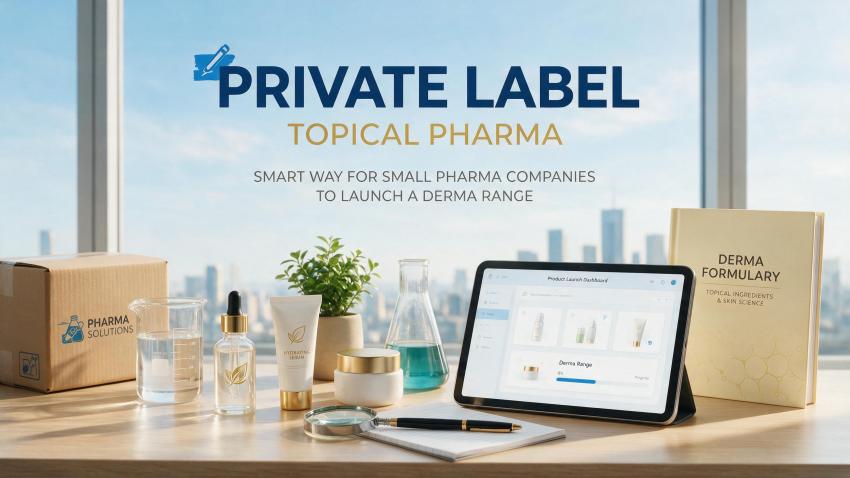
Starting a dermatology product line sounds like a big undertaking, one that usually brings to mind expensive machinery, a full production team, and years of setup before a single product reaches the market. But this is no longer the only way. Private label manufacturing has quietly become one of the smartest paths for small pharma companies looking to enter the skincare space without carrying the weight of building a factory from scratch.
What Private Label Topical Pharma Actually Means
In simple terms, this Private Label Topical Pharma model allows a business to sell dermatology products, creams, gels, ointments, and lotions, under its own brand name, while an experienced manufacturer handles the actual production. The business focuses on branding, marketing, and building customer relationships, while the manufacturing partner takes care of formulation, testing, and quality control.
This approach has made it possible for smaller companies to compete in a category that was once dominated only by larger players with deep pockets and established manufacturing units.
Why This Model Makes Sense for Small Businesses
Setting up a dermatology manufacturing unit requires significant investment, proper licensing, technical expertise, and years of compliance work before production can even begin. For a small or new pharma company, this kind of upfront cost can be a major barrier to entry.
Private label manufacturing removes most of that burden. Instead of building everything independently, a business can partner with an experienced Derma Manufacturer in India, someone who already understands formulation science, safety testing, and regulatory requirements specific to topical products. This allows a small company to launch a professional, well tested derma range in a fraction of the time and cost.
Faster Market Entry Without Compromising Quality
One of the biggest advantages of this model is speed. Since the manufacturing partner already has established processes and tested formulations, a new brand can move from concept to shelf much faster compared to building production capabilities from zero.
This does not mean cutting corners on quality either. Reputable manufacturers follow the same strict safety and testing standards for private label products as they would for their own branded lines, which means small businesses can offer genuinely reliable products right from their very first launch.
Building a Brand Identity Without Manufacturing Distractions
When a company does not have to worry about production logistics, raw material sourcing, or machinery maintenance, it can focus entirely on what matters most for growth, building a strong brand identity. This includes packaging design, marketing strategy, and creating a genuine connection with customers.
This focus becomes especially important when trying to understand the Psychology Behind Luxury Skincare Brands, since customers often associate premium perception with thoughtful branding, elegant packaging, and a clear brand story, factors a small business can fully concentrate on when manufacturing responsibilities are handled elsewhere.
Lower Risk, Smarter Growth
Launching a full manufacturing setup comes with financial risk, especially for a new business still trying to understand market demand. Private label manufacturing significantly reduces this risk, since companies can start with smaller batch orders, test market response, and gradually scale production based on actual customer demand rather than committing to large upfront manufacturing investments.
This flexibility allows small pharma companies to grow more strategically, adjusting their product range based on real feedback instead of guessing what might work.
Why Trust in the Manufacturing Partner Matters So Much
Since the brand's reputation depends entirely on product performance, choosing the right manufacturing partner becomes one of the most important decisions in this model. A reliable partner ensures consistent quality across every batch, proper testing for safety, and compliance with all necessary regulations.
Small businesses that take time to evaluate a manufacturer's track record, certifications, and production standards are far more likely to build a trustworthy, long lasting brand in the competitive skincare market.
A Practical Path Forward for New Entrants
This model has essentially lowered the barrier to entry for dermatology products, allowing passionate entrepreneurs and small pharma companies to compete alongside bigger names without needing the same scale of investment. It offers a practical, lower risk way to test the waters, build a customer base, and grow steadily over time.
Final Thoughts
Private label manufacturing has opened up real opportunities for small pharma companies wanting to enter the dermatology space without the heavy burden of setting up their own production facility. By partnering with an experienced manufacturer, businesses can focus on what truly matters, building a trustworthy brand, understanding customer psychology, and delivering consistent quality. For entrepreneurs looking for a smarter, more practical way to launch a derma range, this model offers a genuinely rewarding path forward.