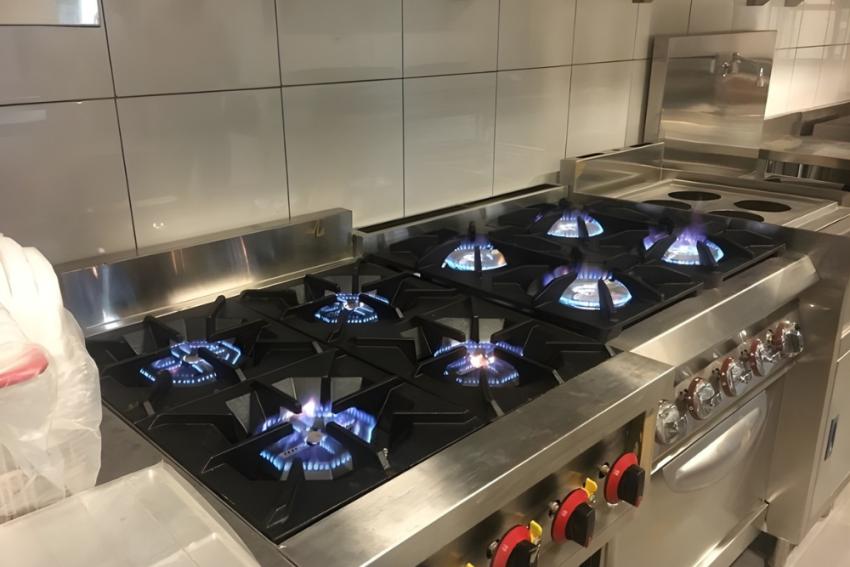
A commercial wok burner is a specialised cooking appliance designed to deliver intense heat for wok-based cooking. Unlike standard cooktops, these heavy-duty Asian stoves provide the rapid temperature control required for stir-fries, noodles, curries, and other high-heat dishes.
Professional wok stations are widely used in Asian restaurants, takeaway kitchens, catering businesses, food courts, and busy hospitality venues across Australia. Choosing the wrong unit can affect cooking speed, energy efficiency, maintenance requirements, and daily kitchen performance.
Selecting the right equipment requires more than comparing price or power ratings. Gas compatibility, ventilation capacity, construction materials, cleaning requirements, and compliance standards all influence whether a wok burner will perform reliably in a commercial environment.
Key Takeaways: What Should You Check Before Buying?
Before investing in a professional wok station, Australian hospitality businesses should focus on these three critical areas:
Gas compatibility: Ensure the burner matches your available supply, whether LPG (Liquefied Petroleum Gas) or Natural Gas, and meets installation requirements under standards such as AS/NZS 5601.1.
Ventilation capacity: High-output cooking equipment produces significant heat, smoke, and vapours, making correct extraction essential.
Long-term build quality: Materials such as 304-grade stainless steel and heavy-duty components determine durability in demanding kitchens.
Why Is the Right Wok Burner Essential for Your Business?
A professional wok burner is built for high-intensity cooking where fast heat recovery and precise flame control are essential. During busy service periods, chefs rely on consistent heat to maintain cooking speed and food quality.
The correct cooking appliance should match your menu, production volume, available space, and kitchen infrastructure.
Business Requirement
Why It Matters
High-volume stir-fry production
Requires strong heat output and reliable components
Asian cuisine preparation
Needs rapid temperature adjustment and flame control
Busy restaurant service
Requires equipment designed for continuous operation
Commercial kitchen compliance
Must meet gas and ventilation requirements
Energy management
Helps control daily running costs
How Should You Budget for a Commercial Wok Burner?
A common buying error is concentrating only on the initial buying price. Lower-cost units often seem attractive but frequently fail under heavy commercial use because of reduced component quality, limited durability, and higher maintenance requirements.
Instead of evaluating only the upfront cost, businesses should consider the total return on investment. This includes purchase price, installation expenses, energy consumption, repairs, spare parts availability, and expected service life.
Budget Decision
Long-Term Impact
Choosing only the cheapest option
Higher replacement and repair costs
Investing in reliable equipment
Better productivity and lifespan
Ignoring running costs
Increased daily operating expenses
A well-selected wok station delivers value through consistent performance rather than simply offering the lowest purchase price.
How Much Heat Output Does Your Kitchen Actually Need?
Heat output is one of the most important factors when selecting a commercial cooking appliance. Buyers often focus only on the highest BTU (British Thermal Unit, a standard measurement used to indicate heat output) or kW (Kilowatt, a measurement of power) rating available.
A burner that is too weak will struggle during peak service, while an oversized unit wastes energy and increases kitchen heat levels.
Typical commercial wok burners may range from approximately 55 MJ for smaller cafés and takeaway operations to 150 MJ or more for high-volume kitchens, depending on the cooking requirements.
Kitchen Type
Recommended Heat Consideration
Small takeaway kitchen
Moderate heat output with efficient operation
Busy Asian restaurant
Higher output for continuous wok cooking
Production kitchen
Heavy-duty unit for extended use
Multi-cuisine venue
Flexible flame adjustment
The goal is not maximum power. The objective is to align heat generation with actual cooking demand.
Does Your Wok Burner Match Your Gas Supply?
Gas compatibility is a critical factor often overlooked when purchasing. Australian commercial kitchens commonly operate using Natural Gas or LPG (Liquefied Petroleum Gas). Each fuel type requires correct burner configuration, gas pressure, and installation settings.
A mismatch between the burner and gas supply will degrade flame performance, reduce efficiency, and create safety concerns.
Before installation, confirm:
Requirement
Why It Matters
Existing gas supply
Ensures correct equipment compatibility
Gas pressure requirements
Maintains proper burner performance
Appliance specifications
Prevents installation problems
Qualified installation
Supports safe operation
Professional installation by qualified technicians is essential for compliance and reliable performance.
Can Your Kitchen Ventilation Handle the Burner Output?
High-powered wok cooking creates intense heat, smoke, grease particles, and cooking vapours. Installing a powerful burner without reviewing the extraction capacity creates an unsuitable working environment.
Australian commercial kitchens require effective ventilation systems designed around the cooking equipment being used.
Ventilation Issue
Impact
Insufficient extraction
Poor air quality and excess heat
Limited airflow
Reduced kitchen comfort
Grease buildup
Increased cleaning demands
Incorrect setup
Compliance concerns
Before installation, review your exhaust canopy, airflow design, and kitchen layout.
Which Wok Burner Size Is Ideal for Your Kitchen Design?
Selecting the correct size is essential for workflow efficiency. A unit that is too small limits production speed, while an oversized professional wok station can waste valuable kitchen space.
Consider:
Number of woks used simultaneously
Available bench or floor space
Expected customer volume
Future business expansion plans
Use-Case Example: 50-Seat Noodle Bar
A 50-seat noodle bar operating during lunch and dinner service may require:
Requirement
Recommended Setup
Cooking demand
Continuous stir-fry production
Heat requirement
Medium-to-high output burner
Configuration
Multiple wok positions
Priority
Fast recovery and easy cleaning
The best setup depends on actual menu demand rather than seating capacity alone.
Which Materials and Build Features Matter Most?
Build quality should be evaluated separately from price. Commercial kitchens expose equipment to high temperatures, moisture, grease, and repeated cleaning cycles.
Look for construction features that improve durability.
Feature
Benefit
304-grade stainless steel body
Corrosion resistance and easier cleaning
Heavy-duty burner rings
Improved heat distribution
Strong control valves
Better flame adjustment
Reinforced components
Suitable for daily commercial use
Quality materials reduce replacement frequency and support reliable kitchen operation.
Should You Choose a Water-Cooled or Air-Cooled Wok Burner?
Cooling design is another factor businesses should consider when selecting a professional wok station.
Type
Advantages
Considerations
Water-cooled wok burner
Handles extended high-temperature cooking and protects surrounding components
Requires water connection and drainage
Air-cooled wok burner
Easier installation and lower infrastructure requirements
May be better suited for lighter cooking demands
For kitchens operating long hours with continuous wok cooking, water-cooled systems are often preferred because they manage heat more effectively.
Buying a commercial wok burner requires careful evaluation of performance, compatibility, durability, and operating requirements. The right choice is not simply the most powerful model or the lowest-priced option.
Australian hospitality enterprises should consider gas compatibility, ventilation design, heat output, construction materials, and maintenance needs before making a purchase.
A properly selected professional wok station improves cooking consistency, supports efficient kitchen operations, and provides reliable performance over years of commercial use.