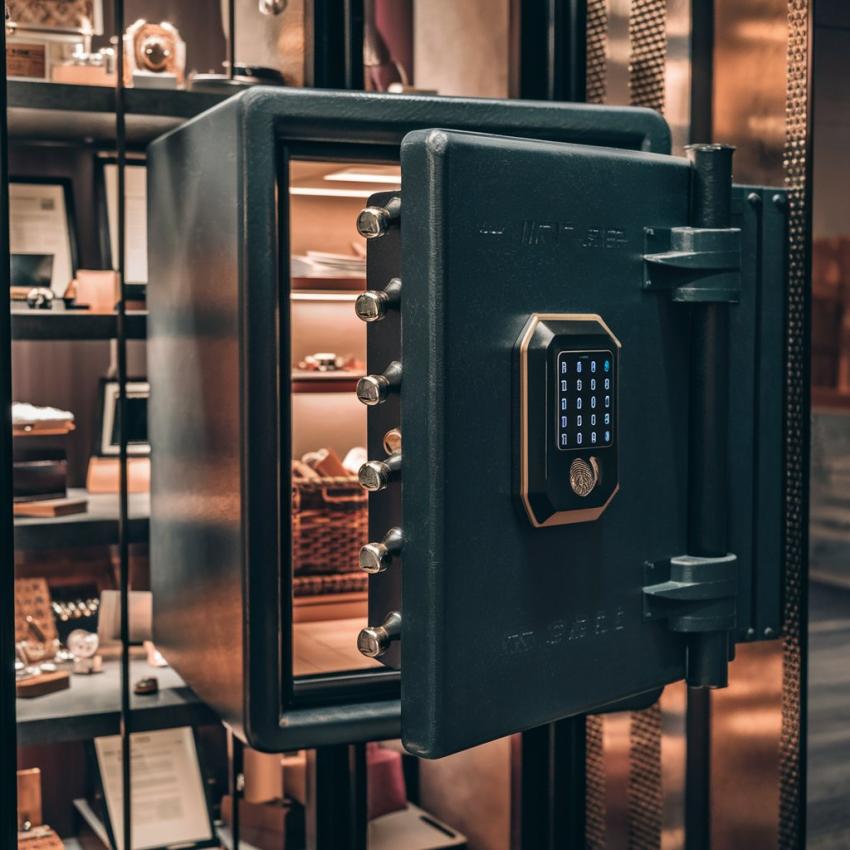
Picture this: a fire breaks out in your home. Everyone gets out safely, but hours later, you're sifting through ash, hoping the one thing you protected — your safe — actually did its job. Did it? Or did the heat inside destroy your documents, cash, and irreplaceable keepsakes anyway?
It's a question more homeowners should be asking before they buy, not after a disaster. "Fireproof" sounds absolute, but in reality, no safe is truly fireproof — they're fire resistant, and understanding that difference could save your most important belongings.
What Are Fireproof Safes, Exactly?
A fireproof home safe is a storage unit engineered to slow the transfer of heat to its interior during a fire, giving your valuables a fighting chance until firefighters arrive or the flames burn out. Rather than blocking heat entirely, these safes are built to delay it — buying time so the internal temperature stays low enough to protect what's inside.
This distinction matters. A safe rated to withstand fire for 60 minutes doesn't mean it's indestructible after that mark — it means that's roughly how long it can maintain a safe internal temperature under standardized test conditions. Once that window closes, protection isn't guaranteed.
The Materials and Technology Behind Fire Resistance
What actually keeps the inside of a safe cool while the outside is engulfed in flames? It comes down to construction and materials:
- Steel exterior – Most fireproof safes use a heavy-gauge steel shell for structural integrity and to help resist warping under heat.
- Fire-resistant insulation – Materials like gypsum board (similar to drywall) or specialized composite fireboard are layered inside the walls. These materials contain moisture that slowly evaporates when heated, absorbing thermal energy and keeping the interior cooler for longer.
- Intumescent seals – Many safes use heat-activated seals around the door that expand when exposed to high temperatures, closing gaps and blocking smoke and heat from seeping in.
- Concrete-filled walls – Some heavier-duty models use concrete composite linings for additional thermal mass and protection.
The thickness and quality of these materials directly affect how long a safe can maintain a survivable internal temperature — generally under 350°F, since that's the point at which paper documents begin to char.
What Do Fire Ratings Actually Mean?
This is where things get important for shoppers. Independent testing organizations, most notably Underwriters Laboratories (UL), evaluate safes by exposing them to controlled fire conditions and measuring how well the interior temperature and humidity are maintained over time.
Common ratings you'll see include:
- 30-minute rating – Interior stays below a safe threshold for roughly half an hour.
- 60-minute rating – Protection for about one hour, suitable for many residential fires that are extinguished relatively quickly.
- 90-minute to 2-hour ratings – Designed for higher-risk situations or slower emergency response times.
It's worth noting that these ratings are often based on a single test at a specific temperature (commonly around 1700°F), simulating typical house fire conditions. A rating isn't a lifetime guarantee — it reflects performance under one standardized scenario, and real fires can vary significantly in intensity and duration.
Choosing the Right Fireproof Safe: What to Look For
If you're in the market for a fireproof home safe, a few factors can make the difference between real protection and a false sense of security:
- Look for an independent certification. A UL rating (or equivalent from a recognized testing body) means the fire resistance claim has actually been verified, not just marketed.
- Match the rating to your risk. If your area has slower average fire department response times, a higher-rated safe offers more of a buffer.
- Consider what you're storing. Paper documents ignite far more easily than metal or plastic. If you're storing digital media (USB drives, hard drives), look for safes with a lower certified interior temperature, since electronics are damaged at lower heat levels than paper.
- Check for water resistance too. Firefighting efforts often involve water, and a safe that survives the fire but lets water destroy its contents hasn't fully done its job.
- Don't overlook size and weight. Larger, heavier safes are harder for thieves to remove, and often correlate with thicker, more insulated walls.
Common Misconceptions About Fireproof Safes
There are a few myths worth clearing up:
- "Fireproof means indestructible." No safe can withstand fire indefinitely. Every rating has a time limit.
- "All safes offer similar protection." Fire resistance varies dramatically based on materials and construction quality — a cheap, uncertified safe may offer little more than the appearance of protection.
- "A fireproof safe protects against everything." Many fireproof safes are not designed to be burglary-resistant. Fire protection and theft protection are different engineering challenges, and the best safes for full peace of mind often address both.
The Bottom Line
Fireproof home safes genuinely can protect your valuables — but only when you understand what "fireproof" really means. These safes don't stop fire; they slow it down, buying critical time to keep the contents inside at a survivable temperature. The right choice comes down to matching a certified fire rating to your household's needs, storing the right items, and not assuming that "fireproof" on the label means "invincible."
Before you buy, take the time to check for independent certification, compare fire ratings, and think carefully about exactly what you're trying to protect. A little research now could be the difference between recovering your important documents and photos — or losing them for good.