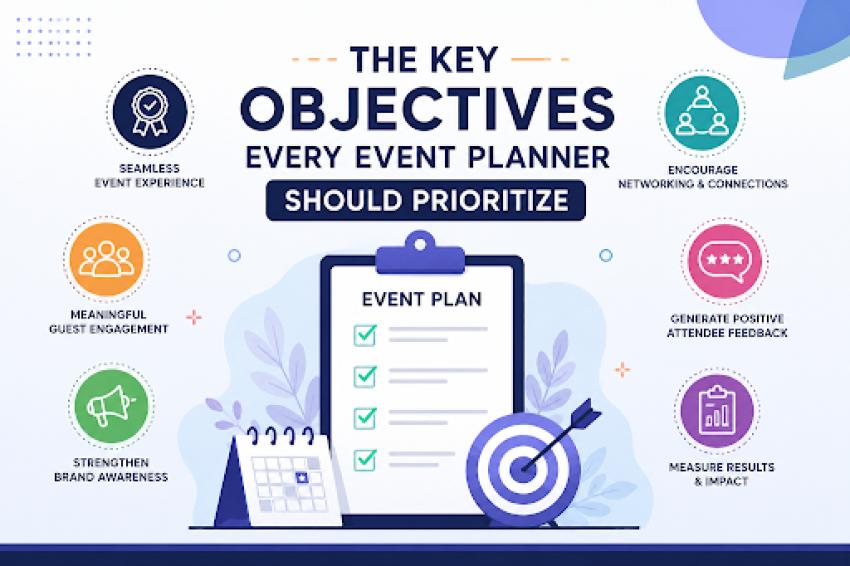
Planning a successful event involves much more than selecting a venue, arranging catering, or managing schedules. Every event planner should focus on a few core objectives that directly impact the overall success of the event. Successful events are built around clear objectives. By prioritizing the right goals, event organizers can create memorable experiences, improve attendee satisfaction, and maximize the value delivered to guests, sponsors, and stakeholders.
1. Deliver a Seamless Event Experience
One of the most important objectives of any event planner is ensuring smooth execution. Attendees may not notice flawless coordination, but they will certainly notice delays, confusion, long waiting times, or poor communication. Professional event management helps ensure that registrations, guest flow, vendor coordination, stage activities, and logistics are handled efficiently. A well-organized event creates a positive impression and allows guests to focus on the experience rather than operational issues. Careful planning and professional execution are essential to minimize chaos and ensure every aspect of the event runs smoothly.
2. Create Meaningful Guest Engagement
Modern events are no longer just about attendance. Success is increasingly measured by how actively guests participate and interact throughout the event. Guest engagement helps transform passive attendees into active participants. When attendees are involved in activities, conversations, networking opportunities, or personalized experiences, they are more likely to remember the event and the brand behind it. Many event professionals now consider event engagement Experiences as one of the most important strategy of successful event planning. Interactive experiences encourage participation, improve attendee satisfaction, and help create memorable moments that guests are likely to share with others. While smooth execution, brand visibility, networking, and attendee satisfaction all play important roles, guest engagement remains one of the most powerful drivers of event success. When attendees actively participate and connect with the experience, events become more memorable, impactful, and valuable for everyone involved.
3. Strengthen Brand Awareness
For corporate events, exhibitions, and product launches, building brand visibility is often a primary objective. Every touchpoint during the event should reinforce the brand message and create a consistent experience for attendees. Strong branding helps increase recognition, improve recall, and strengthen the connection between guests and the organization. A successful event should leave attendees with a clear understanding of the brand's values, products, or services.
4. Encourage Networking and Connections
Events provide valuable opportunities for people to connect with industry peers, customers, partners, and potential clients. Event planners should create environments that encourage meaningful interactions. Networking sessions, discussion areas, collaborative activities, and social spaces can significantly enhance the value attendees receive from the event. Strong networking opportunities often become one of the most memorable aspects of any successful event.
5. Generate Positive Attendee Feedback
Guest satisfaction should remain a top priority throughout the planning process. Comfortable venues, clear communication, engaging activities, quality content, and efficient event management all contribute to a positive attendee experience. Satisfied guests are more likely to attend future events, recommend the event to others, and engage further with the organizing brand. Collecting feedback after the event also provides valuable insights that can be used to improve future event planning strategies.