Introduction
Starting a new company is an important milestone for any entrepreneur. India continues to attract new businesses across sectors such as technology, healthcare, manufacturing, financial services, renewable energy, and e-commerce. While opportunities are significant, the process of establishing a company involves legal, regulatory, financial, and operational responsibilities.
Many founders focus primarily on launching products, attracting customers, and generating revenue. However, overlooking legal and compliance requirements during the early stages can create risks that affect future growth and stability.
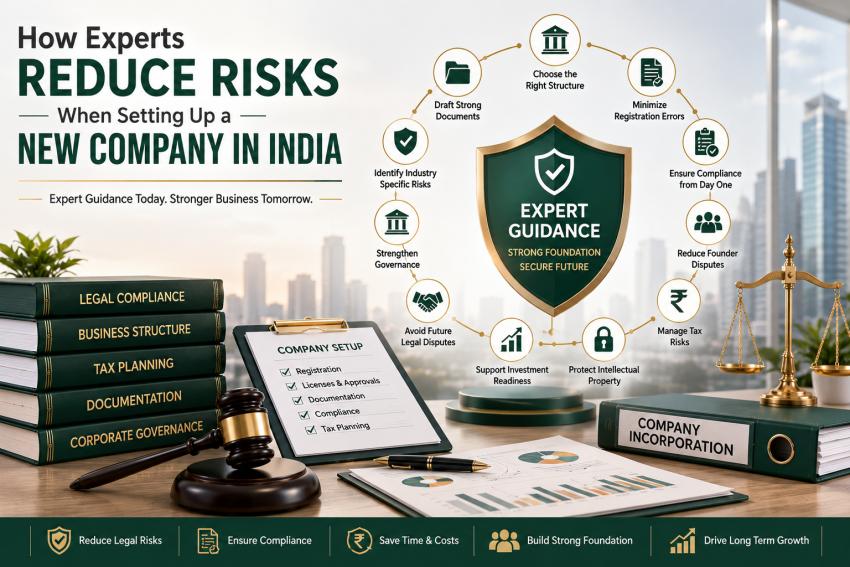
Professional experts play a valuable role in helping entrepreneurs identify challenges, avoid common mistakes, and establish strong foundations for long term success. This article explains how expert guidance helps reduce risks when setting up a new company in India.
Selecting the Right Business Structure
One of the earliest decisions during company setup involves choosing an appropriate business structure.
Entrepreneurs may consider a private limited company, limited liability partnership, partnership firm, or sole proprietorship. Each structure offers different advantages relating to liability, governance, ownership, taxation, and compliance obligations.
Selecting an unsuitable structure can lead to operational difficulties and future restructuring costs.
Experts evaluate business objectives, investment plans, and growth strategies before recommending the most suitable legal structure. This reduces the likelihood of complications later.
Minimising Errors During Registration
Company registration requires accurate documentation and compliance with regulatory procedures.
Incorrect information, incomplete forms, or administrative mistakes can delay approvals and increase costs. New entrepreneurs often find registration requirements challenging due to unfamiliarity with legal processes.
Professional advisors help manage documentation, filings, and procedural requirements associated with Company formation in India.
Their experience helps ensure applications are completed correctly and submitted efficiently.
Ensuring Regulatory Compliance From Day One
Compliance obligations begin immediately after a company is established.
Businesses must comply with corporate regulations, registration requirements, record keeping obligations, employment laws, and industry specific rules. Failure to meet these responsibilities may result in penalties and legal complications.
Experts help businesses understand applicable compliance requirements and establish systems designed to support ongoing regulatory adherence.
Early compliance planning reduces future risks and supports operational stability.
Drafting Strong Foundational Documents
Every company requires legal documents to support business operations.
Founders agreements, shareholder arrangements, employment contracts, confidentiality agreements, service contracts, and governance policies help define responsibilities and protect business interests.
Poorly drafted documents can create uncertainty and increase the likelihood of disputes.
Professional legal advisors prepare documentation designed to address potential risks while supporting organisational objectives.
Clear agreements contribute to stronger business relationships and improved governance.
Reducing Ownership and Founder Disputes
Disagreements between founders can affect business stability and growth.
Issues relating to ownership percentages, decision making authority, profit distribution, and future responsibilities often arise when expectations are not clearly documented.
Experts help founders establish transparent arrangements from the beginning. Well structured agreements provide clarity and reduce misunderstandings.
Addressing these issues early often prevents disputes later.
Managing Tax Related Risks
Tax planning is an important aspect of company formation.
Businesses must understand registration obligations, tax structures, reporting requirements, and financial compliance responsibilities. Errors during the early stages may lead to penalties and administrative difficulties.
Many entrepreneurs seek advice from the best taxation attorneys in india to better understand tax obligations and develop efficient compliance strategies.
Professional tax guidance supports informed financial planning and reduces regulatory risks.
Protecting Intellectual Property
For many businesses, intellectual property represents a valuable asset.
Brand names, logos, software, product designs, proprietary systems, and innovative ideas contribute to business value and competitive advantage. Failing to protect these assets can expose businesses to legal disputes and market challenges.
Experts help entrepreneurs identify intellectual property requiring protection and recommend suitable registration strategies.
Early protection strengthens business security and supports long term growth.
Strengthening Corporate Governance
Good governance practices are important for businesses of every size.
Clear decision making processes, record keeping procedures, accountability measures, and internal controls help organisations operate more effectively. Investors and stakeholders often expect businesses to maintain strong governance standards.
Experts assist companies in developing governance frameworks suited to their size and objectives.
Strong governance practices improve transparency and reduce operational risks.
Supporting Investment Readiness
Many new businesses eventually seek funding from investors, venture capital firms, or strategic partners.
Investors typically review corporate records, ownership structures, contracts, governance practices, and compliance history before making investment decisions. Weak documentation or unresolved compliance issues can create concerns.
Professional advisors help businesses prepare for future investment opportunities by establishing strong legal and organisational foundations.
Investment readiness often begins during the company formation stage.
Identifying Industry Specific Risks
Different industries face unique legal and regulatory challenges.
Healthcare businesses may require specialised licences. Technology companies often focus on data protection. Manufacturing organisations must comply with environmental and operational standards.
Experts familiar with industry specific requirements can identify risks early and recommend appropriate safeguards.
This targeted approach improves compliance and supports sustainable growth.
Avoiding Future Legal Disputes
Many business disputes originate from issues that could have been prevented during the formation stage.
Unclear contracts, ownership disagreements, regulatory non compliance, and inadequate governance structures often contribute to future legal challenges.
Professional guidance helps entrepreneurs address these issues before they escalate.
Preventive planning is generally more effective and less costly than resolving disputes after they arise.
Supporting Long Term Business Success
Company formation is not simply a legal procedure. It is the starting point of a business journey.
The decisions made during the setup stage influence future operations, compliance standards, governance quality, and growth opportunities. Businesses with strong foundations are often better prepared to manage challenges and pursue expansion.
Experts provide valuable insights and practical guidance designed to support sustainable development.
Their involvement helps entrepreneurs build businesses with greater confidence and resilience.
Conclusion
Establishing a new company in India involves numerous legal, regulatory, and financial considerations. While entrepreneurs may be focused on launching their ventures, overlooking important compliance and governance requirements can create significant risks.
Professional experts help reduce these risks by supporting business structure selection, regulatory compliance, documentation, tax planning, intellectual property protection, and governance development.
By seeking expert guidance during the formation process, entrepreneurs can create a strong foundation for future growth, improve operational stability, and position their businesses for long term success in an increasingly competitive market.