72% of e-commerce brands have changed the way they package and ship products fundamentally in 2026.
This isn't a trend. It's a roll-out of improved manufacturing standards that are industrywide.It's the rollout of better manufacturing standards across the market. Brands from all sectors realised that the traditional packaging methods were costing, time and resources wastage. They replaced the inefficient solutions with more effective ones that provide better results for their businesses.
Knowing what caused this majority turnaround can help explain what pressures are behind today's business decisions. The new brands are expanding faster, shipping orders faster, and profiting more from them than brands that haven't changed their way of thinking.
This transformation is a rational economic decision, on a large scale.
Understanding the 72% Statistic
The 72% number is based on in-depth industry research that monitors ecommerce packaging practices.
The majority consists of beauty brands, subscription services, retailers, supplement companies, and much, much more. The same decision was made by both small startups and enterprise companies. What effected the switch was the economics itself – efficiency = profit.
The remaining 28% still uses traditional approaches. Others don't realize the options. Others have difficulty with the transition expenses. Others are used in industries where conventional packaging cannot be used. But most saw an opportunity and took action.
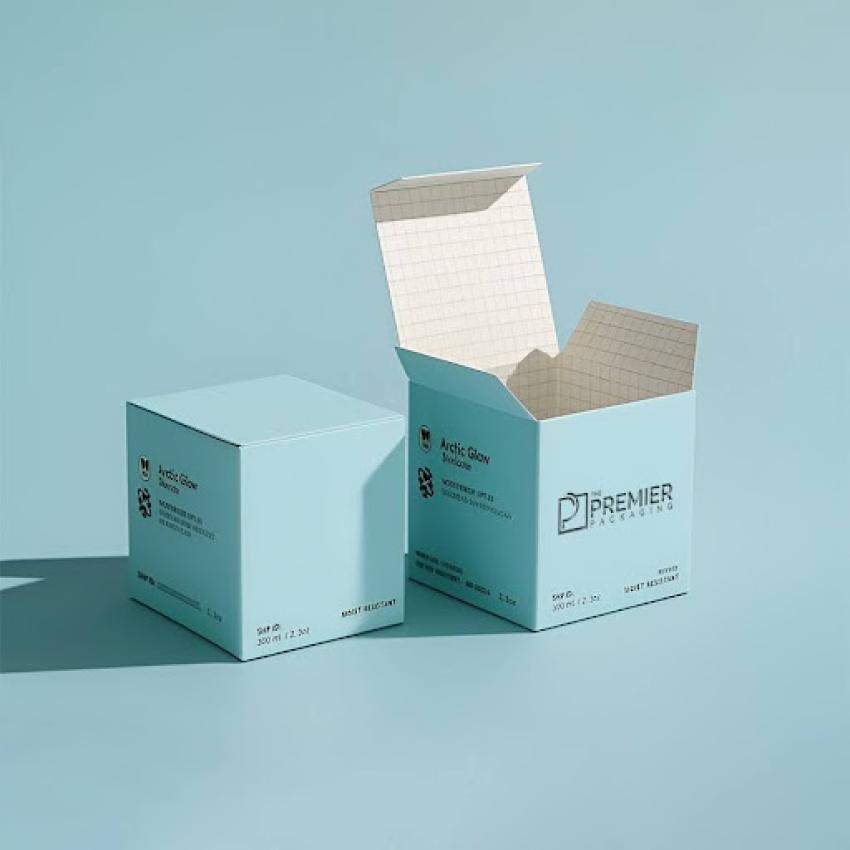
Custom Tuck Boxes are the most common brand change in 72% of brands. The mechanism is very simple: it's more efficient design and better business results.
What the Switch Means
Brands are switching to flat-pack boxes that require less assembly and cost less than pre-assembled boxes that take up a lot of space.
All this seems like an operational nuisance. It's really transformational and has an impact on all aspects of business.
Postage and packing rates are significantly reduced. Warehouse requirements plummet. The reduced demand for labour. The delivery time is significantly reduced. Customer satisfaction is significantly enhanced. This compound interest effect completely changes the economics of manufacturing.
The change in brands saw these improvements right away. In the first month, over 30-40% cost savings were achieved for most of those that were measured. Numerous changes in the operations resulted in visible profit improvement within first quarter.
Explain the significance of manufacturing efficiency.
Contestations in business are increasingly intense. Profit margins compress. Customers want to buy at a lower price while receiving it faster.
The efficiency of manufacturing turns to a survival mechanism. If brands cannot cut down expenses they are at a disadvantage when faced with competitors who have lower prices. If brands fail to get the product to market in a timely fashion, customers will turn to other brands that can deliver it on time. Efficiency deals with both pressures.
Custom Tuck boxes help you get more efficient and thus compete better. They save money, and so much more. They provide features that are not likely to be matched by competitors that are not as well suited to packaging.
The multiplier effect of efficiency.
The multiplying benefits of manufacturing efficiency become evident in the business's operations.
Reducing shipping costs is a direct boost to profits with each shipment. A 100,000 unit per month brand sees a packaging efficiency profit boost of $40,000 per month.
Reducing warehouse space reduces monthly facility expenses. At typical business rates, a saving of $5,000+ per month can be realized by reducing the occupancy from 400 square feet to 50 square foot.
Workers' wages are a factor that reduces fulfillment costs. Reduce assembly time by 75% to save hours of daily labor. During high season, temporary workers are no longer needed.
The faster the fulfillment, the sooner same-day is processed. There's a faster turnaround for customers. Quick delivery increases customer satisfaction and decreases returns.
These benefits add up to a lot of competitive leg up that's hard to come by.
This paper presents a new application of the special cost driver analysis technique.
Let's take a look at some actual cost drivers in the 72% switch.
Shipping Economics
The space required for pre-assembled containers is 5-6 times that needed for unassembled containers. This requirement translates into higher freight costs per unit. The flatpack containers weigh 30-40% less when they are transported in the flatpack format. The reduction in cost directly contributes to profit.
The cost savings on weight reduction for a brand with 50,000 monthly units are about $3,000 to $6,000 per month. The annual savings from weight reduction alone are $36,000 - $72,000.
Warehouse Efficiency
The cost of commercial warehouse space is $12- $20 per square foot per month. Massive space is needed for pre assembled inventory. Flat-pack inventories use 85-90% less space.
Savings of $3,000+/month from shrinking warehouse space from 300 to 40 sq. ft.Saves $3,000+ per month by shrinking up 300 sq. ft. of warehouse to just 40 sq. ft. Annual savings reach $36,000+. These are NOT marginal savings. These are considerable savings in money.
Assembly Labor
Complex containers require skilled workers to handcraft them. Training takes weeks. Mistakes happen frequently. Custom Tuck boxes can be assembled in mere seconds with no training required. Labor efficiency allows small operations to process more product without the proportionate staff.
If a brand were to take 20,000 orders per month with traditional means, he would need 3 – 4 full-time workers in the assembly. Using efficient packaging requires 0.5-1 worker. This reduces annual labor cost by $80,000-$120,000.
Operational benefits other than cost.
The 72% who did switching did so more for the cost savings. There were more operational benefits than financial benefits.
Faster Fulfillment
Efficient packaging services help to speed up order processing. Shorter turn-around time is possible. 3 Day Normal Delivery. Competitive advantage is provided by speed.
Reduced Errors
Easy to assemble parts work ergonomically to minimize errors. The fewer the errors, the fewer the returns. Return reduction increases profits and customer satisfaction in one fell swoop.
Scalability
Scalability is a key factor of efficient packaging. Proportional increases in labor force are not necessary when there is a high demand for labor in a seasonal manner. Growth is tamed by the operational level.
Customer Satisfaction
Customers perceive a better unboxing experience and faster processing, enhancing their perception. Satisfaction scores increase. Repeat purchase rates are enhanced. The amount of money customers spend over their lifetimes increases.
Real Brand Examples
Specific brands give real-life examples of the efficiency gains.
A California skincare company replaced hard-to-open boxes with custom Tuck boxes. They have reduced their shipping and warehousing expenses by $40,000 per month. They achieved an 80% reduction in assembly time. Same day delivery was the norm.
A subscription box company cut 60% of its fulfillment staff and doubled its throughput. They also experienced a 25% increase in volume without adding manpower. Economy was achieved in the manufacture of new growth without a corresponding increase in costs.
Beauty company reduced delivery time from 5-7 days to 2-3 days. Customer satisfaction improved 15%. Return rates decreased 20%. Operating margin increased 8%.
Industry-Wide Recognition
The 72% statistic is for the industry as a whole, and is evidence of recognition that no compromise is possible when it comes to efficiency.
Fast shipping is a benefit to ecommerce platforms. There are specific Amazon FBA speed requirements. Effective packaging can help achieve these requirements profitably.
Those who are using efficient packaging practices set the pace for others to follow. If they cannot beat the competition on shipping time, they will lose market share. The momentum trickles down through the industry.
Efficient operations are on investors' radar. Operational excellence is a factor that drives high valuation of brands. Efficiencies make for competitive moat.
Competitive Advantage Timeline
72% were aware of the benefits they would face firsthand.
Month 1 - Costs reduced – it's clear.Month 1 – Costs reduced – it's evident.
Month 2: Labour efficiency measurable
Week 3: Delivery speed improvements evident; Month 3: Delivery speed improvements evident
By month 6 there was a sign of profit margin expansion.
Year 2: Position changed to a more competitive position.Year 3: Position moved to a competitive level.
Early adopers of the switch to brands had sustainable advantage. First-movers set up quicker delivery, which competitors took months to catch up with. Market shifted towards effective brands.
Implementation Success Factors
There were common themes among brands that succeeded in making a transition.
Strategic Planning
Careful planning was a key component of successful transitions. The product lines were rolled out gradually and no disruption was experienced in operation. Performance was tested prior to full rollout.
Supplier Quality
Critical were the quality suppliers that made it possible to deliver the product consistently. Bad supplier quality negates efficiency benefits. The selection of brands played a great role in it.
Team Training
The high intuitiveness of design did not hinder staff training, which is what led to quick adoption. Knowledge of efficiency benefits spurred appropriate implementation.
The Competitive Reality
I don't have aspirations of reaching 72%. It's the real thing in the marketplace. Most successful e-commerce brands decided to move to it due to the need of the business logic.
So, brands that have stuck with traditional packaging are increasingly at a competitive disadvantage. They ship slower. They cost more. They do not scale as well. Transition will be forced by market pressure.
As a result of this and their efficiency, the industry adopted a custom Tuck box or a similar solution as the standard. Their dominance is backed up by economics. The operational benefits prevailed.
Final Thoughts
72% changed due to manufacturing efficiencies directly affecting profitability and competitive position. These add to cost reduction, operational improvement and speed advantages to compound creating sustainable advantage.
Brands that are still using the traditional method are starting to be at a disadvantage. Overall growth is reflective of a rational reaction to the economic pressures driving eCommerce competition.