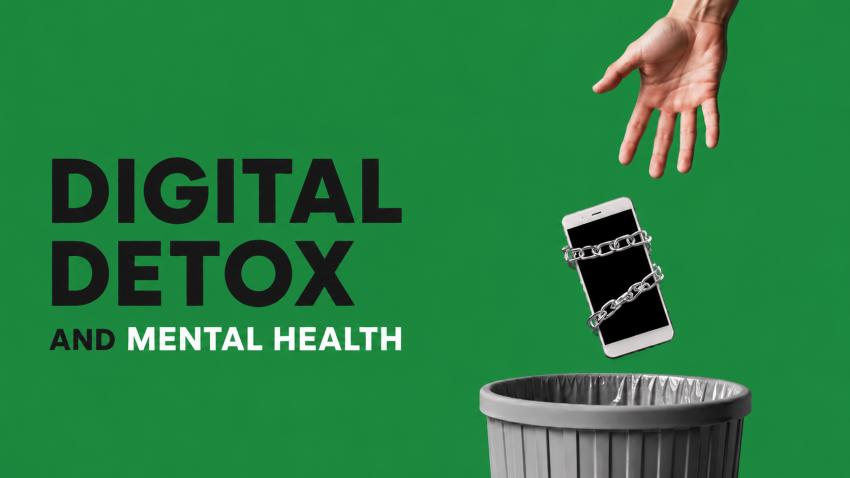
What Is a Digital Detox and Why Does Your Brain Need One?
You wake up and reach for your phone. Before your eyes fully adjust to the morning light, you've already scrolled through 40 notifications, three news alerts, and a group chat that exploded overnight. Sound familiar?
This is the modern baseline and it's quietly devastating your mental health.
A digital detox is a deliberate, time-bound break from digital devices — smartphones, social media, email, and screens in general. It isn't about rejecting technology forever. It's about giving your brain the breathing room it desperately needs to reset, recover, and function at its best.
Understanding Cognitive Overload: The Hidden Cost of Always-On Living
Cognitive overload occurs when the brain receives more information than it can effectively process. Every ping, notification, tab, and scroll demands a sliver of your attention. Individually, each one seems harmless. Collectively, they push your prefrontal cortex — the seat of decision-making, focus, and emotional regulation — into a state of chronic exhaustion.
Research from the American Psychological Association shows that heavy smartphone users report significantly higher stress levels than light users. The constant context-switching between apps, messages, and tasks fragments concentration and reduces the quality of deep thinking — a phenomenon psychologists call attention residue.
Signs you may be experiencing cognitive overload include:
- Difficulty concentrating on a single task for more than a few minutes
- Feeling mentally drained even after a full night's sleep
- Increased irritability or emotional reactivity
- Forgetting simple things or losing track of conversations
- A constant, vague sense of anxiety with no clear cause
If several of these resonate, your brain may be telling you it's time to unplug.
How Digital Detox Directly Improves Mental Health
1. Reduces Anxiety and Stress Hormones
Continuous exposure to social media activates the brain's threat-detection system. Negative news, social comparison, and the pressure to respond instantly all trigger cortisol — your primary stress hormone. A digital detox lowers this chronic cortisol activation, helping your nervous system shift from "fight-or-flight" mode into a calmer, more regulated state.
2. Restores Attention Span and Deep Focus
The average human attention span has declined sharply in the smartphone era. When you step away from the scroll, your brain begins rebuilding its capacity for sustained focus. Studies suggest that even a single weekend of reduced screen time can measurably improve working memory and task performance.
3. Improves Sleep Quality
The blue light emitted by screens suppresses melatonin production, delaying sleep onset and reducing sleep depth. But the damage isn't only physical — mentally stimulating content (doomscrolling, heated comment sections, stressful work emails) activates the mind at exactly the moment it needs to wind down. A digital detox, especially in the hours before bed, dramatically improves sleep latency and overall sleep quality.
4. Enhances Emotional Resilience
Social media creates a distorted mirror. Constant exposure to curated highlight reels fuels comparison, self-doubt, and feelings of inadequacy. Disconnecting allows your emotional baseline to recalibrate. Many people report feeling more content, grounded, and self-assured within just a few days of reduced social media use.
5. Rebuilds Real-World Connection
Paradoxically, our most "connected" era is also one of the loneliest. Digital detox creates space for face-to-face interaction, deeper conversations, and physical presence — all of which are proven to reduce loneliness and strengthen mental well-being.
How to Start a Digital Detox (Without Quitting Cold Turkey)
You don't need to disappear into the mountains for a week. Small, consistent changes create real neurological shifts.
Start with these practical steps:
- Set screen-free windows: No phones during meals, the first 30 minutes of morning, or the hour before bed.
- Turn off non-essential notifications: Every notification is a micro-interruption. Audit your apps ruthlessly.
- Use grayscale mode: Removing color from your phone screen makes it significantly less compelling.
- Designate a "phone-free zone": The bedroom is the most impactful place to start.
- Schedule a weekly micro-detox: One afternoon per week with no social media is enough to notice a difference within a month.
- Replace, don't just remove: Fill reclaimed time with walking, reading, journaling, or socializing — activities that actively restore mental energy.
Frequently Asked Questions About Digital Detox
Q: How long does a digital detox need to be to see mental health benefits?
Research suggests improvements in mood and focus can appear within 24–72 hours of reduced screen time. Significant changes in anxiety and sleep quality are typically noticeable within one to two weeks.
Q: Is a digital detox the same as quitting social media?
No. A digital detox is a temporary, intentional reduction in screen time — not permanent deletion. Many people maintain accounts but set strict time limits or scheduled offline periods.
Q: Can a digital detox help with depression?
While a digital detox is not a clinical treatment for depression, reducing social media use has been linked to lower rates of depressive symptoms, particularly in adolescents and young adults. It works best as part of a broader mental wellness strategy.
Q: What should I do when I feel the urge to check my phone during a detox?
Acknowledge the urge without acting on it. Most notification-checking impulses pass within 90 seconds. Over time, the frequency and intensity of these urges decrease significantly.
The Takeaway: Your Brain Wasn't Built for This
The human brain evolved over millennia in a world of campfires, seasons, and face-to-face conversation — not infinite scroll and 24-hour news cycles. Cognitive overload is not a personal weakness; it's a biological mismatch between ancient hardware and modern demands.
A digital detox is not a luxury. For many people today, it is an act of mental self-preservation.
Start small. Start today. Your focus, sleep, emotional health, and quality of life will thank you for it.