India’s healthcare industry has experienced significant expansion across hospitals, pharmaceutical companies, diagnostic centres, telemedicine platforms, medical device manufacturers, and healthcare startups. Rapid technological advancement, rising healthcare awareness, and increased investment have transformed healthcare into one of the country’s most dynamic sectors.
However, healthcare businesses also operate within a highly regulated legal environment involving licensing systems, patient protection laws, employment regulations, taxation obligations, data privacy standards, and operational compliance requirements. Managing these legal responsibilities has become increasingly complex for healthcare organisations seeking long term growth and operational stability.
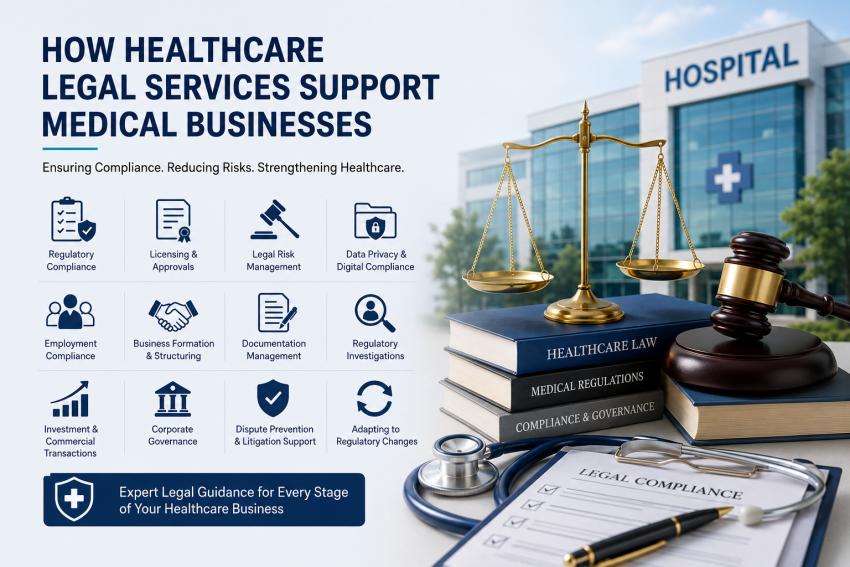
Healthcare legal services now play a critical role in helping medical businesses manage compliance, reduce legal risks, structure operations efficiently, and respond to evolving regulations. Professional legal guidance supports healthcare organisations at every stage of business development, from incorporation and licensing to expansion and dispute management.
Growing Legal Complexity in Healthcare
Healthcare businesses must comply with multiple regulatory frameworks issued by central authorities, state governments, healthcare regulators, and industry bodies.
Healthcare organisations often deal with:
Hospital licensing requirements
Clinical establishment regulations
Medical ethics obligations
Data privacy compliance
Consumer protection standards
Employment related regulations
Biomedical waste management rules
Insurance related compliance
The legal environment continues evolving due to technological innovation, digital healthcare systems, and increasing regulatory scrutiny.
Healthcare legal services help businesses understand these changes and implement effective compliance strategies within daily operations.
Importance of Regulatory Compliance
Compliance remains one of the most important operational responsibilities for healthcare businesses. Regulatory violations may lead to financial penalties, operational restrictions, reputational concerns, or licence related complications.
Healthcare legal professionals assist organisations with:
Regulatory registrations
Operational licensing
Compliance audits
Internal policy reviews
Risk assessment procedures
Regulatory communication
Strong compliance systems improve organisational discipline and reduce operational uncertainty.
Healthcare businesses with organised compliance frameworks are generally better prepared during inspections, audits, and regulatory reviews.
Assistance With Business Formation and Structuring
Healthcare businesses require proper operational structures from the beginning. Company formation decisions directly affect taxation, governance obligations, investment planning, and regulatory compliance.
Healthcare legal services support businesses with:
Corporate structuring
Partnership agreements
Shareholding arrangements
Governance systems
Regulatory planning
Proper business structuring improves long term operational flexibility and financial efficiency.
Professional legal guidance also helps healthcare startups avoid future restructuring complications.
Managing Healthcare Documentation
Accurate documentation remains essential within the healthcare industry. Incomplete or inconsistent records may weaken an organisation’s position during litigation, investigations, or compliance reviews.
Healthcare legal services help businesses maintain organised systems for:
Patient documentation
Consent records
Regulatory filings
Employment records
Operational policies
Commercial agreements
Strong documentation practices improve procedural transparency and strengthen legal preparedness.
Digital healthcare systems have further increased the importance of secure and organised data management.
Data Privacy and Digital Healthcare Compliance
Telemedicine platforms, digital health applications, diagnostic software, and electronic medical records have transformed healthcare operations across India.
However, digital healthcare expansion also creates significant legal obligations involving:
Patient confidentiality
Data protection standards
Cybersecurity compliance
Electronic consent systems
Digital communication practices
Healthcare legal professionals help businesses establish legally compliant digital systems capable of protecting sensitive medical information.
Strong data governance practices improve operational credibility and public trust.
Support During Healthcare Expansion
Many healthcare businesses continue expanding through new hospitals, speciality centres, diagnostic networks, and digital healthcare platforms.
Healthcare expansion projects often involve complex legal considerations related to:
Regulatory approvals
Infrastructure agreements
Investment transactions
Licensing procedures
Employment arrangements
Operational compliance systems
Healthcare legal services help organisations manage these processes efficiently while reducing regulatory risks.
Professional legal planning also improves project execution and operational readiness.
Assistance With Employment Compliance
Healthcare businesses manage large workforces involving doctors, nurses, technicians, administrators, and support staff. Employment related compliance remains particularly important because healthcare operations often function continuously and involve specialised professionals.
Healthcare legal professionals assist businesses with:
Employment agreements
Professional engagement structures
Labour law compliance
Workplace policies
Internal disciplinary procedures
Employment dispute management
Proper workforce compliance strengthens operational stability and reduces organisational disputes.
Healthcare institutions also benefit from organised human resource governance systems.
Managing Regulatory Investigations
Healthcare organisations may face inquiries or inspections from healthcare authorities, labour departments, insurance regulators, consumer forums, or government agencies.
Improper handling of investigations may create additional legal complications and reputational concerns.
Healthcare legal services support organisations through:
Investigation responses
Compliance verification
Regulatory representation
Documentation preparation
Procedural guidance
Professional legal oversight improves procedural discipline and protects institutional interests during sensitive proceedings.
Healthcare businesses with experienced legal support are generally better prepared for regulatory scrutiny.
Importance of Industry Specific Expertise
Healthcare law requires specialised understanding of medical operations, patient rights, regulatory frameworks, and institutional governance systems.
Experienced healthcare law attorneys in India understand:
Healthcare licensing systems
Hospital governance standards
Medical ethics obligations
Healthcare infrastructure regulations
Clinical operational requirements
Industry specific compliance risks
Sector focused legal expertise allows businesses to receive more practical and commercially realistic advice.
Healthcare organisations benefit significantly from advisors familiar with operational realities within the healthcare industry.
Reducing Litigation Risks
Healthcare businesses regularly face legal risks involving patient complaints, contractual disputes, insurance issues, employment conflicts, and regulatory proceedings.
Healthcare legal professionals help reduce litigation exposure through:
Compliance reviews
Risk assessment procedures
Documentation management
Internal policy development
Dispute prevention strategies
Preventive legal planning usually proves more effective than managing disputes after legal proceedings begin.
Healthcare organisations with strong compliance systems are generally better positioned during litigation and regulatory inquiries.
Supporting Investment and Commercial Transactions
India’s healthcare sector continues attracting investment from domestic and international sources. Investors typically conduct detailed legal due diligence before participating in healthcare projects or acquisitions.
Healthcare legal services support businesses during:
Investment transactions
Mergers and acquisitions
Commercial partnerships
Infrastructure development
Financial restructuring
Strong legal support improves transaction efficiency and strengthens investor confidence.
Healthcare organisations also benefit from advisors capable of coordinating regulatory, financial, and operational considerations during expansion activities.
Strengthening Corporate Governance
Corporate governance has become increasingly important within the healthcare sector due to operational complexity, investor expectations, and regulatory scrutiny.
Healthcare legal services help organisations establish:
Governance frameworks
Internal compliance systems
Reporting procedures
Risk management policies
Operational accountability standards
Strong governance practices improve transparency, operational discipline, and institutional credibility.
Healthcare businesses with organised governance structures are often better positioned for expansion and investment opportunities.
Coordination With Corporate Legal Advisors
Healthcare organisations frequently require integrated legal support involving healthcare regulations, taxation planning, infrastructure transactions, employment management, and corporate governance.
Professional coordination becomes especially valuable during:
Hospital expansion projects
Cross border transactions
Corporate restructuring
Financial planning
Commercial partnerships
Many healthcare businesses also seek guidance from experienced best corporate law firms in india capable of providing integrated support involving governance, compliance, investment management, and commercial transactions.
Coordinated legal advice improves long term operational preparedness and commercial stability.
Adapting to Regulatory Changes
Healthcare regulations continue evolving due to technological advancement, digital healthcare growth, public health priorities, and increasing patient awareness.
Healthcare legal professionals help businesses adapt to developments involving:
Telemedicine standards
Data protection obligations
Medical technology regulations
Healthcare infrastructure policies
Insurance compliance systems
Timely legal guidance helps healthcare businesses remain compliant while supporting continued operational growth.
Organisations capable of adapting quickly to regulatory change are generally better positioned within competitive healthcare markets.
Improving Public Trust and Business Stability
Public trust remains one of the most valuable assets for healthcare organisations. Legal disputes, compliance failures, or regulatory violations may affect patient confidence and institutional reputation.
Healthcare legal services help businesses strengthen public confidence by supporting:
Compliance discipline
Organised governance systems
Proper documentation management
Regulatory preparedness
Effective dispute resolution
Strong legal oversight contributes directly to operational stability and long term commercial growth.
Healthcare organisations supported by experienced legal professionals are generally better equipped to manage regulatory challenges and maintain institutional credibility.
Final Thoughts
Healthcare businesses in India operate within an increasingly detailed and evolving legal environment involving regulatory compliance, patient protection standards, employment obligations, and digital healthcare regulations.
Healthcare legal services provide critical support by helping organisations manage compliance systems, reduce operational risks, structure transactions efficiently, and strengthen governance practices. Their expertise improves regulatory preparedness, operational stability, and commercial confidence.
As India’s healthcare industry continues expanding, businesses supported by experienced legal professionals will remain better positioned to protect institutional interests, maintain public trust, and achieve sustainable long term growth.