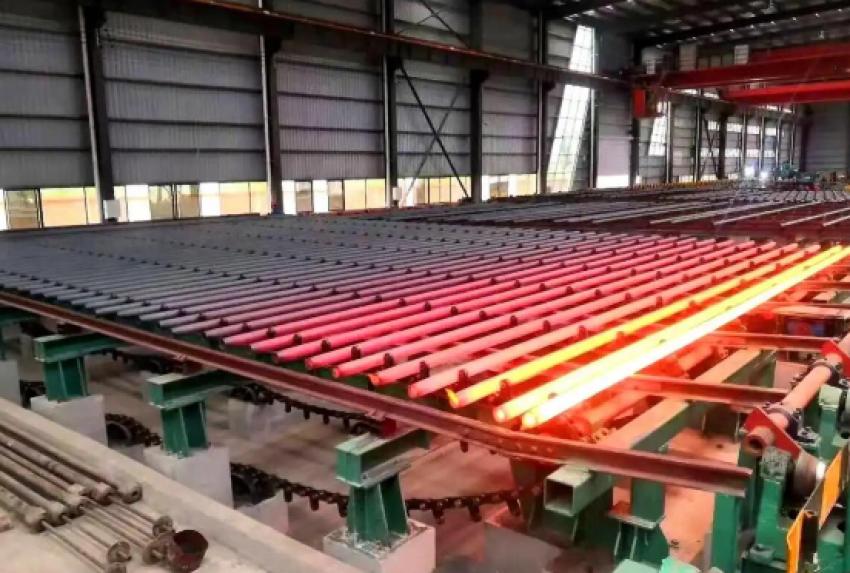
In 2026, the global seamless steel pipe market continued its steady growth. According to data from authoritative market research institutions, the global seamless steel pipe market size is projected to grow from US$248.08 billion in 2025 to US$260.68 billion in 2026, with a compound annual growth rate (CAGR) of 5.1%. This growth is mainly attributed to the continued activity in global oil and gas exploration and development, the ongoing expansion of power generation infrastructure, and the steady progress of high-end manufacturing industries such as aerospace.
Looking ahead to the next five years, the market growth momentum is expected to continue. The global seamless steel pipe market size is projected to reach US$315 billion by 2030, with a CAGR of approximately 4.8% between 2026 and 2030. By segment, the seamless stainless steel pipe market is valued at approximately US$31.3 billion in 2026 and is projected to reach US$42.45 billion by 2032, with a CAGR of 5.16%; the cold-drawn seamless steel pipe market is experiencing even stronger growth, projected to reach US$17.25 billion in 2026, with a CAGR as high as 9.1%.
China's Core Position and Structural Changes in the Market:
As the mainstay of the global seamless steel pipe industry, China's output accounts for more than two-thirds of the world's total. By 2025, China's seamless steel pipe output will account for more than 50% of the global total, forming the world's largest industrial system.
However, while expanding in scale, the industry also faces structural challenges. Capacity utilization has long hovered between 65% and 70%, with structural overcapacity and severe homogenization competition becoming major bottlenecks restricting the industry's high-quality development. According to Mysteel's research, in 2026, there are expected to be 4 seamless steel pipe production lines under construction and 1 planned, adding approximately 2.05 million tons of capacity. It is projected that by the end of the 15th Five-Year Plan period, domestic seamless pipe capacity will reach 44.41 million tons, while annual output will stabilize at around 31 million tons.
It is noteworthy that the industry is shifting from quantitative expansion to qualitative improvement, from scale growth to value growth. This shift aligns with the overall direction of the China Iron and Steel Association's proposal for the steel industry to reduce quantity and upgrade quality. The demand for traditional construction steel is facing increasing downward pressure, while the demand for industrial materials continues to rise. Seamless steel pipes, as an important component of industrial materials, are adapting to this change through product structure optimization and technological upgrades.
Demand Drivers Analysis:
1. Oil and Gas Extraction and Transportation: Oil and gas extraction and transportation is the largest demand area for seamless steel pipes. Each well drilled requires hundreds to thousands of tons of seamless steel pipes (mainly casing and tubing). During the 14th Five-Year Plan period, China will maintain an average annual crude oil production of over 200 million tons and rapidly growing natural gas production, requiring the drilling of tens of thousands of new wells to compensate for the declining production of older oil fields. This directly guarantees the basic demand for oil well pipes.
Of particular note is the rapid development of unconventional oil and gas resources (such as shale gas), which is driving demand for high-end pipe materials. As extraction targets shift to shale gas, ultra-deep wells, and high-pressure corrosive gas fields, the demand for high-performance, high-reliability seamless steel pipes is increasing exponentially.
2. Steady Progress in Pipeline Network Construction: The establishment of the National Pipeline Company has accelerated the interconnection of the national oil and gas pipeline network. While high-frequency straight seam welded pipes are typically used for the main trunk lines of long-distance pipelines, seamless steel pipes remain the preferred choice due to their safety and reliability in stations, crossings, extremely harsh environments, and urban gas pipeline networks. For example, after the completion of the entire China-Russia East Route Gas Pipeline, its annual gas transmission capacity reached 38 billion cubic meters, extensively utilizing high-grade, large-diameter seamless steel pipes such as X80.
3. Underground Pipeline Network Renovation
During the 15th Five-Year Plan period, China planned to construct and renovate over 700,000 kilometers of underground pipelines, with new investment demand exceeding 5 trillion yuan. According to Mysteel's forecast, the construction and renovation of underground pipeline networks will drive an annual demand for steel pipes of approximately 1.9-2.3 million tons, accounting for 2.80%-3.39% of the total steel pipe demand.
4. Power Industry
The power industry is a stable and high-growth source of demand for seamless steel pipes, primarily used for high-pressure and ultra-high-pressure boiler tubes and heat exchanger tubes. It is estimated that a 1000MW thermal power boiler uses approximately 10,000 tons of steel pipes. The consumption of boiler steel pipes reached 1.207 million tons in 2025 and is projected to reach 2.414 million tons in 2026-2027, averaging 1.209 million tons per year. Demand for boiler steel pipes is expected to increase year by year during the 15th Five-Year Plan period.
5. Machinery Manufacturing
The demand for seamless steel pipes in machinery manufacturing accounts for approximately 26.7% of the national demand, totaling around 6.5 million tons, making it the second largest demand sector after the energy and chemical industry. The demand growth rate for high-end hydraulic pipes, high-precision bearing pipes, and special alloy structural pipes will far exceed that for ordinary fluid transportation and low-end structural pipes. During the 15th Five-Year Plan period, the demand for seamless steel pipes in the machinery sector will exhibit a distinct characteristic of "stable total volume, optimized structure, and increased value."
Export Situation and Trade Pattern:
Exports have become a crucial driver of the growth in China's seamless steel pipe demand. China's total seamless steel pipe exports climbed from 2.299 million tons in 2010 to 5.7211 million tons in 2024, with an average annual increase of 244,400 tons. The proportion of exports to domestic production climbed from 9.1% in 2010 to 19.3% in 2024. In 2025, China's total seamless steel pipe exports reached 6.28 million tons, a year-on-year increase of nearly 10%.
Looking ahead, China's seamless steel pipe exports are expected to remain at a high level of 5.5-6 million tons over the next 1-3 years. However, it is worth noting that the international trade environment is becoming increasingly complex due to the continued impact of tariffs and trade measures from countries such as the United States. The tariffs implemented by the United States in 2025 have increased the landed cost of imported seamless stainless steel pipes, forcing buyers to reassess their supplier portfolios. In the long term, a model that simply pursues continuous growth in export volume is unsustainable; the export structure will shift towards high value-added products, and export markets will become more diversified.
Technological Trends and Industrial Upgrading Directions:
1. Green Manufacturing and Short-Process Technology
Under the "dual carbon" target, the seamless steel pipe industry is accelerating its transformation towards green and low-carbon practices. Academician Wang Guodong of the Chinese Academy of Engineering proposed a "three-in-one" technology system of "solidification-direct piercing rolling-on-line controlled cooling," which eliminates the need for traditional annular heating furnaces by directly piercing and rolling continuously cast billets, significantly reducing energy consumption and carbon emissions.
2. Intelligent Manufacturing and Automation
Seamless steel pipe production is accelerating the integration of automated monitoring and intelligent quality inspection technologies. The industry is guided by "new quality productivity," accelerating its transformation towards high-end, intelligent, and green manufacturing.
3. High-Performance Material Development
The demand for high-strength, corrosion-resistant, and high-temperature, high-pressure-resistant seamless steel pipes continues to grow. The application rate of high-performance materials such as duplex stainless steel and nickel-based alloys in deep-sea oil and gas, ultra-supercritical units, and other fields is continuously increasing.