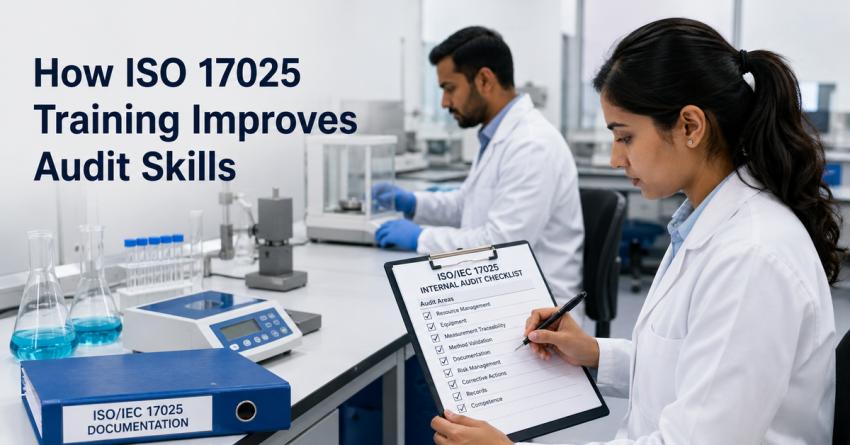
Internal audits are essential for maintaining compliance with ISO/IEC 17025 in testing and calibration laboratories. A well-conducted laboratory audit helps identify process gaps, improve operational efficiency, maintain technical competence, and prepare laboratories for accreditation assessments. However, the effectiveness of internal audits depends heavily on the skills and knowledge of the auditor.
Many laboratories struggle with incomplete audit findings, weak corrective actions, inconsistent audit reporting, and documentation issues due to limited auditor competence. Professional ISO 17025 auditor training helps laboratory professionals understand auditing principles, ISO 17025 requirements, and practical audit techniques needed for effective internal audits.
Why Audit Skills Matter in ISO 17025 Laboratories
ISO/IEC 17025 requires laboratories to conduct internal audits at planned intervals to verify compliance with technical and management system requirements. Skilled auditors play an important role in evaluating whether laboratory activities are implemented effectively and consistently.
Strong audit skills help laboratories:
• Identify nonconformities early
• Improve documentation practices
• Verify technical competence
• Monitor corrective actions
• Reduce compliance risks
• Maintain accreditation readiness
Without proper audit knowledge, laboratories may overlook process gaps that can affect the reliability and accuracy of laboratory results.
Understanding ISO 17025 Requirements
One of the biggest advantages of ISO 17025 training is improved understanding of the standard’s clauses and compliance requirements. Auditors must understand both technical and management system requirements to perform accurate assessments.
Training programs generally cover:
• Resource management
• Equipment calibration
• Measurement traceability
• Method validation
• Risk-based thinking
• Corrective action procedures
This knowledge helps auditors evaluate laboratory operations more effectively and identify areas requiring improvement.
Improves Internal Audit Planning
Audit planning is one of the most important stages of the ISO 17025 internal audit process. Poor planning often results in incomplete audits and missed nonconformities.
ISO 17025 training helps auditors learn how to:
• Define audit scope and objectives
• Prepare audit schedules
• Develop an ISO 17025 checklist
• Select audit criteria
Proper audit preparation improves consistency and ensures all critical laboratory activities are reviewed systematically.
Enhances Nonconformity Identification Skills
Identifying nonconformities accurately is a key auditing skill. Trained auditors are better able to detect issues related to technical procedures, equipment management, and quality system implementation.
Common audit findings include incomplete calibration records, missing traceability evidence, outdated procedures, inadequate training records, and improper corrective action implementation. ISO 17025 training helps auditors distinguish between observations, minor nonconformities, and major compliance failures.
Strengthens Audit Communication Skills
Internal auditors regularly interact with laboratory personnel throughout the audit process. Effective communication skills are essential for conducting interviews, collecting evidence, discussing findings, and presenting audit conclusions professionally.
Auditors should also understand ISO 17025 auditor roles related to documentation control, compliance monitoring, and quality management system implementation.
Training improves the auditor’s ability to ask objective audit questions, collect reliable evidence, conduct meetings, and prepare clear audit reports.
Supports Risk-Based Thinking
ISO/IEC 17025 emphasizes risk-based thinking within laboratory management systems. Auditors must evaluate how laboratories identify and manage risks that may affect testing or calibration results.
ISO 17025 training improves the auditor’s ability to assess risks related to equipment performance, personnel competence, data integrity, and reporting reliability. This approach helps laboratories strengthen process controls and reduce operational risks.
Helps Laboratories Prepare for Accreditation
Laboratories preparing for an accreditation audit require effective internal audits to maintain compliance. Skilled auditors help identify compliance gaps before external assessments occur.
Through proper ISO 17025 auditor training, organizations can improve audit effectiveness, strengthen quality management systems, and maintain ongoing compliance with ISO/IEC 17025 requirements.
Conclusion
ISO 17025 training plays a vital role in improving audit skills for laboratory professionals and internal auditors. Effective training helps auditors conduct structured audits, identify nonconformities accurately, and support continual improvement within laboratories.