Most people, when they hear the words "traveling alone," immediately conjure images of a lonely figure eating dinner for one, awkwardly filling the silence with a phone screen. It is a misconception so deeply embedded in how we think about holidays that millions of people keep postponing the solo trip they secretly want to take — waiting for a friend who's available, a partner who shares their interests, or a family calendar that finally aligns. The waiting, more often than not, goes on forever.
Here is the truth that seasoned solo travellers will tell you without hesitation: going it alone might just be the most rewarding kind of travel there is. Not because solitude is the point, but because freedom is. When you travel solo, you are — possibly for the first time in your adult life — completely in charge of your own experience. And that changes everything.
The Freedom That Nobody Warns You About
When you travel with others, compromise is the invisible tax you pay on every decision. You want to spend the morning wandering a local market; your travel companion wants to sleep in. You are curious about the street food cart on the corner; your friend is nervous about hygiene. You are happy staying at a mid-range guesthouse; someone else in the group has their heart set on a resort. None of these conflicts are anyone's fault — they are just the natural friction of different personalities, budgets, and appetites colliding in an unfamiliar place.
Solo travel dissolves all of that. You wake up when you want. You eat when you are hungry and where you feel like going. You spend three hours in a museum because a particular exhibit genuinely fascinates you, without guilt, without glancing sideways to check if anyone's bored. You change your plans at noon because the weather shifted or because a local recommended somewhere better. There is a quiet, almost giddy pleasure in realising that the day belongs entirely to you.
This is particularly meaningful for people who spend most of their daily lives accommodating others — caregivers, parents, people in demanding professional roles. A solo trip is not selfishness; it is restoration.
You Actually Get to Know the Place
Counterintuitively, solo travellers often come home with a deeper understanding of the places they visit than those who travel in groups. The reason is simple: when you are alone, you are more open and more approachable. Locals talk to you. Fellow travellers strike up conversations. A solo person sitting at a café bar is an invitation; a group of six is a closed circle.
Some of the most memorable travel experiences happen in these unplanned moments — the elderly man who insists on walking you to the temple because you are going the wrong way, the guesthouse owner who sits down for tea and ends up telling you the history of the neighbourhood, the chance encounter with another solo traveller who shares a recommendation that turns out to be the highlight of the trip.
When you travel in a group, you already have your social world with you. When you travel alone, you have to engage with the world around you — and it almost always gives back.
Solo Travel in Sri Lanka: A Case Worth Making
Sri Lanka has emerged as one of the more compelling destinations for solo travellers in recent years, and for good reason. The island is compact enough to navigate without overwhelming logistics, culturally rich enough to reward genuine curiosity, and — importantly — genuinely welcoming to independent visitors. Whether you are heading for the ancient cities of the Cultural Triangle, the tea-draped hills of Ella, or the wild coastline of the south, there is a coherent, accessible travel infrastructure that makes going solo far less daunting than you might expect.
Colombo, the commercial capital and the city most visitors pass through, deserves far more time than the typical overnight stop. The city is a living, breathing collision of colonial architecture, Buddhist temples, glass-fronted towers, and street food carts doing brisk business at midnight. For a solo traveller, it is endlessly navigable and endlessly interesting.
Accommodation options in Colombo have expanded dramatically over the last decade. From boutique heritage properties in Cinnamon Gardens to sleek urban hotels in the Fort district, the range of hotel offers in Colombo now caters to every budget and travel style. Solo travellers in particular benefit from the city's growing number of well-located, well-priced properties that offer easy access to both business districts and leisure attractions — no rental car required, no negotiating with a group about where to base yourselves.
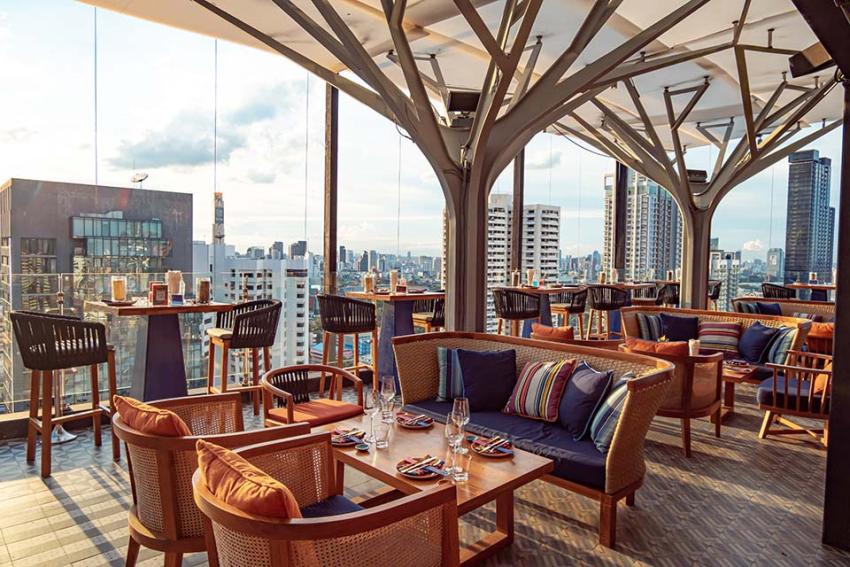
For those who want their stay to double as a vantage point on the city, the rooftop hotels in Colombo category has grown impressively. Spending an evening on a rooftop terrace, watching the city lights spread out across the coastline with a drink in hand, is the kind of solitary pleasure that sounds lonely in description and feels magnificent in practice. There is a particular peace in watching a city you are still getting to know do its thing from above — no commentary required, no one else's reaction to manage.
Eating Alone Is Not What You Think
The dining-alone stigma is perhaps the most persistent myth attached to solo travel. In reality, eating alone in an unfamiliar city is one of the great quiet pleasures of independent travel. You pay attention differently when there is no conversation to divide your focus. You notice the kitchen, the other diners, the way the staff interact with each other. You taste the food more carefully. You feel the atmosphere of the room without the filter of your own group.
Colombo's dining scene is particularly well-suited to the curious solo eater. The city has a remarkable depth of culinary options, from the roti and curry vendors that have operated out of the same spot for decades to internationally recognised fine dining experiences. For seafood lovers, a meal at one of the hotels near Ministry of Crab — the acclaimed restaurant that has put Sri Lankan crab cookery on the global map — is worth planning an evening around. Many of these properties offer comfortable, stylish accommodation that puts you within easy reach of the restaurant, along with Colombo's other culinary highlights.
Solo dining, especially at a destination-worthy restaurant, teaches you something about your own relationship with experience. You are not performing enjoyment for anyone else. You are just having it.
The Inner Work of Going Alone
There is a dimension to solo travel that does not get discussed enough, perhaps because it sounds a bit earnest: it genuinely changes how you see yourself. When you navigate an unfamiliar city alone, solve a logistical problem without help, or simply sit comfortably at a restaurant table for one without reaching for your phone every three minutes, you quietly accumulate a kind of confidence that is hard to manufacture any other way.
Solo travel forces self-reliance. It asks you to trust your instincts, make decisions without consensus, and sit with uncertainty in a way that everyday life rarely demands. These are not comfortable skills to develop — but they are enormously valuable ones. People who travel alone regularly often describe the experience as clarifying. They come home knowing themselves a little better than when they left.
There is also the matter of perspective. Dropping into a different culture, even briefly, recalibrates your sense of what's normal, what's important, and what's negotiable. This recalibration is amplified when you are alone, because you have no familiar social mirror to reflect things back to you. You just have the experience itself, unmediated.
Practical Realities: It is Safer and Easier Than You Think
One of the biggest barriers to solo travel is anxiety about safety and logistics — concerns that are legitimate but often overestimated. Sri Lanka, and Colombo in particular, consistently ranks as one of the safer destinations in South Asia for independent travellers. The network of hotels in Colombo City Sri Lanka ranges from budget-friendly guesthouses with helpful, English-speaking staff to full-service international properties with concierge teams who are well-versed in helping solo visitors plan their time in the city.
The practical reality of solo travel in 2025 is also far more manageable than it was even a decade ago. Reliable navigation apps, transparent booking platforms, real-time transit information, and the ubiquitous availability of ride-hailing services in major cities have removed many of the friction points that once made solo travel feel genuinely risky or complicated. What remains is the adventure — and that part, thankfully, has not been optimised away.
The Trip That Belongs Only to You
Every experienced solo traveller has a story from a trip that would never have happened had they been waiting for the right group to form. A spontaneous overnight stay in a village they hadn't planned to visit. A friendship forged over a shared table at a guesthouse. A morning spent sitting by the ocean with nothing on the agenda and nowhere to be.
These are the stories that stay. Not because they were dramatic or Instagram-worthy, but because they were entirely, uncomplicatedly yours. No shared narrative to maintain, no memories to negotiate. Just you, the place, and whatever happened between you.
If you have been putting off the solo trip — waiting for a better time, a different budget, or the right companion — consider that the waiting might be the only thing actually standing between you and one of the better experiences of your life. The world is remarkably well-disposed toward people who show up to it alone and curious.
Go find out for yourself.