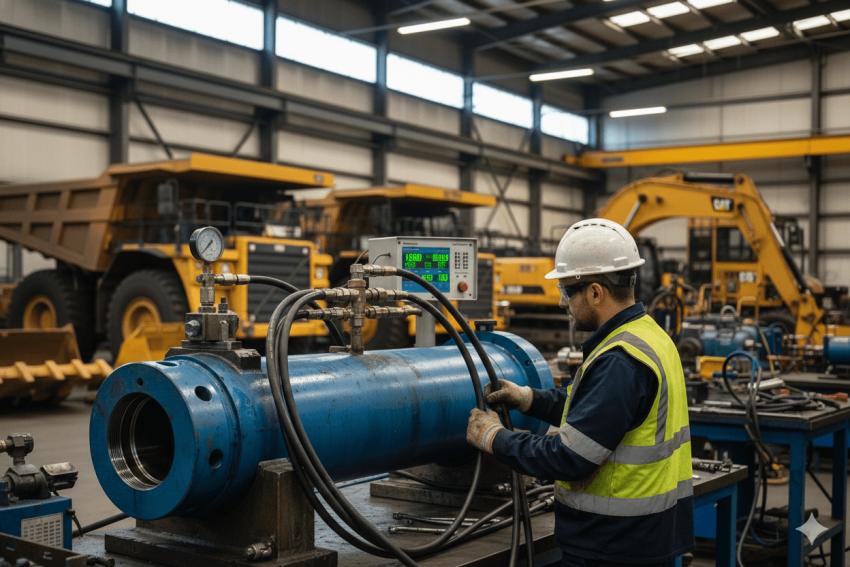
Anyone working with heavy machinery here in Australia knows that hydraulic systems do the literal heavy lifting. Whether you are running an agricultural setup in regional NSW or managing a massive mining site out in WA, these machines face insane pressures daily.
But here's the rub. The parts inside wear out entirely out of sight. Before you know it, an unexpected blowout brings the entire site to a grinding halt.
That’s precisely why hydraulic pressure testing is an absolute lifesaver. It checks the guts and seals of your gear under controlled conditions to find hidden weaknesses. Let's dive right into the main warning signs indicating your equipment is begging for a proper look.
Sign 1: Slow or Erratic Operation
Sluggishness is typically the very first heads-up that you have a problem. Machine speed relies entirely on fluid flow. So, if an actuator starts dragging its feet or jerking around unpredictably, you've lost flow. In a lot of cases, this happens because high-pressure oil is slipping past the piston seals internally. It basically robs your machinery of the grunt it needs to operate.
Sign 2: Fluid Leaks
Look, visible fluid leaks are a no-brainer.
Puddles under the rig usually mean you’ve got shot rod seals or cracked barrels. That alone is bad news because it opens the door for dust and muck to ruin the rest of the system. Internal leaks, though, are the truly sneaky ones. High-pressure fluid bypasses worn seals right inside the chambers. You won't see a drop of it from the outside. Yet, it absolutely guts the pushing power of your machine, making it stall out when placed under load.
Sign 3: Unusual Noises and Vibrations
A healthy machine should purr.
When it starts rattling, whining, or making alarming banging noises, it is under massive mechanical stress. These racket-makers usually boil down to either aeration or cavitation. Aeration happens when air gets trapped in the hydraulic fluid, which then creates a loud knocking sound as it compresses. Cavitation is slightly different. That occurs when the system demands more fluid volume than it actually receives, creating vapour pockets that implode violently under pressure. Leave it alone, and it'll chew your internal components to bits.
Sign 4: Excessive Heat Build-Up
Hydraulics get warm. That’s just part of the job.
But if it's cooking at over 82°C (180°F)? Mate, that's a glaring red flag. Operating at those temperatures breaks down your fluid rapidly and absolutely trashes the seals. Heat usually spikes when fluid bypasses from a high-pressure zone to a low-pressure area without doing any actual mechanical work. If your cylinders feel like a hot frying pan compared to the rest of the rig, hidden internal leakage is probably throwing off all that excess friction.
Sign 5: Pressure Irregularities
Keep a hawk's eye on those control panels.
Are the gauge readings bouncing around erratically? Or maybe they're just flatlining or creeping up way slower than usual? That points straight to an internal pressure bleed. The machine might somehow still push through a cycle, but it’ll be noticeably underpowered.
Sign 6: Visible Wear and Physical Damage
Sometimes you just have to trust your own two eyes. Take a walk around. Flaking chrome, dented barrels, or deep gouges on the piston rod are serious visual warnings. If the outside has taken a beating like that, you can bet your bottom dollar the delicate internal seals and alignments are completely cooked too.
Why Regular Pressure Testing is the Ultimate Solution
Spotting problems fast - that's what matters most.
Water pushes through slowly, revealing tiny gaps long before they become visible outside. When repairs are done, this method checks for strength without hazard because liquid will not explode as trapped air might. Constant pressure will expose hidden weaknesses and show where the seals are failing. It’s black and white proof that you are meeting stringent standards with no guesswork. Safety is obvious, not assumed.
Conclusion:
Ignore obvious signs such as temperature spikes or strange sounds and you are only inviting ugly safety hazards and costly repair bills. In the heavy machinery world, prevention always beats a reactive cure. Don't wait until the whole operation goes belly up. Get in touch with top-tier industrial hydraulic services to map out a solid maintenance plan and keep your site firing.