If your organization is preparing for ISO 55001 certification, one thing is clear: well-defined procedures are critical for success. Many companies fail audits not because they lack systems, but because their processes are not properly documented or aligned with ISO 55001 requirements.
This guide provides a complete ISO 55001 procedures list in a simple, practical format—so you can implement faster and pass audits with confidence.
What Are ISO 55001 Procedures?
ISO 55001 procedures are structured steps that define how your organization manages assets throughout their lifecycle—from planning and acquisition to maintenance and disposal. These procedures are a core part of effective ISO 55001 processes, helping standardize operations and reduce risks.
They also ensure that all departments follow a consistent approach, which is essential for meeting ISO 55001 certification requirements and maintaining long-term efficiency.
Complete ISO 55001 Procedures List
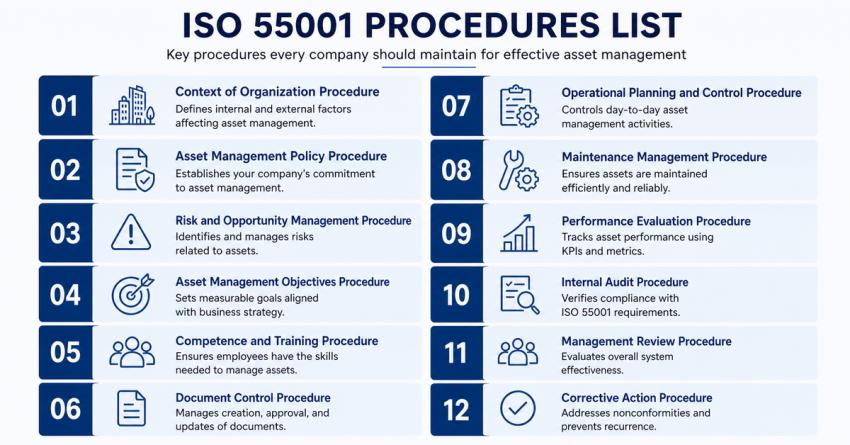
Below are the key procedures every company should maintain:
1. Context of Organization Procedure: Defines internal and external factors affecting asset management.
2. Asset Management Policy Procedure: Establishes your company’s commitment to asset management.
3. Risk and Opportunity Management Procedure: Identifies and manages risks related to assets.
4. Asset Management Objectives Procedure: Sets measurable goals aligned with business strategy.
5. Competence and Training Procedure: Ensures employees have the skills needed to manage assets.
6. Document Control Procedure: Manages creation, approval, and updates of documents.
7. Operational Planning and Control Procedure: Controls day-to-day asset management activities.
8. Maintenance Management Procedure: Ensures assets are maintained efficiently and reliably.
9. Performance Evaluation Procedure: Tracks asset performance using KPIs and metrics.
10. Internal Audit Procedure: Verifies compliance with ISO 55001 requirements.
11. Management Review Procedure: Evaluates overall system effectiveness.
12. Corrective Action Procedure: Addresses nonconformities and prevents recurrence.
Organizations often strengthen these procedures by maintaining structured ISO 55001 documents, which help centralize all records, improve consistency, and ensure that processes are properly controlled across departments.
Are These Procedures Mandatory?
ISO 55001 does not explicitly require specific procedures—but it does require documented information and controlled processes.
In practice, certification bodies expect:
- Clearly defined procedures
- Consistent implementation
- Supporting records
That’s why this list reflects what successful companies actually use.
How to Make Your Procedures Effective
To compete with top-ranking content and real-world standards, your procedures should:
1. Keep It Simple
Avoid unnecessary complexity. Clear and concise procedures are easier to follow and implement.
2. Align with Asset Lifecycle
Cover all stages:
- Planning
- Operation
- Maintenance
- Improvement
3. Define Responsibilities
Clearly mention who is responsible for each activity.
4. Regularly Review and Improve
Update procedures based on audit results, performance data, and business changes to stay compliant with evolving ISO 55001 certification requirements.
Common Mistakes to Avoid
Many companies struggle because they:
- Create overly complex ISO 55001 documents
- Copy generic ISO templates
- Ignore real operational practices
To avoid this:
- Focus on practical implementation
- Customize procedures to your business
- Keep documentation user-friendly
Why This Procedures List Matters
Implementing the right ISO 55001 procedures helps you:
- Improve asset performance
- Reduce operational risks
- Ensure audit readiness
- Achieve certification faster
In addition, integrating well-defined ISO 55001 processes with consistent execution ensures long-term success. Organizations that regularly review their procedures and maintain accurate documentation are better positioned to improve efficiency, reduce asset-related risks, and maintain a reliable asset management system aligned with business goals.
Final Thoughts
A strong ISO 55001 system is built on clear, practical procedures—not just documentation. By implementing this ISO 55001 procedures list, your organization can improve asset performance, maintain consistency, and achieve better operational efficiency overall.